

These Are The 9 Best Companion Plants For Your Tomatoes
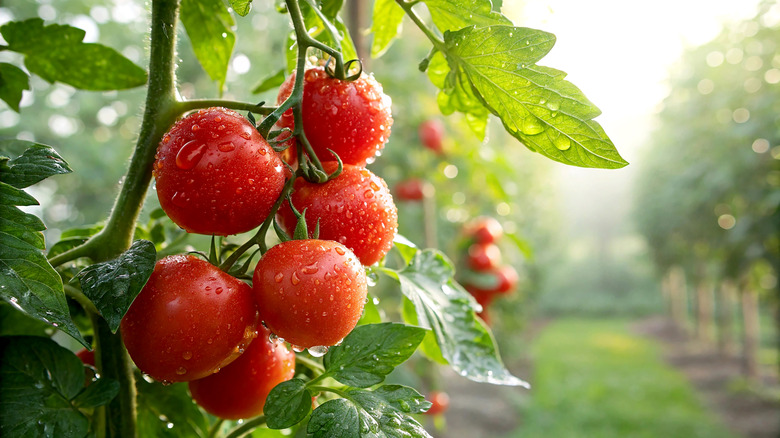
Tomatoes are fantastic entry-level plants for new gardeners. With a little care and a lot of sun, they shoot up quickly and produce tasty fruits for you to enjoy. One of the best ways to achieve success, regardless of skill level, is by pairing them with companion plants suited for the job.
Companion planting is not strictly necessary when growing tomatoes, but it can help give you a leg up. Certain companion plants attract pollinators, while others repel natural pests or release chemicals that promote a better harvest. So, while there are a handful of essential tomato gardening tips for beginners, choosing to surround them with beneficial neighbors is definitely one you should lean into. You don't want to go through all the grunt work of creating a tomato garden just to wind up with nutrient-depleted or pest-infested plants, right? With that in mind, I rounded up a list of the best companion plants for your tomatoes so your next harvest will be the best one yet.
Marigolds
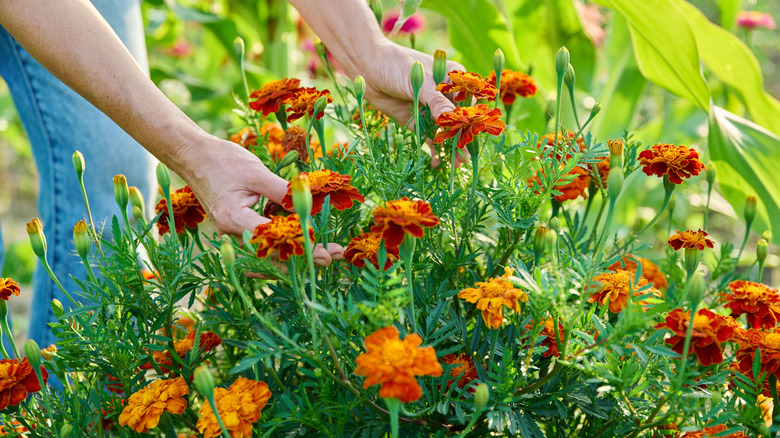
Marigolds are more than just a pretty addition to your garden. As it turns out, they are also a proven duo when it comes to companion planting with tomatoes. The benefits are two-fold as well, so adding them to your set-up is a no-brainer. Actually, you can go ahead and make that three-fold if you consider the aesthetic element they bring to your space.
Marigolds are known for not only repelling pests that are known to wreak havoc on tomato plants, but they also attract the insects you want around. For example, they grab attention from bees, which help pollinate tomato plants, leading to a better harvest. They also draw in ladybugs, which eat aphids. In fact, using quick-flowering plants like marigolds to attract early pollinators is one of several spring gardening tasks Martha Stewart says you shouldn't skip — and we all know she's a boss when it comes to all things gardening and cooking.
As for their repellent powers, marigolds emit a strong scent that keeps bugs like aphids, thrips, tomato hornworms, and whiteflies away. They also emit chemicals underground that ward off root-knot nematodes, which can hinder the tomato plant's growth by feeding off its roots. Plant marigolds about 12 to 18 inches away from your tomatoes and let nature work its magic.
Garlic
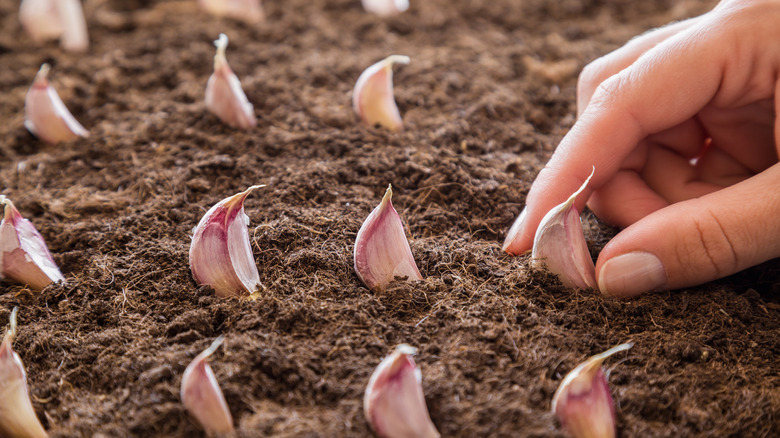
Having both fresh tomatoes and garlic on hand will always serve you well when it comes to whipping up meals, but their symbiotic relationship in the growing stage is also something to marvel at. Garlic is known for absorbing and releasing sulfur into soil, which can help repel fungus and blight. In addition, the strong odor we all know and love has an opposite effect on a handful of pests that easily aggravate tomato plants. Instead of drawing them in, garlic deters a variety of insects and even some mammals from harming your crop. Best of all, garlic does all this organically, so your tomatoes will not only flourish, but they will do so chemical-free.
Garlic's companion planting superpowers carry beyond tomato plants. It also works as a wonderful companion plant for herbs, marigolds, carrots (all three of which are also mentioned on this list as beneficial for tomatoes), and many other vegetables. Plant a few heads of garlic throughout your garden, and the hits will just keep on coming.
Basil
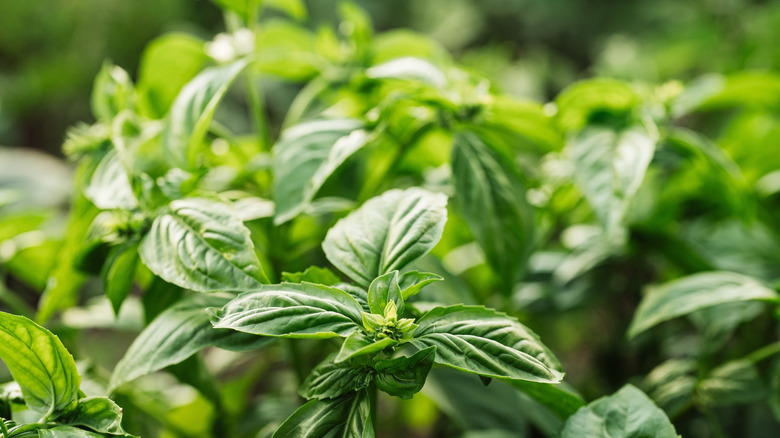
Basil and tomato plants make the best of friends. The herb brings several benefits to the table for our favorite vine-ripened fruit, and the relationship is mutually beneficial.
For starters, basil is known for repelling several pests that are prone to attacking tomatoes, like aphids, whiteflies, and thrips. It doesn't require a ton of nutrients to grow, either, so it won't deplete the soil of all the things needed for your tomatoes to produce tasty fruits. Additionally, a 2024 study published in Plant Cell Reports found that planting basil in close proximity to tomatoes helps the latter rebound faster after wound stress to the leaves, suggesting it makes them more resilient to nature's occasionally harsh conditions — and that's something any gardener can appreciate. Lastly, while not extensively proven, some people believe basil results in yummier tomatoes. Guess you'll have to give it a go to find out if you are a believer or not, but either way, basil and tomatoes just make sense.
As for what basil plants get out of the pairing, tomatoes grow taller, providing the herb with plenty of much-needed shade. Surround your tomato plants with basil, and it'll be a win-win. Besides, tomatoes and fresh basil are an iconic duo in the kitchen, so you'll be able to combine them in countless dishes. Caprese salad, anyone?
Onions, chives, and shallots
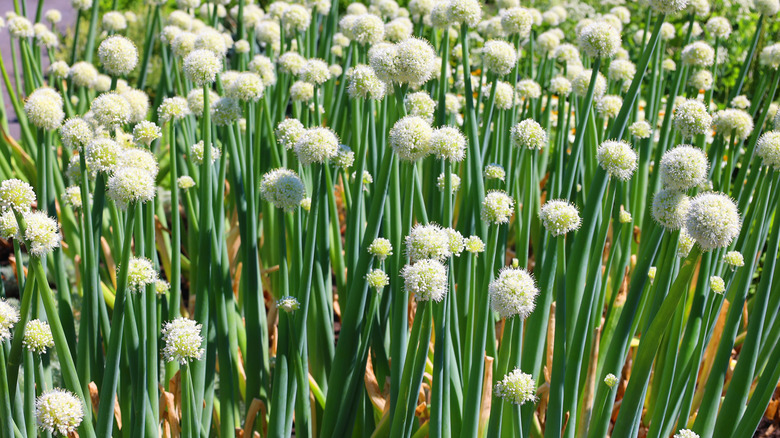
Aphids are a well-known pest in gardens, and they sure don't steer clear of tomato plants. With this in mind, companion plants that have a proven history of repelling these pesky critters can provide serious benefits for your next tomato harvest. Luckily, you have some options.
We already discussed garlic, but may I present some other members of the allium family: Onions, chives, and shallots. Alliums like these are similar to garlic in that they repel insects (and some mammals) thanks to their strong aroma and sulfur compounds, helping to steer them away from your tomato plants. With aphids out of the way, your tomatoes will be able to do more important things, like producing a delicious bounty of fruits.
No surprises here, but once you harvest your alliums and tomatoes, you can combine them in countless dishes. After all, everything from a simple tomato soup to salads to your mom's Sunday gravy likely calls for a mix of onion and tomatoes. Plant alliums in your garden and they'll ensure a hearty harvest and many tasty meals to follow.
Asparagus
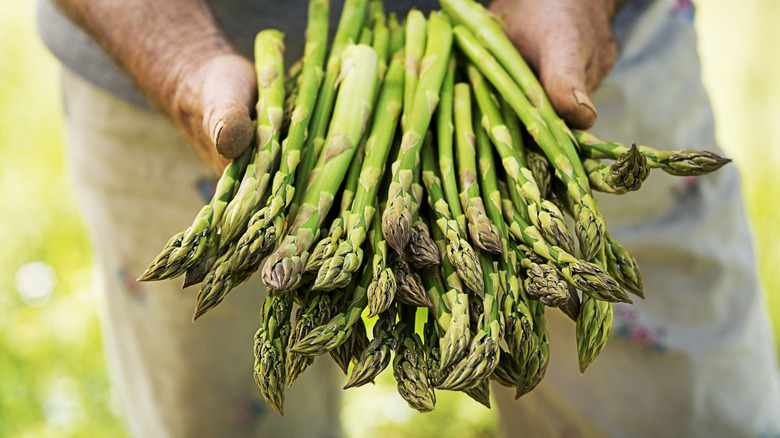
Root-knot nematodes, which are tiny (annoying) worms, are known to ravage tomato plants. When plants become infected with these pests, it can result in up to an 80% loss in yield at the end of the growing season. Not on your watch, though! A great way to combat this issue is to start with tomato strains that are resistant to root-knot nematodes, like Beefmaster, Better Boy Hybrid, Celebrity, Red Bounty, or Mountain Merit (just to name a few). However, adding natural deterrents such as asparagus to the mix is always a good idea as well.
In a 2019 study published in The International Journal of Current Microbiology and Applied Sciences, asparagus leaf extract showed promising results in helping minimize the damage caused by root-knot nematodes on tomato plants. The addition of asparagus led to high rates of juvenile mortality and lower nematode infection rates overall. In the end, "The findings suggest that asparagus extracts could serve as a viable, eco-friendly alternative to chemical nematicides for controlling nematode populations and improving tomato plant health." So, if you want to skip the harsh chemicals and still wind up with healthy, happy tomato plants the au natural way — which, of course, you probably do — asparagus is here for the win.
Carrots
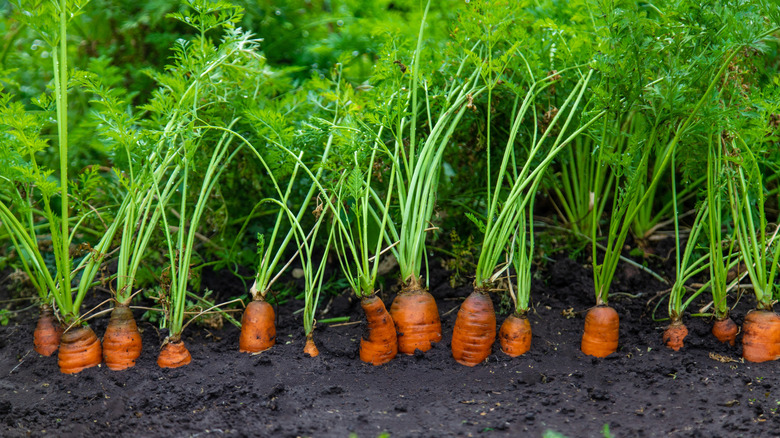
Carrots and tomatoes have different growing seasons, so you may not think they'd make the best companion plants. Despite this, they actually benefit each other when grown together in overlapping cycles. Once developed, tomato plants are great for providing some much-needed shade for carrots during the hottest times of the day; Tomatoes are the true beneficiary, though.
Carrots grow deep into the soil, so when they are paired with tomatoes, they carve out plenty of space for the roots to expand. This aeration leads to larger tomato plants, and in turn, a greater yield. To top it all off, you can easily harvest either the tomatoes or the carrots without disturbing the other. In fact, harvesting your carrots while your tomatoes are still growing adds even more space for the growing roots.
Aside from the symbiotic relationship carrots and tomatoes have in the garden, they go together wonderfully in all kinds of dishes, even some that are less expected. Did you know carrots are one of several outstanding secret ingredients for tomato sauce, helping to balance out acidity? As the old saying goes, plants that grow together, go together, and the tomato-carrot combo is a great example.
Herbs like dill, thyme, and oregano
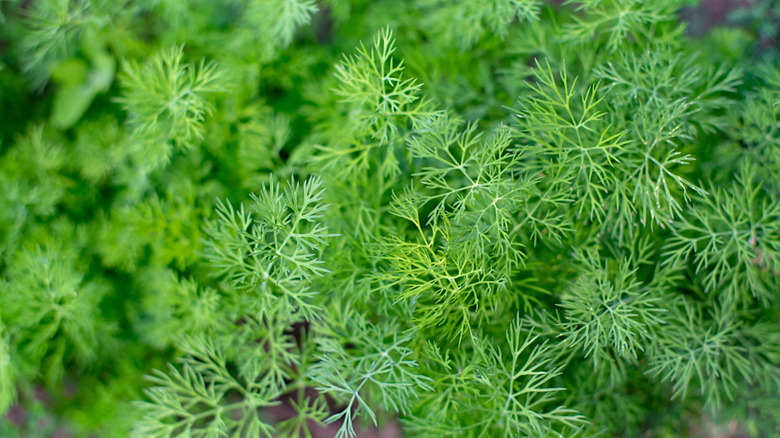
While having more fresh herbs around is always a good idea, growing a handful of them alongside your tomato plants provides an extra layer of benefits. While they each work their magic in slightly different ways, these herbs are your key to deterring unwanted pests and attracting the bugs you want, like ladybugs.
According to research from Iowa State University, using thyme as a companion led to fewer pests and insects around tomatoes and a variety of other vegetable plants. A study published in the journal Horticulturae showed that thyme can also reduce disease severity by stimulating the defense system in tomatoes while simultaneously increasing their resistance overall. Sounds like exactly what you want in a companion plant (and it smells great, too).
Dill is another herb that makes a fantastic pest eliminator and pollinator. It is known to attract ladybugs, which not only work as pollinators, but the larval-stage version of the insects also consume undesirables like aphids, spider mites, and more.
And for even more pest-fighting power, you can also add oregano to your garden. Tomato flavor combination aside, it helps ward off aphids. According to a 2021 study published in The South African Journal of Botany, oregano's essential oils work well as an eco-friendly approach to mitigating those pests in your garden.
Beans and legumes
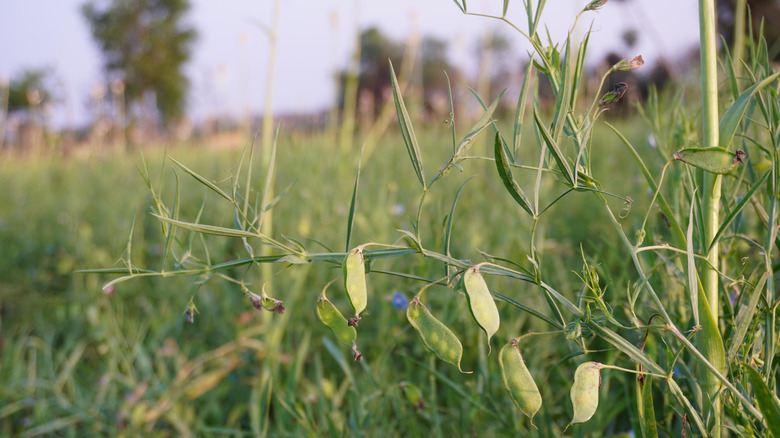
Beans and legumes lend a serious helping hand when planted near tomatoes. Bush beans in particular, such as string beans, make the best choice, but really, it depends on your garden and what you like to eat.
Bush beans stand out as a fantastic tomato companion because they grow low to the ground and are, well, bushy. Unlike many other types of beans, they don't climb, so you won't have to worry about them blocking sunlight that should be reaching your tomatoes. The added root systems surrounding your tomatoes also add a layer of protection while simultaneously converting nitrogen in the soil into fertilizer for your tomatoes. Cool, huh?
Pole beans also make a nice pair with tomato plants. However, while bush beans make an excellent choice for all kinds of tomatoes, pole beans are not ideal for determinate tomato plants (aka ones that don't continue growing up), because they don't provide space for the beans to climb without overshadowing the tomatoes themselves. Regardless, no matter what type of beans you opt to grow alongside your next crop of tomatoes, in the kitchen, you can enjoy the duo in dishes like bacon-y succotash, soup, salads, stir-frys ... the list goes on. Pair that with the fact that planting these two crops together could eliminate the need for additional, chemical-laden fertilizers, and you've got a recipe for success.
Borage
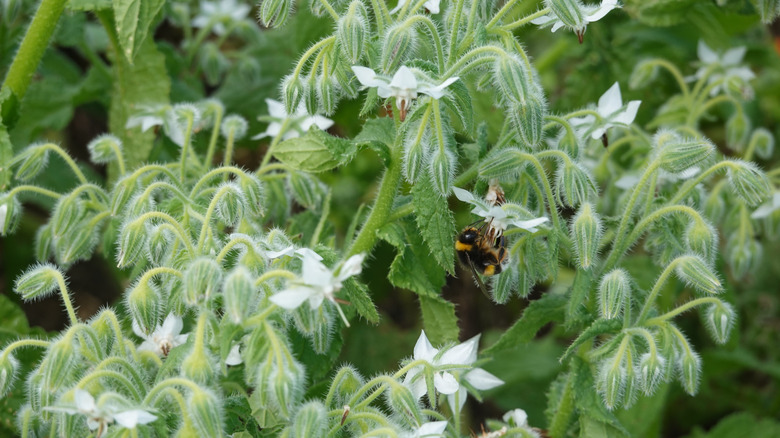
Borage may be a lesser-known herb, but consider this your sign to get well acquainted with it. For starters, it adds a bit of culinary flair to cocktails, mocktails, salads, and more. However, in the garden, it also acts as a perfect companion plant for tomatoes. Similar to many of the other choices on this list, it offers several benefits, so whether you're already familiar with it or not, borage is just what your garden needs.
Borage is best known for attracting beneficial pollinators and insects — specifically bees — so much so, in fact, that it's often called a bee bush or bee bread. The Farmers' Almanac cites borage as a great herb for reducing damage to tomato plants caused by hornworms and cabbage worms because it is a major beacon for bees. When our buzzy little friends are present, they make harmful insects wary of entering the territory.
According to a study published in Applied Entomology and Zoology, borage also draws in aphidius colemani, a parasitic wasp that targets and helps eliminate aphids. So, as you can see, borage and tomatoes make a winning team. Plant them together and watch as you and your harvest reap the benefits.