

5 Fast Food Chain Restaurants That Took Over The 1970s
We may receive a commission on purchases made from links.
The 1970s proved an intriguing time in American food history. Fondue sets sold as the buzziest new item, instant ramen first appeared on shelves, and Starbucks opened its first outlet. All the while, fast food chains started to really ramp up. While many had already operated for a few decades, the '70s kick-started a new level of momentum. Locations proliferated nationwide, new menu items were released, and once small-scale operations became widespread.
During this time, fast food outlets popped up in cities, no longer focusing solely on suburbs, all while car culture kept revving as the drive-through took on mainstream appeal. More creative fast food commercials appeared, accompanied by jingles that imprinted into the American psyche. Culturally and economically, the 1970s saw fast food evolve into modern-day proportions.
Such success arrived by way of savvy chains experimenting with food, service, and price. Whether it was the debut of Taco Bell's Enchrito or McDonald's Quarter Pounder, the rise of new chains like Wendy's, or the advent of fast food kids playgrounds, the 1970s delivered a range of fast food experiences still circulating today.
Rapid 1970s franchising solidified Wendy's place in fast food
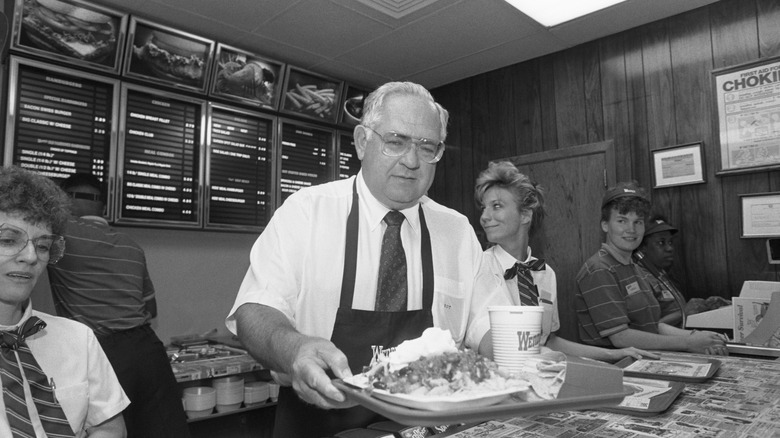
Nowadays, over 5,000 U.S. Wendy's locations sell signature square burgers and shakes. With such ubiquity, it's hard to imagine the chain all started from a single outlet, a grand opening that took place in mid-November 1969. The 1970s proved a pivotal period of growth for this iconic chain, taking it from an inaugural location to widespread success.
From the get-go, Wendy's focused on fresh, simple burgers, using never-frozen meat formed into the iconic square patty, its structure an indicator of top-tier ingredients. The still-sold Chocolate Frosty also emerged at the beginning, as did the still-in-use slogan "Quality Is Our Recipe." The fast food chain's unusual name, which came from the founder's daughter, has also persisted.
During the 1970s, Wendy's tapped into a formula that has prevailed to this day. In November 1970, the business helped popularize the drive-through concept, letting customers order via a speakerphone system. Later in the decade, Wendy's also unveiled a salad bar, a first for a fast food chain, which remained until the mid-2000s. Such risky business moves paid off. Locations quickly grew around the Columbus, Ohio, origin, with franchising already occurring by 1972. By the end of the decade, Wendy's operated over 1,000 locations, establishing a widespread presence that hasn't faded since.
Taco Bell gained momentum in the 1970s
Although Taco Bell opened its first location in 1962, the chain grew rapidly during the 1970s, spreading crunchy tacos and a host of other Tex-Mex items from sea to shining sea. The California-based chain began the decade with 325 outlets and expanded to over 800 by the end of the 1970s — an economic success capped off by a high-caliber buyout from PepsiCo. While expanding, the chain never strayed from accessible food costs. Taco Bell prices in the 1970s are truly shocking, with tacos selling for under 30 cents a pop.
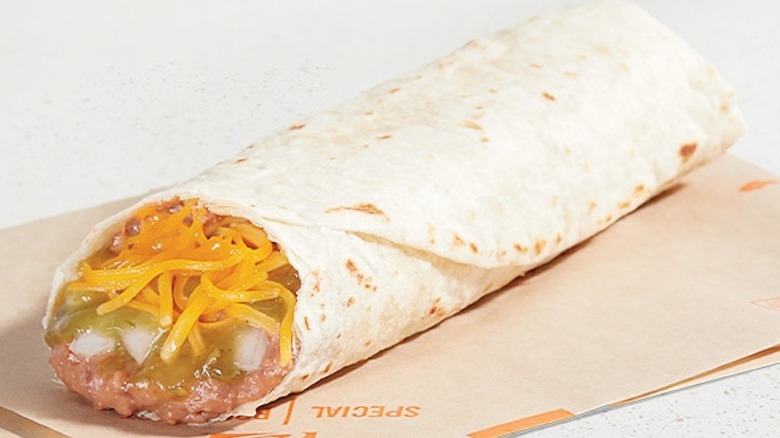
Furthermore, the decade delivered an array of exciting new menu items. During the 1970s, Taco Bell debuted the green chili-filled Green Burrito, the Enchirito (a crossover between a burrito and an enchilada), while pushing the Bell Beefer to compete with traditional burger joints. The time period escalated the chain's menu experimentation, a strategy still central to the brand.
Yet Taco Bell's 1970s momentum wasn't all thoughtful business logistics. Rather, the decade heralded the chain's cultural prevalence. Consumers caught sight of newly opening adobe-style locations, commercials with catchy Taco Bell jingles played on TVs, and restaurant outlets even included food pronunciation below menu items. For many Americans, this period brought the first taste of Mexican-inspired fast food, a form of dining embedded for decades since.
The 1970s marked the peak of A&W's influence
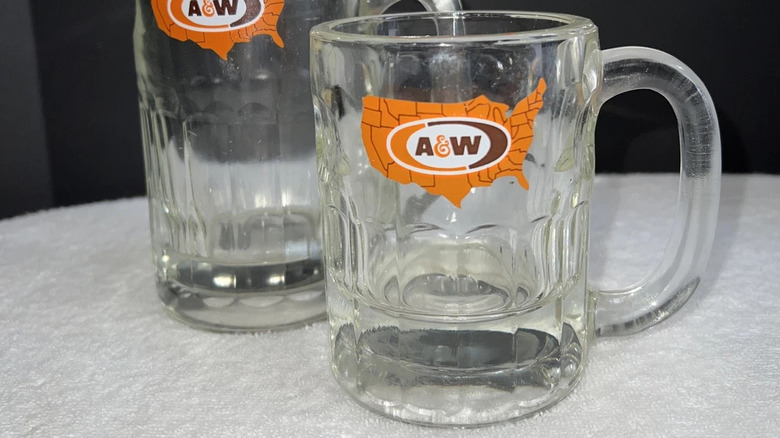
Think of A&W today, and the root beer rather than the chain likely comes to mind. Yet flash back to the 1970s, and the fast food brand reached its apex, even operating more locations than McDonald's during the first half of the decade. In 1974, there were some 2,400 A&Ws nationwide, selling fan-favorite burgers, fries, fried chicken and — quintessentially — root beer, both standalone and in float form.
During this decade, A&W made the momentous decision to distribute its signature soft drink in cans and bottles. In parallel, the chain advertised the soda in very 1970s jingle style: "That frosty mug taste!" played on TVs nationwide (via YouTube). If such beverage-focused marketing wasn't enough, the chain also debuted "Rooty the Great Root Bear," an anthropomorphic brown bear mascot, to appeal to kids.
It all added up to a tremendously nostalgic experience. "Chili dog with onions and a root beer in a frosted mug. Can't beat that!" noted a Reddit user. Unfortunately, following such momentum, subsequent years didn't pan out as well for A&W. By the early 1980s, business severely slowed, compounded by a third-pound burger marketing mishap. Nowadays, the fast food chain is more beloved in Canada, but its cultural imprint remains.
McDonald's found its groove during the '70s
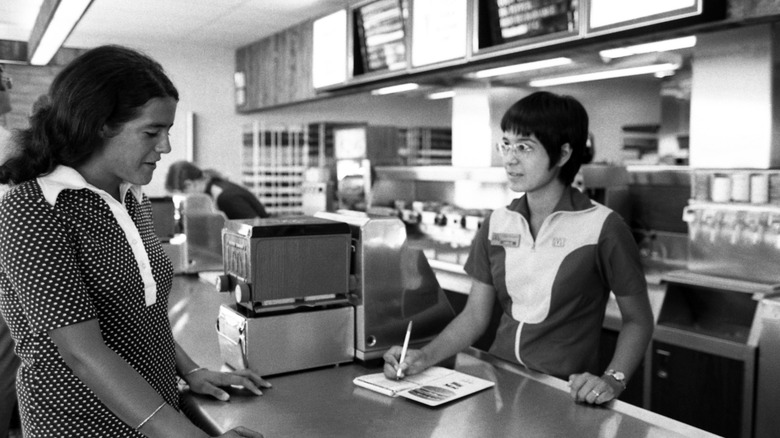
Mention fast food, and McDonald's is always in the conversation. The 1970s proved no different for the behemoth chain, with the decade serving as an important era of growth. Many still-available food offerings debuted during this time. The Quarter Pounder was released in 1971, a favorite that forever upped fast food portion sizes. Four years later, the chain broke into the breakfast game with the debut of the McMuffin, later joined by hash browns, pastries, sausage, and other items. Visually, the brand underwent a rework: Drive-thrus appeared, while the logo added a bold red backdrop.
By the 1970s, McDonald's had embraced an increasingly family-friendly environment, a focus it has maintained since. First came playgrounds for kids at the start of the decade, then a line of McDonaldland toys, until the Happy Meal arrived in 1979. Although McDonald's wasn't the first fast food chain to offer kids' meals, these initiatives paid off, fueling the chain's growth for decades to come.
Pizza Hut offered a distinctive 1970s dining experience
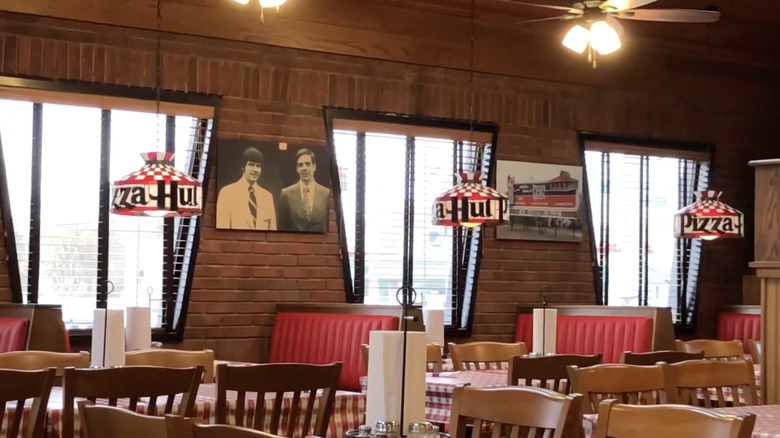
Today, Pizza Hut is known as one of America's biggest delivery pizza brands, ready to drop off a pie at a moment's notice. First launched in 1958, Pizza Hut had already gained the coveted status of the world's largest pizza chain by 1971. The decade's economic success was reinforced by a major PepsiCo buyout in 1977, later evolving into the massive Yum! Brands portfolio, which also operates Taco Bell and KFC.
Yet look back to the 1970s, and Pizza Hut's dominance wasn't only manifested in sales and business strategy. Back then, the chain was known for its cozy, family-friendly dining environment. Inside red-roofed outlets, diners unwound in booths amid old-school Italian American furnishings. Guests could order thick- or thin-crust pizza, as well as deep-dish pasta dishes and submarine sandwiches. Supported by specific music, service and even scent, it all added up to a memorable, transportive experience.
"This makes me want to weep from nostalgia. Going out to dinner was a big treat for us growing up. Pizza Hut was always a favorite," a Reddit user wrote in a post dedicated to 1970s Pizza Hut. It's a dining era now long phased out, a pizza chain vibe lost to the decades.