

5 Chain Restaurants That Were Founded In Colorado
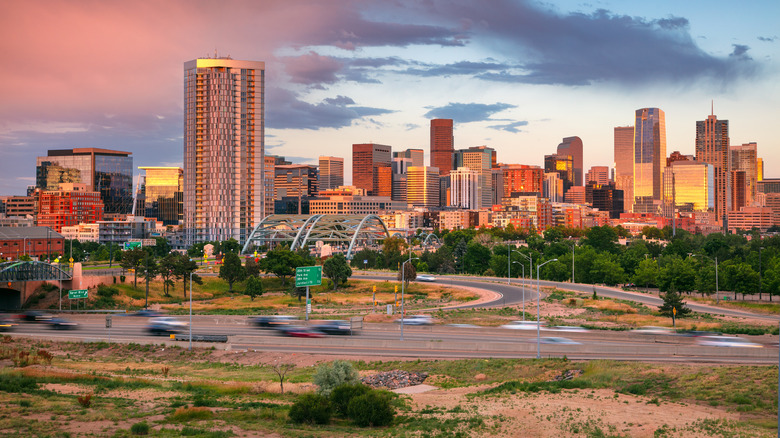
While Colorado is famous for its scenic beauty and landmarks, like the breathtaking Rocky Mountains and multiple national parks, the Centennial State also has its fair share of food-related claims to fame. It's noted, for instance, for a delicacy called Rocky Mountain oysters (which definitely don't contain seafood). Colorado is also home to America's first Thai restaurant, and it is the U.S. state that produces the most beer.
Some well-known chain restaurants also got their starts in this picturesque state — and considering Denver, specifically, is noted as being one of the best dining destinations in the country, that perhaps comes as no surprise. Food Network star Guy Fieri has featured Colorado restaurants 41 times on his famed show "Diners, Drive-Ins and Dives," as of January 2026, and 19 of them were in the capital city. Denver diners tend to favor fresh cuisine, farm-to-table ingredients, and unique food offerings, which has made it a veritable melting pot for trendy eats, fresh fare, and international cuisine.
While it is a culinary hub, Denver also has one of the lowest survival rates for new restaurants in the entire country. So, if a restaurant does well among the city's discerning diners, odds are favorable that it may do well in other markets. This is exemplified by five now-nationwide restaurant brands, each of which started out with inaugural locations in Denver and grew from there. Each expanded into international markets, too — some more successfully than others. All have become household names in the American food scene.
Chipotle's innovative assembly line began in a Denver pie shop
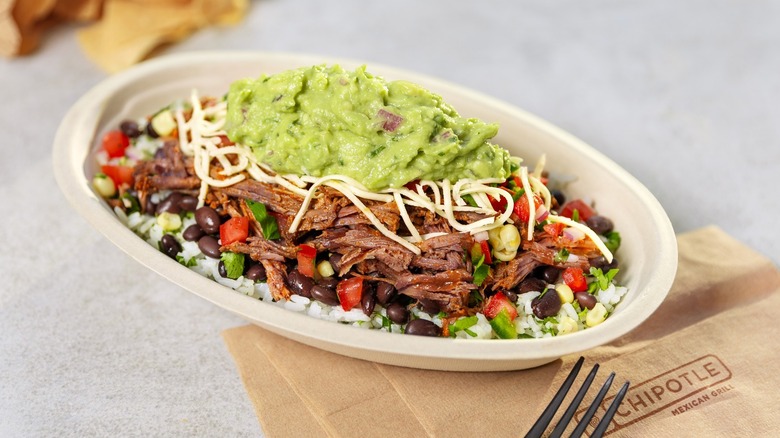
Chipotle Mexican Grill is widely credited with pioneering the fast-casual restaurant concept. The brand debuted in 1993 against stiff competition, at a time when fast-food players like McDonald's and Burger King were dominating the space. In terms of Tex-Mex cuisine, the arena Chipotle was entering, Taco Bell was at the top of the heap. But while Chipotle founder Steve Ells wanted his food to be rolled out fast, his restaurant's menu was inspired by the fresh, local, artisanal components of dishes at a high-end restaurant he'd worked at in California — a far cry from the cost-effective-to-make, high-volume fare being churned out by the big boys.
Ells was a classically trained chef who didn't have enough money to open the type of high-end dining establishment he dreamed of. So, instead, he borrowed money from his dad to open Chipotle. Ells kept his inaugural Denver restaurant very basic, fitting it out with stainless steel and plywood, and leaving bare concrete floors and exposed piping. There was no posted menu in the facility — he let the food speak for itself and sometimes literally chased people down, urging them to try it. Word spread quickly, business boomed, and talk turned to a second restaurant. The second Chipotle location, also in Denver, was converted from a former pie shop, which had a linear display counter. This setup became Chipotle's first customer-facing serving line — a format still used today — letting patrons customize their orders as they watch the food being made.
Multiple rebrands shaped Qdoba's journey
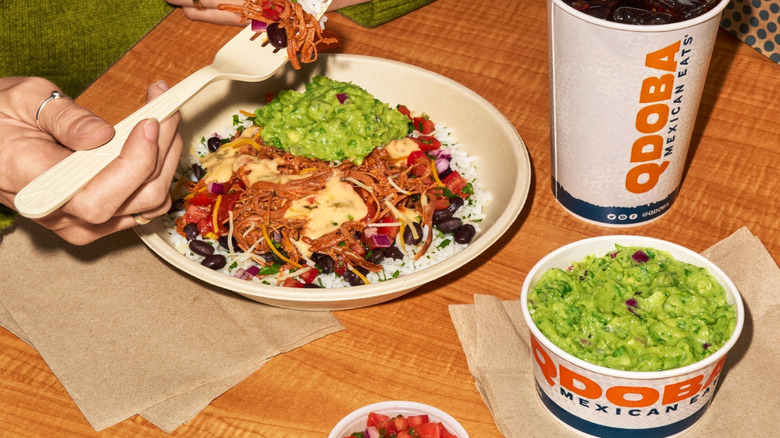
Another Denver-born restaurant, Qdoba Mexican Eats, became a direct competitor to Chipotle. The brand also uses an assembly-line service model, and its menu features fresh produce, flame-grilled meats, and guacamole made onsite. The two companies were founded just two years apart — Qdoba debuted under another name in 1995 — and also have similar cuisine, with foundational dishes like burritos, bowls, quesadillas, and salads.
Qdoba doesn't have as large of a presence as Chipotle does, though. The company has just under 870 restaurants worldwide (with around 850 of them in the U.S.), as of January 2026, while Chipotle operates more than 3,900 global locations, as of September 2025. Qdoba has had a more circuitous journey in establishing its identity, which may at least partially account for the chain lagging behind its Denver compatriot. The brand started out as Zuma Fresh Mexican Grill, opening its first location at the corner of Sixth Avenue and Grant Street in downtown Denver (a site still operating as a Qdoba restaurant, as of January 2026). The company rebranded as Z-TECA in 1997, then became Qdoba Mexican Grill in 1999. The changeover to the company's current name, Qdoba Mexican Eats, occurred in 2015, distancing the brand from competitors, like Chipotle, whose company names also ended with "Mexican Grill."
Qdoba has made significant menu and pricing changes over the years, as well — the latter to appease unhappy customers upset over hidden charges that surpassed the listed menu prices, like upcharges for guacamole and queso sauce. Multiple acquisitions have also been part of the brand's history, further contributing to a somewhat rocky journey.
Strategic changes fueled Noodles & Company's rise
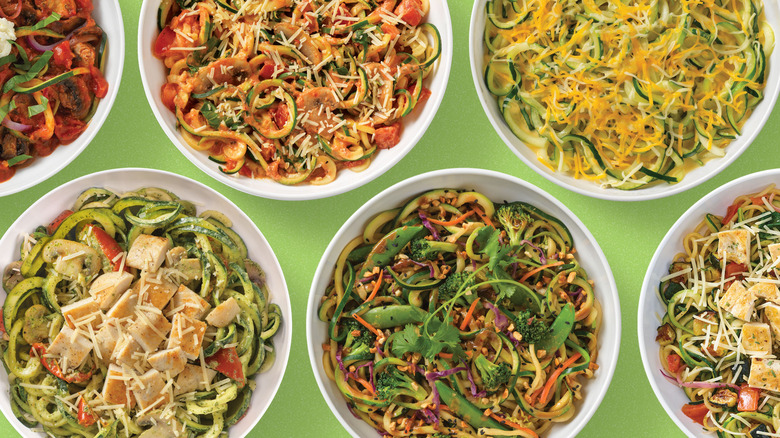
Noodles & Company pioneered a unique concept: a restaurant built around a single ingredient rather than a specific cuisine. Founder Aaron Kennedy recognized that because noodles are a global staple, they offer a versatile foundation with universal appeal. The first Noodles & Company opened in 1995 in the Cherry Creek area of Denver. Kennedy chose this affluent neighborhood because he believed the residents, shoppers, and diners there were willing to pay a premium for high-quality, globally inspired food. The original menu was modest, featuring nine different noodle-based entrees.
Unfavorable reviews from news outlets and poor earnings almost spelled the end for Noodles & Company early on, though. The chain's second location in Madison, Wisconsin, performed particularly poorly, struggling with both financial losses and negative local sentiment. To turn things around, Kennedy and his associates completely revamped the company — in particular, they moved away from pre-prepared cooking to a made-to-order saute style. Marketing and design specialists were also brought in to overhaul the branding and restaurant interiors. The changes worked, and Noodles & Company began thriving.
As of early 2026, the chain operates approximately 423 restaurants, including a dozen locations in its birth city of Denver. Today's menu features a diverse mix of noodle-based dishes, with something to appeal to virtually everyone — fulfilling Kennedy's early vision. Global cuisines remain well-represented, ranging from Russian-inspired classics like Steak Stroganoff and Italian-American staples like Spaghetti and Meatballs to Asian-inspired favorites such as Pad Thai and Chili Garlic Ramen, released in 2025.
Quiznos had a dramatic evolution and decline
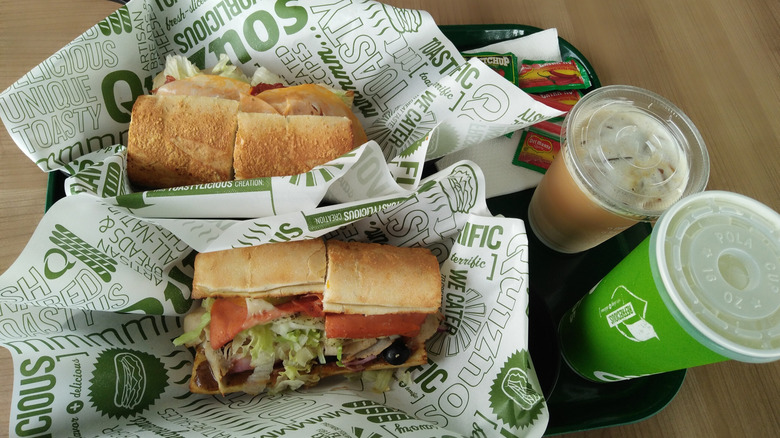
Quiznos debuted in 1981, differentiating itself with toasted subs at a time when fast-food sandwiches were commonly served cold. These heated sammies were founder Jimmy Lambatos' tribute to the subs of his New York City youth — a concept he perfected at his Denver Italian restaurant, Footers, before opening the first Quiznos on Grant Street. Occupying a space that previously housed a sandwich shop called the Starring Roll, this flagship location served as the testing ground for Lambatos' innovative conveyor-belt oven, which toasted the subs thoroughly without burning them.
Quiznos grew to 17 shops by 1988, at which point Lambatos and his business partner parted ways. The chain was ultimately sold to a franchisee, who took the company public and spearheaded massive growth. At its peak, Quiznos had more than 4,000 restaurants. But a huge downward spiral, marked by financial troubles, multiple lawsuits, bankruptcy, and a buyout, saw the company's numbers drop to fewer than 400 restaurants over the course of a decade.
As of December 2024, less than 340 Quiznos remained in the U.S. and internationally. The original Quiznos on Grant Street was shut down by the City of Denver in 2023 for nonpayment of taxes by the restaurant's owner. With the outdoor sign still looming overhead, declaring the building to be the first-ever Quiznos, the structure was converted into a nail and beauty salon in 2023. As of January 2026, the salon is still operating at the location — though the ghostly outline of the word "Quiznos" is still plainly visible on the building.
Smashburger becomes a smash hit in Denver and beyond
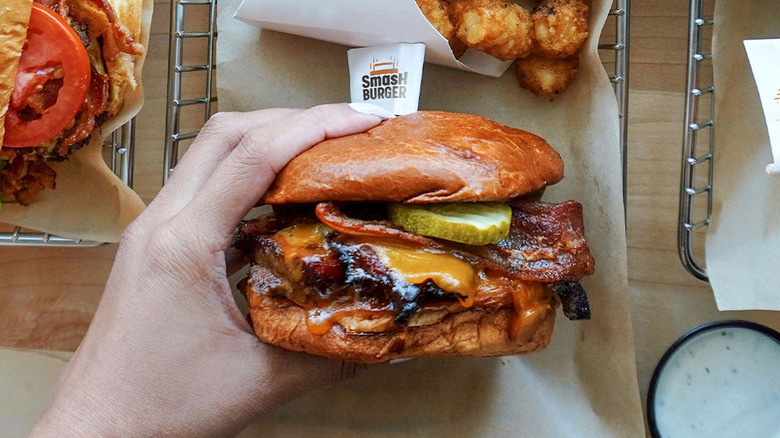
Like the other successful chains that launched from Denver, Smashburger brought something different to the scene: burgers smashed directly onto a hot griddle to seal in juices and create a flavorful crust. While the technique wasn't new, Smashburger popularized it on a massive scale by pairing the method with fresh, high-quality ingredients. The brand set its inaugural footprint on South Colorado Boulevard in 2007, and diners couldn't get enough.
The company was helmed by Tom Ryan — who helped invent Pizza Hut's stuffed crust — and former Quiznos owner Rick Schaden. They spent six months painstakingly designing the establishment's kitchen, which would have a refrigerated space beneath the griddle so cooks could keep churning out smash burgers without leaving their stations. They taste-tested hundreds of types of meat before settling on Angus beef for their burgers. Custom-made patty presses were used to press the meat into its characteristic smashed burger format.
Smashburger became an immediate hit, setting a record by reaching the 200-restaurant mark faster than any fast-casual chain before it. As of January 2026, the company serves 34 states and maintains a presence in seven countries