

7 Ways To Get The Most Out Of A Costco Rotisserie Chicken
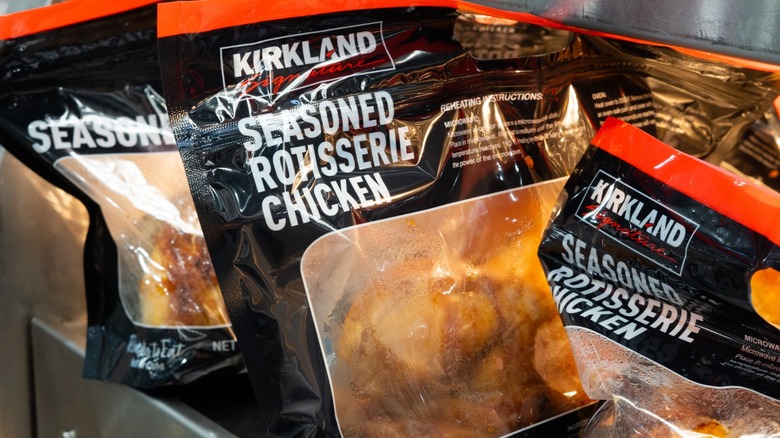
Costco rotisserie chickens seem like a miracle. A $5 bag of bliss, you can't help but wonder how they stay so cheap. Any time the prospect of roasting a chicken at home worms into your brain, Costco's chicken appears to you in a vision: come to me, it whispers. With several years of professional restaurant experience under my belt, I've gotten into more intimate contact with chickens than I'd have liked; I've also been witness to brilliant tricks to get as much flavor as you can from the food you're making. More crucial here, however, is my near-religious devotion to Costco rotisserie chickens. That charming, undeniable bird is a divine figure, offering rewards for those who worship. Once you pray at the altar of that salty, brindled roast chicken, to not do so would feel like transgression.
These are all postulations, of course. This publication is not recommending that you kneel down and beg the chicken on its plastic throne to provide you with sustenance. On the contrary, the best way to honor it is to desecrate it yourself: use the bones to make a stock, shred the breast meat with your hands, deep fry the skin to crispy paradise. From now on, you will squeeze every ounce of love out of a Costco rotisserie chicken, and it will reward you accordingly.
Reheat in the oven instead of the microwave
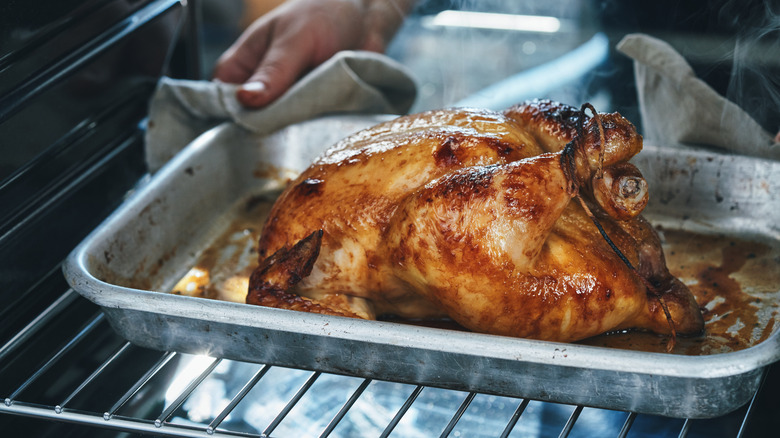
Like the half-opened box of cereal in your pantry, it can be tempting to go at a Costco rotisserie chicken with your hands during times of stress with as few steps between you and satisfaction as possible. This inevitably involves chucking the breast or leg into the microwave willy-nilly, resulting in the worst sin imaginable: dry chicken.
However, this catastrophe is not destined to be. If you really want to milk your bagged poultry prize for all its worth, take the extra twenty minutes it heats up in the oven to breathe and relax, and let the unbreakable promise of the chicken soothe you. The oven retains the chicken's moisture, and, if you want to transform your store-bought rotisserie chicken into a crispy delight, its shattering skin, as well. Your oven also more evenly heats the chicken, especially if you have a convection setting, which circulates hot air, ensuring a consistently warmed chicken that tastes like it's just off the rotisserie.
Make crispy chicken skin
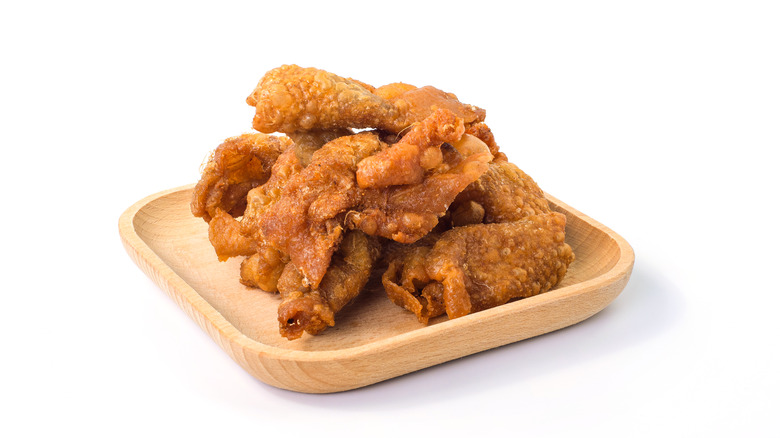
While arguably the most delicious part of Costco's ready-to-go chicken — besides the price — the skin on the bird tends to be both flaccid and slightly elastic. The skin once was crispy as the chicken spiraled on its spit towards its delicious destination, that much is certain, but as it steams in the package on your way home, it loses its bite.
That's why you should delicately remove the skin once you're in your kitchen and prepare to have your mind blown like a screaming rubber chicken. After you slice the skin into smaller sections, you have two options. In the first, you can bake the skin in a high-temperature oven for about 10 minutes. If you want even, flat shards of chicken skin, you can place a sheet of parchment paper on top of the skins and press down with another sheet pan of the same size; this will make each piece cook evenly, a dastardly dipping utensil on your hands.
Alternatively, you can deep fry these rotisserie chicken skins; they will puff up into irregular shapes, making a crunchy, schmaltzy garnish. Either way you skin it, the result is a delicious snack worthy of a BLT — try it in this crispy chicken skin, lettuce, and tomato sandwich that is to die for.
Boil a stock with the bones
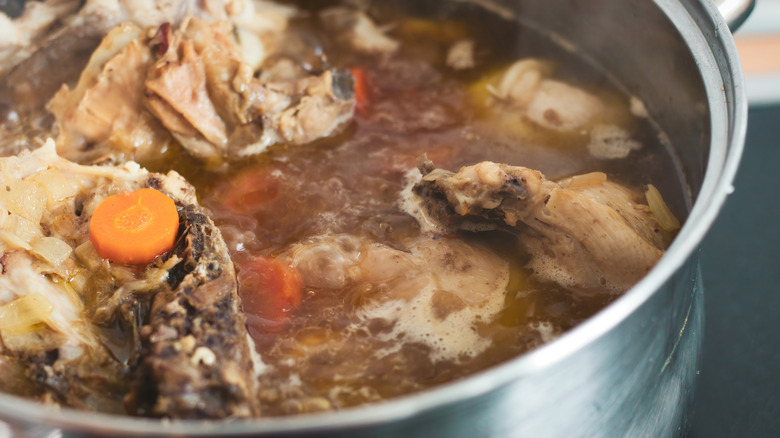
After profanely plundering all traces of meat from a Costco rotisserie chicken in one sitting, the first thing you'll likely want to do is get rid of any evidence of your irresistibly vulgar display — speaking from experience. However, future-you will be devastated if you don't catch that chicken carcass before it hits the trash can and turn it into an easy homemade stock. Because your chicken has already been cooked, there is built in flavor packed into those bones already, negating the routine need to roast your raw bones in advance.
Add in any aromatics you want, depending on the flavor route that is most attractive to you. A basic stock uses carrots, onions, and celery, along with other aromatics like garlic, peppercorns, bay leaf, thyme, rosemary, and parsley. You can boil all of this in the most ginormous pot you can get your hands on, skimming off any grey scum that floats to the top during the hours-long process. After straining, you'll be left with a culinary bounty worth all the king's gold.
To mix it up a little bit, you can add kombu, a dried kelp used to make the umami-rich Japanese dashi broth, and dried shiitake mushrooms as well. A bit of miso and even coconut milk makes a great base for soups or curries. Another lovely addition is tomato paste; just a little bit won't make your broth a "tomato" broth, but if you add more it will lean marinara. In all cases, some sort of alcohol or vinegar such as white wine does wonders for perking up flavor.
Don't toss the fat in the bottom of the container
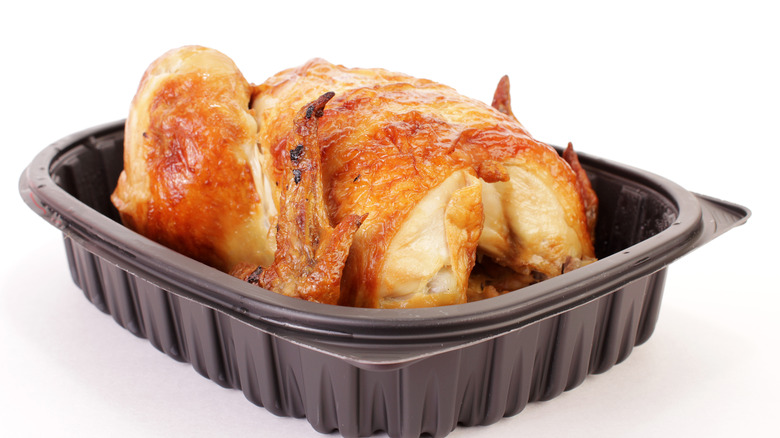
That unsightly witches' brew on the bottom of your rotisserie chicken bag is actually an undercover flavor champion. A mixture of chicken fat, collagen, and drippings, this goopy gold can be chucked into anything for a little tastebud boost. This mixture would go great in gravy, like this boozy peppercorn-Riesling iteration, which is perfect alongside a store-bought bird. It is also great added to a stock, like the one you made from the chicken bones. Add it to your pot of rice as it is cooking, for chicken flavor without the chicken.
If you can separate the buttery fat from the rest of the puddle in the bottom of the bag, then you might be the luckiest prospector in the west. This schmaltz can be used as a cooking oil, naturally, but it can also make a mean aioli. Stream this into eggs while blending with an immersion blender (you may have to supplement with more oil) and you'll wind up with a beautiful, luscious homemade mayonnaise. If it doesn't feel too cannibalistic for you, then dip your rotisserie chicken leg right in and enjoy the greatest bite of your lifetime.
Shred the breast for classics like chicken salad
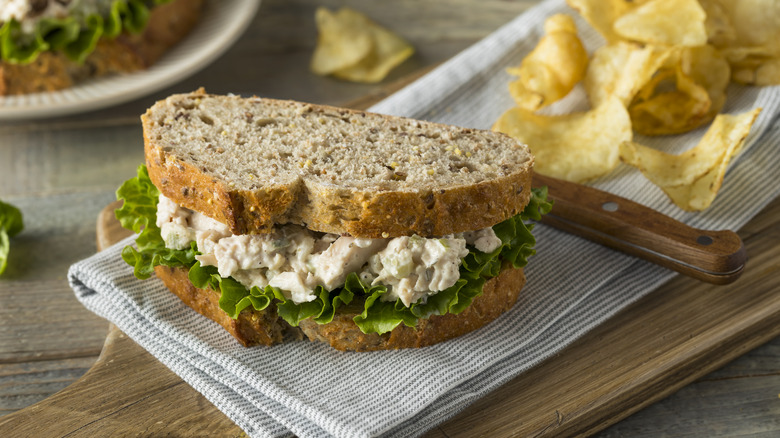
For dishes that come out guns blazing with fatty ammunition — think creamy chicken salad or cheesy chicken quesadillas — the chicken breast off of a Costco rotisserie will do the trick. It is a leaner cut of meat that won't do so well in dishes that need to cook for a while, as you'll be left with chicken on the wrong side of chewy. A dish that is quick or fresh helps keep the breast moist and flavorful.
Slice the breast from the bird and remove the skin if you haven't made chicken skin chips already. If your fingers aren't slick with chicken fat yet, they will be soon; get in there with your hands and shred the meat. Keep the chunks relatively big, as they will continue to break down in whatever concoction you're throwing together. Once again, a chicken salad is ideal here; the best cut of meat to use when making chicken salad is indeed the breast. Costco chicken is already pretty flavorful, so no need to go heavy on the salt. Do feel free, however, to add curry spices, chili crisp, or Old Bay to make a chicken salad with a little something to say.
Dark meat makes for unctuous soups and stews
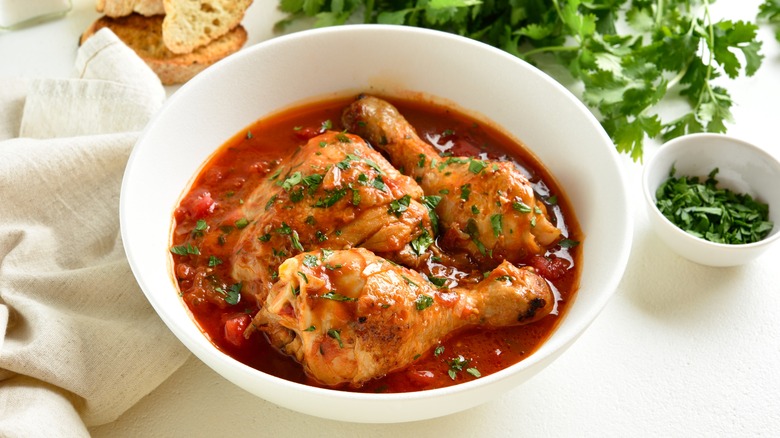
If you intend to subject your Costco rotisserie chicken to an hours-long oven- or stovetop-festival, then dark meat like thighs and legs are here for you. Free them from their bones and let them mingle with stock and aromatics on the stove, their fat permeating the stew without leaving the chicken out to dry. Your chicken noodle soup will taste even more chicken-y. Like the best things in our lives, we can thank Costco for that.
When you break down the chicken, you can keep the thighs on the bone. This will help more collagen subsume into your broth, thickening it up and flavoring it while it simmers. It should fall off the bone after its long spa in its savory bathtub. Remove the meat from the stock, and then (carefully, it will still be hot) help the meat fall right off the bones. An inspired option on the fiery side is this chicken and sausage gumbo, the gruff heat of which will happily accept an assist from buttery chicken thighs.
Grind the bones into bonemeal for your plants
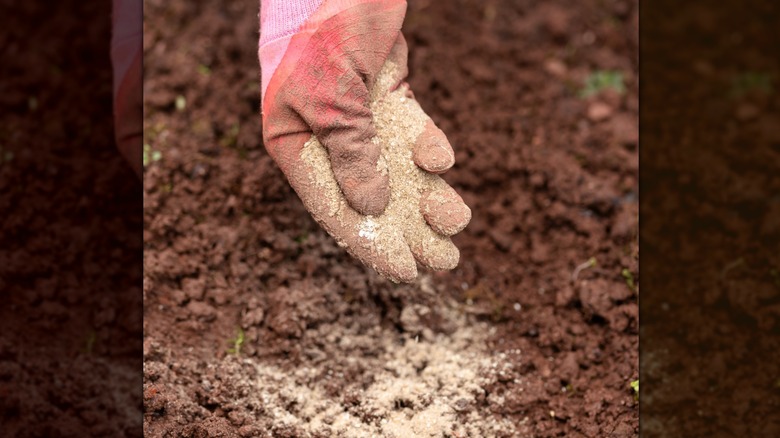
For those who want chickens out in their yard without having to take care of them, your Costco chicken can scratch that itch. No need to name the fella: chicken bones make great bone meal, which lends nutrients and minerals to the soil in your yard. In particular, bone meal is a phosphorus shot straight into the veins of your garden, which encourages root health.
Make sure your bones are relatively cleaned of any meat or gristle before proceeding. Then, you can boil these leftover bones (you're already halfway there if you made stock!) until they are soft. Once you drain them, you can process them until they are ground finely. After that, you can bake them in a very low oven to dry the paste out. This is a perfect, no-waste way to care for your plants, both indoors and out. In short, Costco rotisserie chickens are perfect for the gardeners out there.