
10 Nostalgic Mall Food Court Staples We Can Barely Find Anymore
Shifting market trends have seen malls, and subsequently food courts and the staples therein, increasingly become a remnant of bygone eras. Once integral parts of weekends, summer breaks, and the Christmas season, these former set pieces in films and television now make up the backdrop of nostalgic trips down memory lane like Netflix's "Stranger Things." While both still exist, once popular brands that could be found in malls across America have comparably become few and far between.
For some businesses like pretzel vendors or ice cream shops, buyouts have seen their locations carryon while their names were left behind in the history books. Even chains stretching back to before World War II serving up orange drinks and popcorn — once the prototype for breakfast cereal before a theatrical debut — couldn't carryon unscathed by shifts to online shopping. While the characters in "Mallrats" may have once debated what does or doesn't count as a food court offering, what isn't in dispute is the drop in reach for these businesses that once occupied malls all over.
Arthur Treacher's Fish & Chips
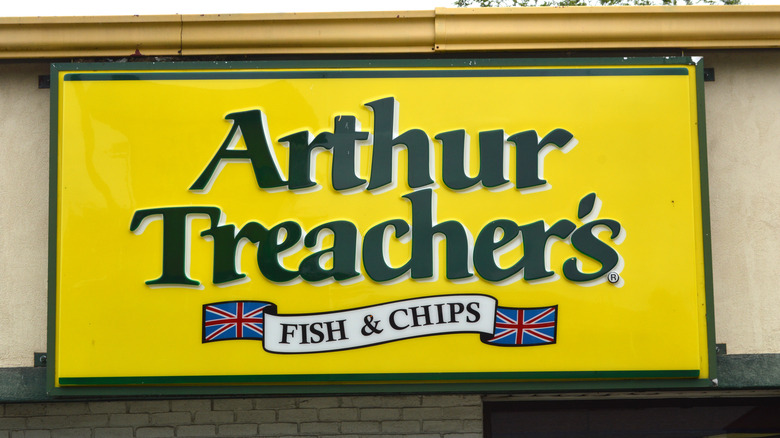
Many a fast food chain has dabbled in bringing their business to hungry mall shoppers with Arthur Treacher's Fish & Chips counted among them. First opened in 1969 in Columbus, Ohio, with influence from Wendy's founder Dave Thomas, this purveyor of primarily fried fish once boasted over 800 total locations across the country. Of those that had opened in malls, some were full restaurants while others were merely counters capitalizing on the shared seating space of the food court.
Over the years, ownership changes and mergers saw Arthur Treacher's headquarters move to Jacksonville, Florida and then to Lake Success, New York. The latter took place after the seafood restaurant that also served chicken teamed up with Pudgie's Famous Chicken in 2000. A mere six years later Nathan's Famous took control with locations offering fare from the trio of headliners. These days, at least three standalone Arthur Treacher's restaurants have been revived in the chain's home state of Ohio while the fish and chips can still be procured at less than 30 Nathan's restaurants.
Blimpie
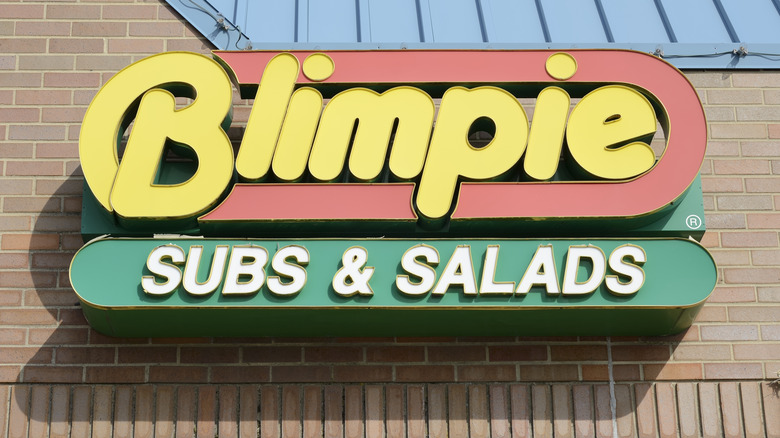
In the 1993 film "Demolition Man" that pit Sylvester Stallone up against Wesley Snipes in an imagined future California, viewers were entertained with the notion that the so-called franchise wars had resolved with all restaurants becoming Taco Bell. In reality, an actual rivalry was shaping up to see Subway walking away as the far and away victor of the sandwich wars as even with stores closing it boasts the most locations of any fast food chain in the U.S. Meanwhile, the footprint of its predecessor of one year, Blimpie, has continued to diminish.
Having first opened in New Jersey in 1964, Blimpie would peak at about 1,800 locations, dwarfing its presence as of 2025 where it had shrunk to less than 100 shops, according to Scrape Hero. Where once it was commonplace to spot one of these eateries at a mall food court, the majority of the chain's locations existed in the wild nearly two decades after Kahala-Cold Stone had further expanded its ownership of the brand by adding the roughly 300 locations owned by the separate Metropolitan Blimpie to its portfolio of almost 1,300 shops.
Bresler's 33 Flavors
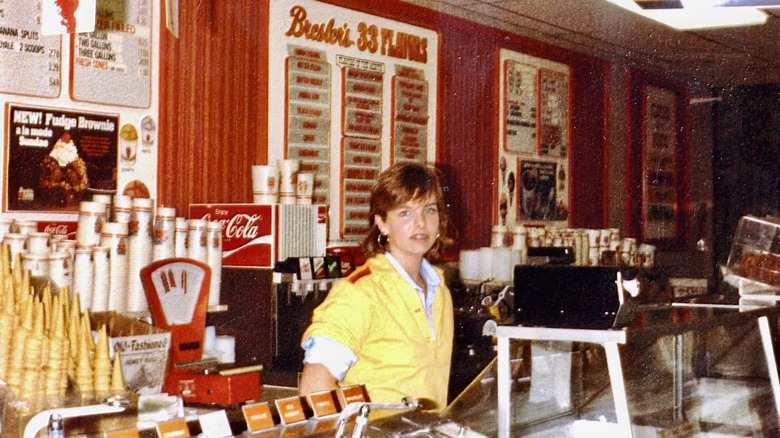
Between teens window shopping or simply loitering about, and families taking a trip to the stores, many a mall experience has been capped off with a sweet treat. For many, this once meant snagging a cone or a banana split from Bresler's. Before it became known as Bresler's Ice Cream on its way to being just a memory, the chain that once expanded to over 300 ice cream shops across the country had started in 1927 as Bresler's 33 Flavors.
After 60 years in operation, and two years after the founder had passed away, Bresler's was sold to Oberweis Dairy and took on the new name as it also went on to add frozen yogurt to its menu a few years later. Not long after, that addition became its mainstay as CoolBrands International Inc. folded the chain in with Yogen Früz stores. Remaining Bresler's were converted to CoolBrands Yogen Früz name, leaving the American original following other classic ice cream parlors that closed down. Now over 1,300 Yogen Früz shops can be found with locations in over 40 countries.
Hot Sam
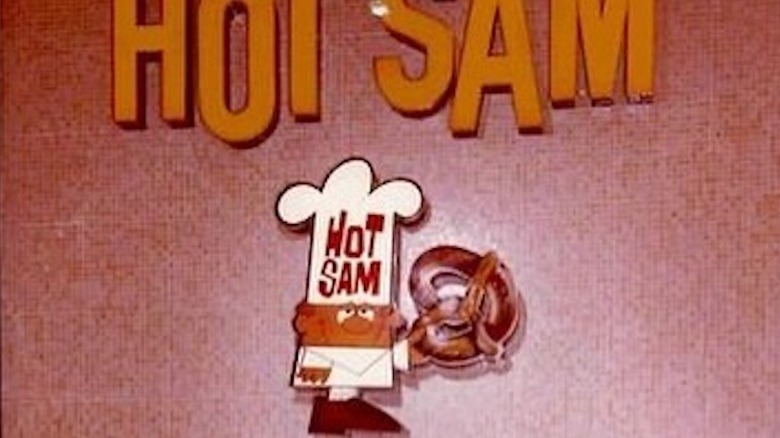
Keen-eyed observers looking for nostalgia touchstones while watching Netflix's "Stranger Things" likely perked up during the third season when the Starcourt Mall featured heavily in the story. Nestled amid the neon of the '80s, fans undoubtedly picked out the food court's inclusion of the once-popular pretzel stand, Hot Sam. This chain founded in 1966 had reached 175 malls across the country after first offering soft pretzels to shoppers at the Livonia Mall outside Detroit, Michigan.
Pretzels were served under the Hot Sam name with the squat baker mascot for nearly three decades before the prevalent mall brand Mrs. Fields purchased the chain in 1995. A year later, the cookie company also picked up Pretzel Time and made the decision to convert all Hot Sam's. Ultimately, both chains were purchased by NexCen Franchise Management Inc. which also operated Pretzelmaker. As with Hot Sam, the fate of Pretzel Time was conversion to the latter brand. That said, Hot Sam pretzels are still available exclusively to order online.
Karmelkorn
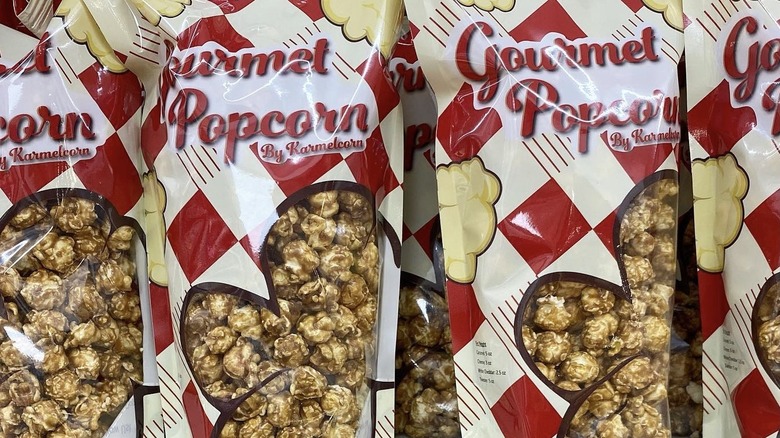
The economic downturn in the wake of the response to the COVID-19 pandemic gave modern Americans a taste of the challenges their forebears endured as the Great Depression began at the end of the 1920s. With that in mind, it's no wonder that the popcorn purveyor Karmelkorn, having survived its founding when unemployment rates skyrocketed and both businesses and banks alike failed all around it, managed to thrive for decades. In fact, nearly four decades after this Casper, Wyoming-founded business began selling candy-coated popcorn through licensing, and ultimately its own storefronts, it was picked up by the Franchise Growth Corporation.
That purchase saw Karmelkorn's reach expand to 270 stores across 43 states in little more than a decade and subsequently found Dairy Queen making the move to buy the brand in 1986. While the popcorn business was able to survive the Great Depression, recessions, several periods of war and more, its storefronts were not able to endure the mall malaise that saw traffic decline as shopping patterns shifted to virtual venues. In 2019, the last location that was coupled with a Dairy Queen and Orange Julius closed for good as other stores had shuttered by allowing leases to expire. Now, the popcorn can still be purchased online or at select retail locations under the rebranded Karmelcorn.
Kenny Rogers Roasters
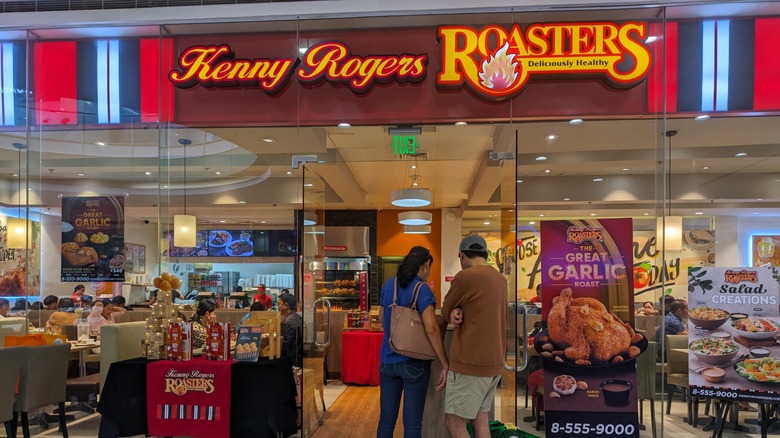
In 1991, in partnership with former KFC CEO John Y. Brown Jr., then-future Country Music Hall of Fame inductee Kenny Rogers stepped into the restaurant business with Kenny Rogers Roasters. The aim with its wood-fired rotisserie chicken was to provide a healthier option than the typical fried offerings available in the fast food industry. The concept quickly proved a success as within a few years over 350 locations cropped up across the country, often at malls.
Despite the popularity, expansion found the business in economic struggles before closing its first decade in operation. Having filed for Chapter 11 bankruptcy protection, Nathan's Famous swept in and took ownership in 1999. Still, struggles found Kenny Rogers Roasters' reach dwindling and by 2011 the last American location had closed in California. However, three years prior, Benjaya Corporation had bought NF Roasters Corp allowing for the brand established by the singer of "The Gambler" to live on and grow across Asia.
Orange Julius
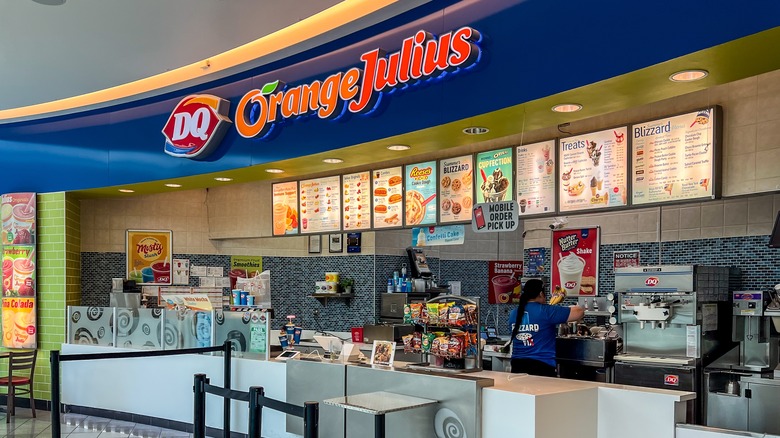
Arguably one of the most synonymous names with mall food courts, Orange Julius' roots stretch back to 1926. It was then that Julius Freed and Bill Hamlin opened their juice stand in Downtown Los Angeles. Not long after, a new blend was engineered so that Hamlin could enjoy the drink without as much acid. Thus the frothy drink for which the brand became famous was born. Just like it had purchased Karmelkorn in 1986, Dairy Queen continued capitalizing on mall markets as like other fast food chains, it grew completely different from when it first opened.
Of course, the burger and Blizzard business wasn't alone in seeing the potential to pull in more green from Orange Julius when it moved to buy the brand the very next year. A decade later, Berkshire Hathaway moved to purchase International Dairy Queen, Inc. and the deal was closed the following year in 1998. The resulting acquisition saw all Orange Julius storefronts converted to Dairy Queens that continued to sell the Golden State-born beverages.
Roy Rogers
Before Kenny Rogers would use his renown to help sell rotisserie chicken around the world, an entirely different celebrity Rogers was brought on to sell fast food at an Old West-themed restaurant. Originally operating as RoBee's Roast Beef House, a trademark infringement lawsuit from Arby's found the King of Cowboys himself, Roy Rogers, signing a licensing deal to keep the burger, roast beef, and fried chicken business going.
Following its founding in the 60s, Roy Rogers had grown to nearly 650 locations, including in many malls across America, before it traded hands from Marriott to Hardee's. Much of those restaurants would see conversions to the new owner's brand while other locations were sold off to competing chains. By 2025, more than two decades after a concerted effort to bring the restaurant known for its Fixin's Bar back to prominence, family franchisees Jim and Pete Plamandon Jr. managed to grow Roy Rogers anew to about 40 locations across five states as it joined other old-school restaurant chains on the way back.
Sbarro
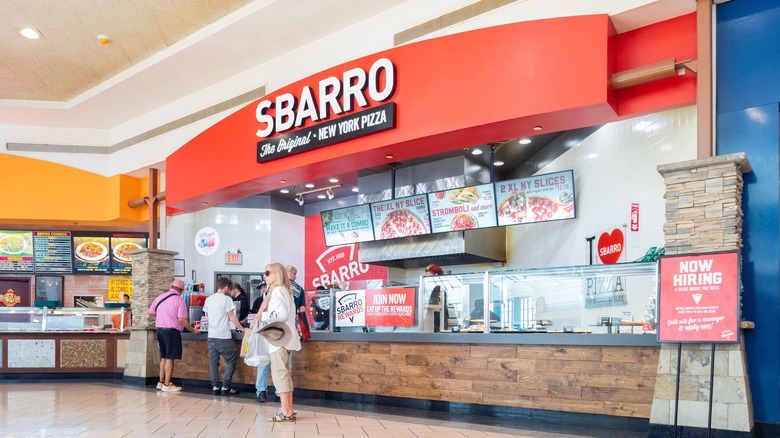
Competing palettes and preferences have long argued over who makes the best slice of pizza, be it broad regional debates between the likes of New York and Chicago or localized community disputes about particular pizzerias. Amid those pie arguments, one Brooklyn-born Italian grocery store would grow beyond its Bensonhurst roots to be a fixture in malls across the country. After opening in 1956, Sbarro Salumeria began to expand and introduced its first slice-selling storefront to malls with a location in its home borough's Kings Plaza Shopping Center in 1970.
In addition to seeing its original storefront shuttered in 2004, restructuring efforts a decade later meant the closure of over 300 locations, amounting to roughly half of Sbarro's business at the time. Prior to the move that kept it from becoming like other old-school pizza chains that vanished, Sbarro had already begun shedding from its peak of more than 760 locations. As with other eateries, the change in buyer behavior had stifled sales at malls to bring about the needed downsizing.
TCBY
Otherwise known as The Country's Best Yogurt, TCBY's former footprint far exceeds that of many other mall food court staples combined. After opening its first location in Little Rock, Arkansas in 1981, the frozen yogurt brand peaked with expansion to nearly 3,000 storefronts across the world. It's great success brought with it an even greater fall as more than four decades after it began doling out the cold treats, less than 130 locations remain throughout the United States.
The downward trend for the frozen yogurt titan happened in earnest within a decade after it was acquired by Mrs. Fields in 2000. The parent company went through bankruptcy filings, the first of which happened in 2008. Only a few years later, Mrs. Fields Famous Brands found itself refinancing to steer clear of a similar outcome by trading debt for controlling interest with investors The Carlyle Group and Z Capital Partners. Following that, those brands were acquired by Pearl Street Equity LLC in 2023.