

9 Ways You Can Cook Scrambled Eggs, Ranked
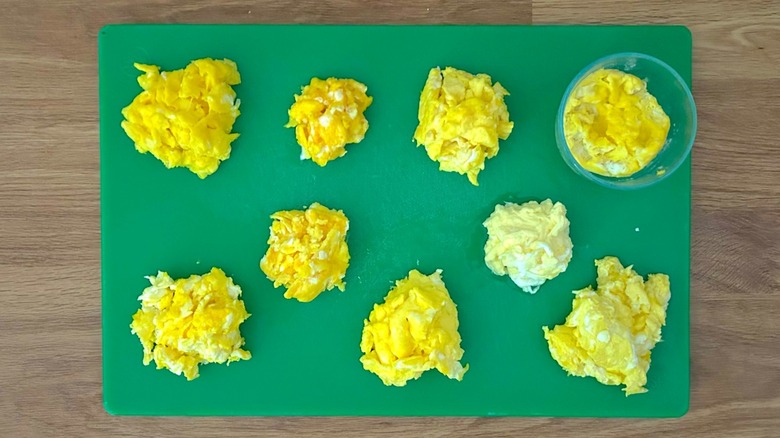
When it comes to quick, easy, high-protein breakfast options, scrambled eggs are something of a gold standard. While they seem simple enough to make, there are a number of mistakes you can encounter when making scrambled eggs that can make or break them, pun intended. Among these are failing to use fresh eggs, not using enough fat, and forgetting to stir them as they cook.
Even when avoiding these basic errors, there are still several factors to consider when attempting to produce light, fluffy scrambled eggs, from how you whisk them to what liquid to add to them. And, believe it or not, there are a few unusual methods for making scrambled eggs that might surprise you. From using alternative appliances to cook them, like an air fryer or microwave, to adding various ingredients to help bind them and give them a lighter texture, like cornstarch or alcohol, these techniques may surprise and inspire you — or turn you off completely.
We decided to test out these different ways of cooking scrambled eggs to see which worked best and which aren't worth the time or effort. Not only were we shocked by the results, we frequently found ourselves questioning who decided some of these were even a good idea to begin with. So which scrambled egg cooking method ultimately came out on top? Read on for the full ranking.
9. In boiling water
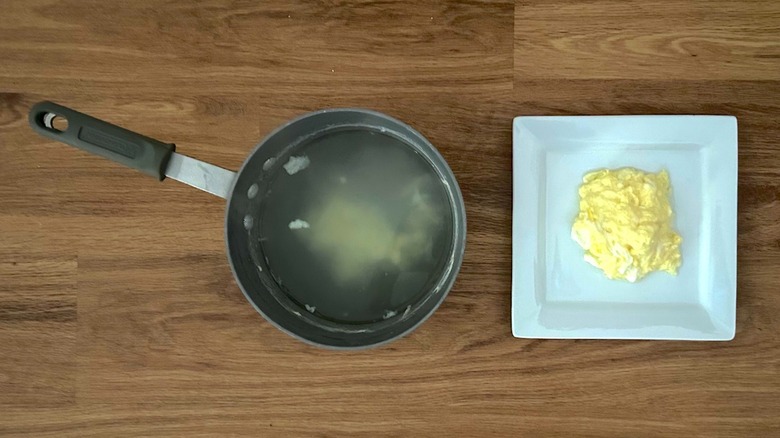
The absolute worst way to cook scrambled eggs hands down was in boiling water. This technique seems like it would be a good idea in theory, especially if you're looking for a lightning fast technique for making scrambled eggs, but in practice, it was quite literally a hot mess.
Again, the basic technique is sound on paper. It involves bringing a pot of water to a boil on the stove top and stirring it until it begins to swirl around like the water in a hot tub. The whisked eggs are poured into the pot and allowed to cook until set, approximately a minute or two, before they are retrieved using a slotted spoon.
What resulted from this method can only be described as snot-like. There's no other word to accurately depict what this both tasted and felt like texturally. They were practically mush and had zero semblance of egg flavor. It was also virtually impossible to strain out enough water from the gloopy mass of eggs to make it hold together in any capacity. In short, don't waste your time with this method. It's a total bust.
8. In an air fryer
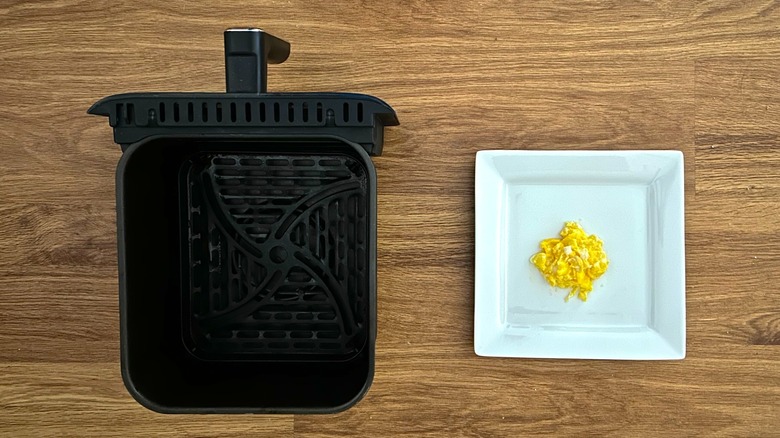
The air fryer is one of the most revolutionary appliances to hit home kitchens. Not only are these mini convection-like ovens incredibly versatile, they are typically quick and easy to use. I had high hopes for preparing scrambled eggs using the air fryer, thinking they might turn out well and wouldn't require much effort, I was grossly mistaken.
For this method, the whisked eggs are poured into an oven-safe pan, nonstick skillet, or aluminum foil greased with cooking spray or butter that fits into the air fryer basket. The unit is set to 350 degrees Fahrenheit and the eggs are stirred every minute or so until they have completely set. This generally takes about 5 minutes, though the exact time may vary depending on your air fryer unit.
Because you have to stir the eggs every minute or so, the technique isn't especially hands off, nor is it much quicker than cooking scrambled eggs on the stovetop. What's more, no matter how much you grease the pan, the concentrated heat of the air fryer makes the eggs stick. About half the volume of the eggs ended up adhered to the pan and the rest never quite set up right, though they tasted fine. Overall, this method was more trouble than it was worth, and the results were inferior to any of the remaining methods.
7. In the microwave
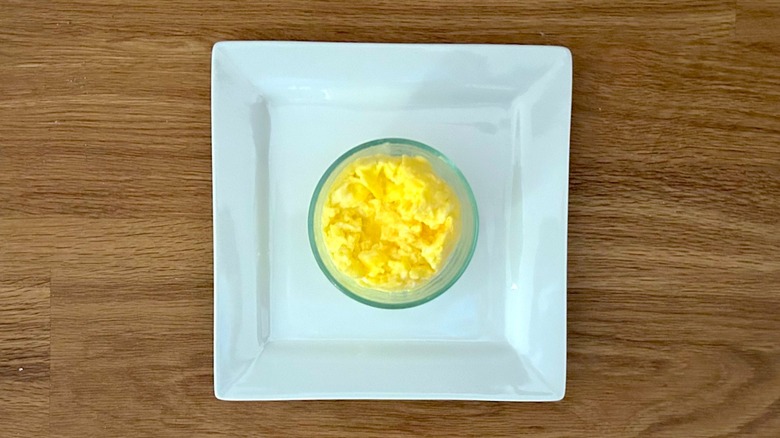
Though I don't love the microwave for cooking most things, I recognize that it is capable of expediting a lot of the most basic tasks in the kitchen, including cooking a single serving of scrambled eggs. For this technique, a ramekin or oven-safe dish is greased with cooking spray and the eggs are added to it before being nuked for 30 seconds at a time. The eggs are stirred between each interval until they are completely set.
While the microwave can produce scrambled eggs in just over one minute, they aren't particularly good. As they cook they start to puff up, like a soufflé, which sounds like it would produce a light and fluffy texture, but this wasn't the case. The finished eggs were dense, dry, and rubbery. They also had zero flavor. It was as if the microwave itself cooked the taste right out of the eggs.
Perhaps the one way this method might work is when other ingredients are added to the eggs, like shredded cheese, roasted vegetables, or crumbled bacon. This would help keep the eggs moist and would add a boost of flavor that is very much needed. Otherwise, I'd skip the microwave and stick with some of the more reliable methods below.
6. In the oven
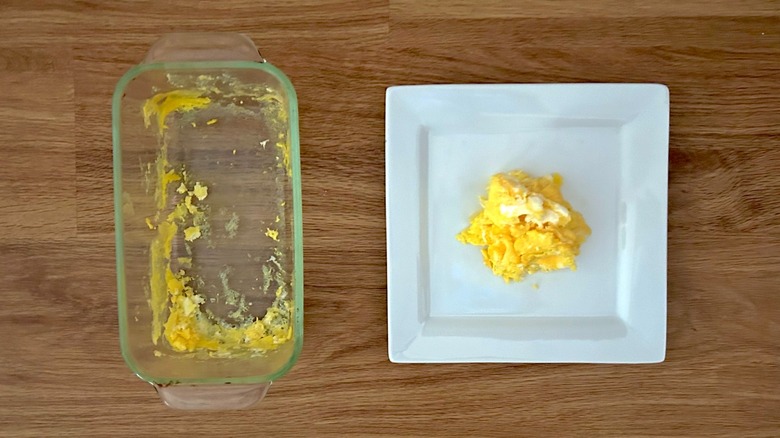
On its face, the oven seems like a good idea, especially if your stovetop is occupied with making other brunch dishes like pancakes or French toast — it can free up some valuable real estate and generally requires less active cooking. However, this isn't exactly what happens with oven-baked scrambled eggs, which is why they wound up here.
To make scrambled eggs in the oven, start by preheating the oven to 350 degrees Fahrenheit. Grease a baking dish with cooking spray and add the whisked eggs to the vessel. The eggs are cooked until they just begin to set, at which point they are stirred together, scraping the bottom and sides of the baking dish. The eggs are returned to the oven and this is repeated as many times as needed until they are completely cooked, which generally takes about 15 minutes.
Perhaps the biggest issue I have with this method is that it takes a long time and isn't a hands off method — you need monitoring to ensure the eggs don't set too quickly or burn. I also felt the eggs ended up somewhat dry and they stuck to the baking dish even though it was generously greased. The only instance where this method might make good sense is if you are preparing a large batch of scrambled eggs for a gathering and don't want to make them in batches on the stovetop.
5. With cold butter
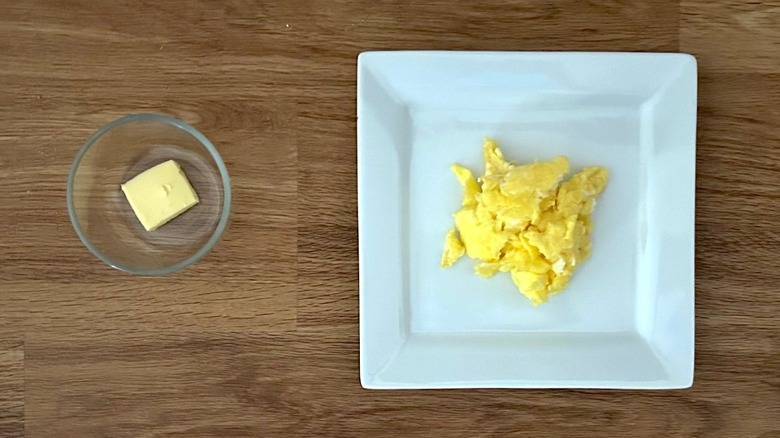
When most of us make scrambled eggs, we do so in a pan of melted, hot butter. While this works well, one school of thought suggests that this may be a mistake and can mess up your scrambled eggs. According to some experts, adding butter to the pan and heating it up can result in the eggs taking on unnecessary color and a somewhat burnt flavor that will taint their inherent egginess. The solution is laying off the heat to begin with.
To execute this method, the eggs are whisked together and added to the cold pan along with the cold butter. These are heated together over a medium-low temperature and carefully cooked low-and-slow to prevent the eggs and butter from browning and give them a velvety texture.
For the most part, this method was effective, though the eggs did cook somewhat unevenly, leaving them dry in some spots and creamy in others. It also took somewhat longer to make than more conventional methods. That said, they tasted good and I did appreciate the eggs having a brighter yellow hue. I'd definitely repeat this method, even if it wasn't among the higher-rated techniques.
4. With wine
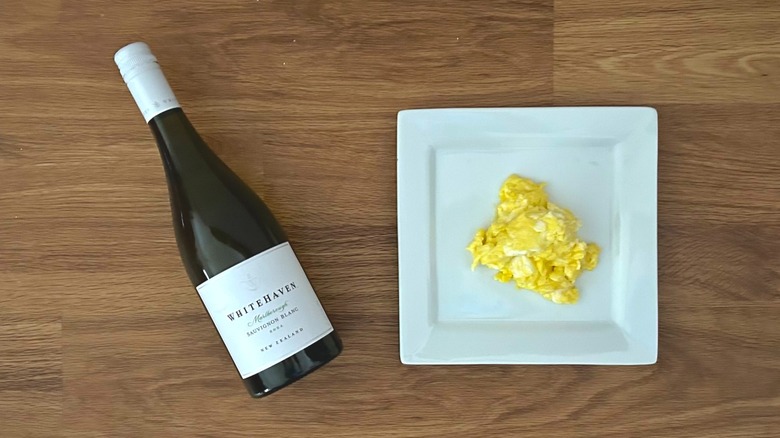
If day drinking is your thing, listen up, this method is for you. This technique involves adding a splash of that leftover wine from last night's dinner into your egg mixture before scrambling them up. This boozy upgrade is a great way of jazzing up scrambled eggs and improving their texture, but there's a catch.
The basic technique involves mixing two whole eggs with roughly a teaspoon of wine before cooking them in butter the conventional way. Theoretically, the wine will impart a vibrant flavor while helping to lighten the eggs up. The key is using the right kind of wine. This is the opportune time for a crisp, acidic, dry white wine that isn't assertively sweet and doesn't have a distinctive flavor. A simple sauvignon blanc or pinot grigio is a good bet.
Though I was slightly concerned that the aroma of wine was abundantly obvious in the finished scramble, I was pleasantly surprised that you couldn't really taste it. The eggs simply tasted eggier and they had a delightfully airy mouthfeel. My primary reservation — and why I didn't rank this method higher — is that it isn't suitable for all audiences, as not all the alcohol will burn off before the eggs are finished cooking. Otherwise, I thought they were delightful.
3. With mayonnaise
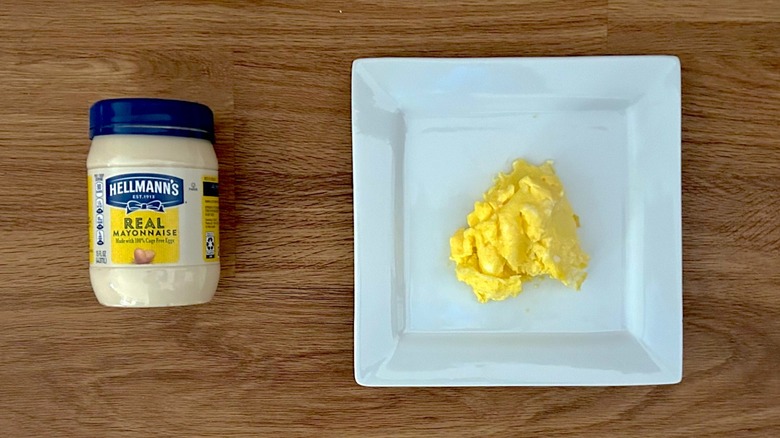
Regardless of what he is cooking, Alton Brown takes a scientific approach to things, and that includes scrambled eggs. His secret to success with scrambled eggs is to augment them with just a teaspoon of mayonnaise. This might sound bizarre, but there's sound reasoning for the method, and the end result is quite delightful.
Mayonnaise is basically a mixture of egg yolks and vinegar or lemon juice, which are emulsified together with oil. When this rich and velvety mayonnaise is added to whisked eggs, they become even creamier and airier, which is a win. And although a teaspoon seems like it isn't enough to make a difference, it works like a charm without overwhelming the flavor of the eggs.
I was extremely skeptical when I tested this method. I needn't have worried, though, as the eggs were fantastic. They were indeed moist and airy, and the flavor was still egg-forward. That said, there was a hint of acidity in the aroma and taste that lingered, which isn't necessarily a dealbreaker, just something to be aware of. While I'd definitely suggest this method over adding wine for the simple reason that not everyone can consume alcohol, it didn't quite live up to the scrambled egg methods to come.
2. Mixed with cornstarch
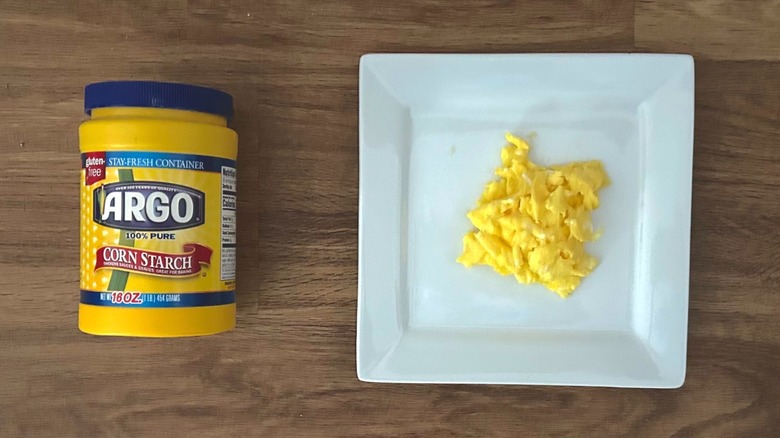
Cornstarch often makes an appearance in the most bizarre places in the kitchen. It can be used to tenderize baked goods, thicken sauces, and to give meat a smooth, velvety texture in stir fries. One use that is perhaps less well-known is adding cornstarch to scrambled eggs to help make them fluffier and smoother. This method involves preparing a cornstarch slurry from equal parts water-to-cornstarch. The slurry is gently whisked together with the eggs before they are cooked using the conventional stovetop method in a pan with hot butter.
While the culinary expert in me understood the logic behind why this method would likely work, I was wholly unprepared for how good these eggs actually were. They were incredibly airy and had a firm, yet delicate texture. They were moist, satiating, and cooked uniformly better than most of the other methods. What's more, while I was concerned about the flavor of the cornstarch lingering and masking the eggs, I didn't need to be. They tasted perfectly eggy and the cornstarch was undetectable. This is a great method that I would be especially pleased to implement when making a larger batch of eggs. The only reason it didn't land in the top slot is that it does require one extra step and for someone seeking simplicity in the morning, this may be more effort than they wish to invest for breakfast.
1. Without whisking them
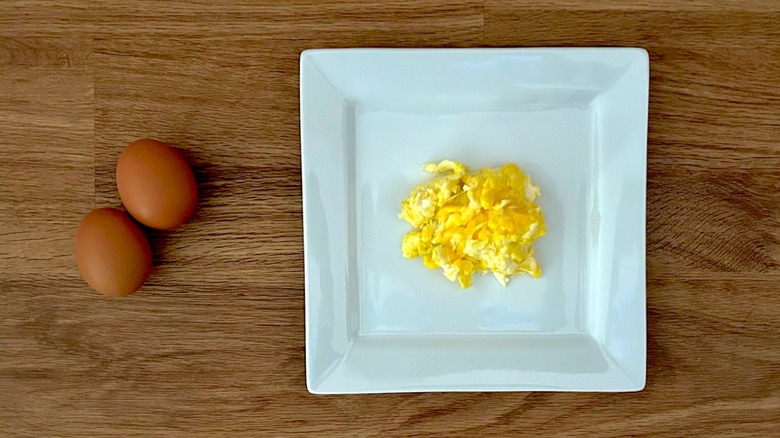
The final method for making scrambled eggs that I tested was one that Gordon Ramsay has long been a fan of. This involves cracking the eggs directly into the pan rather than pre-whisking them before they are cooked in butter over a lower heat in a nonstick pan. The eggs are gently stirred using a rubber spatula until they set up before they are served.
What sets this method apart from the others more than anything is its simplicity and the fact that it saves you a little extra time and effort in the morning. All that is good, but only if the results are noteworthy — and they were. Though the scrambled eggs weren't as well-combined as the others, with pockets of egg yolks and whites visible in the finished product, they excelled in texture and flavor. These eggs were perfectly light and fluffy and tasted the most eggy of the bunch. They were absolutely spot on and I would highly recommend this method to anyone wanting to streamline their breakfast egg-making routine without sacrificing taste or mouthfeel.
Methodology
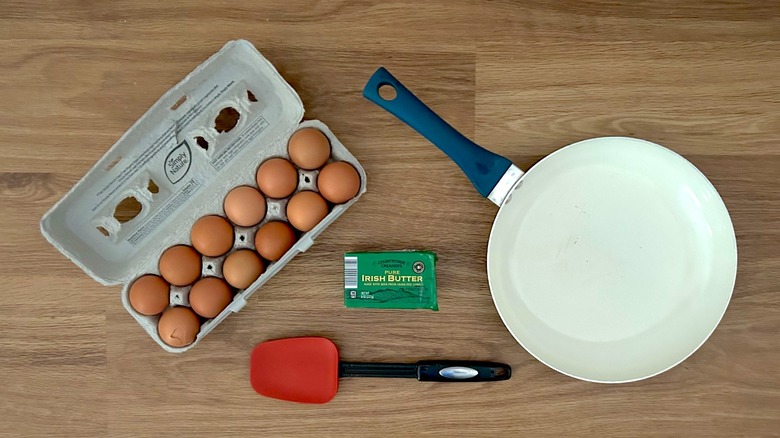
To test these various methods for making scrambled eggs, I started with the highest quality, cage-free, organic, fresh eggs. Each method was tested with two whole grade AA eggs. These were pre-whisked using a teaspoon of water (unless another liquid is specified in the cooking method), and the eggs were cooked in ½ tablespoon of salted Irish butter (again, unless otherwise indicated by a method).
All of the eggs were sampled in succession as they were prepared while hot to get the best flavor and texture impressions. Each method was assessed based on ease of preparation, effectiveness, appearance of the final scramble, texture, and overall flavor.
Though I ultimately determined the final ranking order, I did factor in the opinions of my partner to see if they were in agreement. I've been a professional chef for nearly two decades and ran a bed and breakfast, so eggs were my specialty, making me something of an expert on the matter. In general, we were both in alignment in our overall conclusions.