

10 Myths About Searing Steak (And Why It Really Matters)

There is no sound more quintessentially culinary than the sizzle of a steak meeting a hot pan. When executed with precision, it's a promise of what's to come: a savory, bronze-crusted masterpiece. Yet this fundamental process is often guided by a collection of persistent myths, passed down through home cooks and grilling enthusiasts. We've all heard the maxims: get that pan screaming hot, never turn the steak more than once, and, above all, you must seal in the juices. But what if this age-old advice is actually holding our steaks back from achieving their full, unctuous potential?
To separate culinary fact from fiction, we consulted Dave Yasuda of Snake River Farms, an expert whose work is dedicated to the science and craft of beef. Together, we'll dismantle the ideas that keep home cooks from that elusive restaurant-quality crust. This list goes beyond instruction to explain why proper technique matters. The goal: to empower you to surpass anecdotal advice and master the method yourself.
Bring your steak to room temperature before cooking
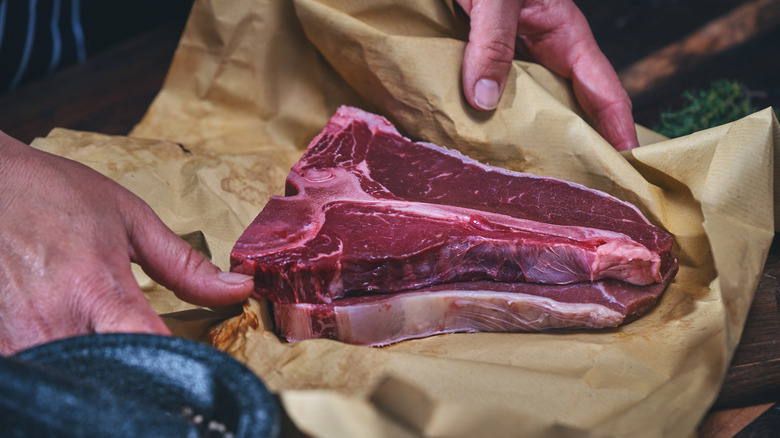
Few pieces of culinary advice are as universally dispensed as the directive to bring a steak to room temperature before it touches heat. The logic seems correct: A warmer steak might cook more evenly and develop a superior sear. This notion, however, crumbles under scientific scrutiny. According to Dave Yasuda, "This sounds like good advice, but allowing a steak to sit at room temperature doesn't provide any significant change to the finished product."
The reality behind this steak myth is that a 20- to 30-minute rest on the counter is virtually futile. In that time, the internal temperature of a refrigerated steak rises by less than 1 degree Fahrenheit. This is a negligible difference when that steak is about to confront a scalding-hot cooking surface. Achieving a true room-temperature interior would require hours, unnecessarily inviting pathogen growth. The temperature differential of a chilled steak can even work in your favor, allowing you to build a flavorful crust without overshooting the desired internal doneness.
You can cook a steak straight from the package
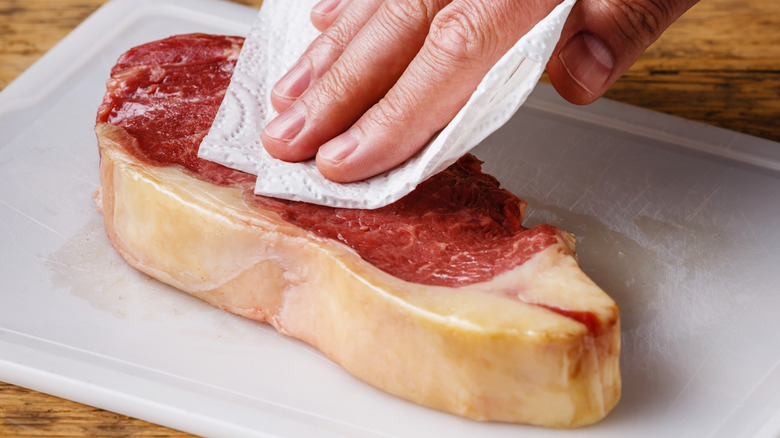
The convenience of sliding a steak directly from its store packaging into a hot pan is a tempting shortcut, but it is a guaranteed method for firing off a steamed, gray exterior. The fundamental science of searing, known as the Maillard reaction, cannot occur efficiently in the presence of surface moisture. The packaging that protects your steak also betrays it, trapping a layer of condensation that acts as a heat sink.
Think of it this way: Your pan's initial, intense thermal energy (the same energy needed for browning) must first boil off excess moisture, effectively steaming the meat instead of caramelizing the surface. By the time the surface is dry enough to sear, the window for ideal internal doneness has likely passed. The result is a dull outside and an overcooked inside.
Dave Yasuda explains, "A perfect sear requires a dry exterior. The more surface moisture, the more difficult it is to develop an appetizing sear." The solution is simply to "remove surface moisture with a paper towel or clean kitchen cloth." As it turns out, one of the most effective steps you can take for a perfect crust requires no heat at all.
You should only salt a steak right before cooking
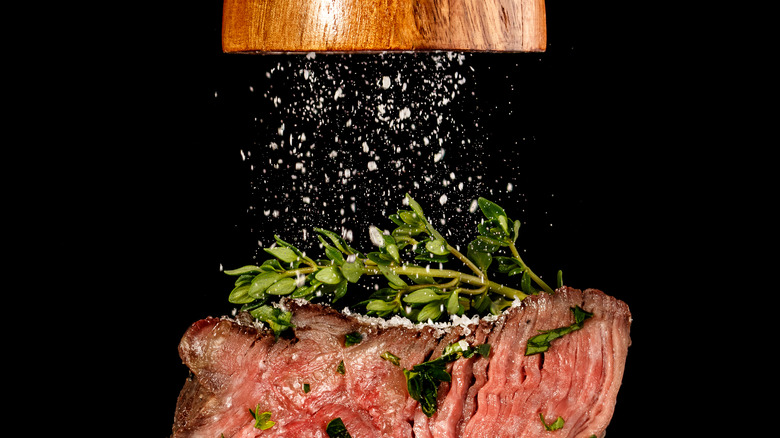
Everyone knows salting a steak is imperative, but the moment you apply it makes all the difference. A sprinkle before the steak goes on the grill flavors the outside, but does nothing for the inside. And while salting just before cooking is common, it ignores the science of osmosis. In fact, the worst time to salt is 10 to 30 minutes before heat is introduced. That's when the salt has only begun to draw moisture out of the steak. You're left with a damp surface that steams instead of sears.
For a truly next-level steak, timing is everything. Salting at least 40 minutes (and ideally several hours) before cooking allows the salt to penetrate into the muscle fibers, seasoning the steak from the inside out. Dave Yasuda goes a step further: "The absolute best way to really nail this is to generously salt the exterior of the steak and leave it uncovered in the refrigerator overnight. This creates a dry-to-the-touch surface and has the benefit of allowing the salt to penetrate the immediate exterior of the steak."
This process, known as air-drying or dry-brining, transforms the steak's surface. By allowing air to circulate around the meat, moisture evaporates, flavor concentrates, and a proper sear can be expected upon contact with heat. But if you're short on time, then simply salt after cooking and resting the meat for a bright, clean hit of salinity on the crust.
You must use a grill to get the best steak
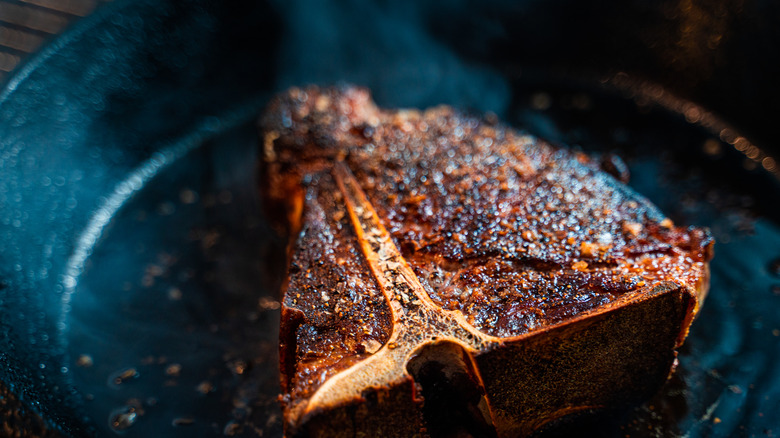
While grilling over an open flame delivers an undeniable, primal appeal, it is not the sole path to steakhouse perfection. When the goal is a precise, full-spectrum sear with a deeply caramelized crust, a heavy pan is the superior tool. The reason is one of pure physics: A flat, preheated cooking surface provides uninterrupted contact across the entire surface of the steak. This ensures efficient, even heat transfer, allowing for a consistent and complete Maillard reaction. On a grill, the meat bridges the grates, leaving the sear pattern interrupted and the valleys between the bars less developed.
This is why many professional chefs, when seeking the ultimate crust on a premium cut, reach for a skillet. While carbon steel handles high heat well, the pan of choice is none other than one made of heavy cast iron. This material is not prone to warping like some other pans and offers a level of control that is difficult to replicate over a flame. Moreover, cast iron can withstand a prolonged preheat, a recommended first step that promises a perfect crust.
Searing seals in the juices
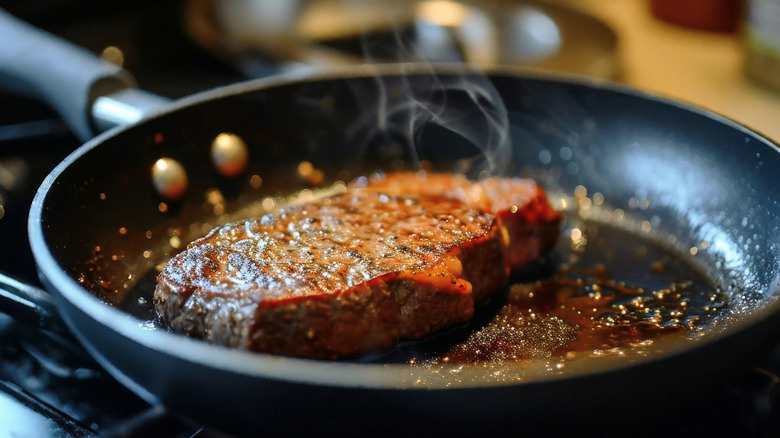
Arguably the most famous steak myth, the notion that a quick, hot sear creates a moisture-proof barrier is a culinary anecdote that won't die. The reality, confirmed by food scientists and online food sleuths alike, is that searing does not seal in the juices. Instead, the intense heat of the pan actively forces moisture (particularly water and the protein myoglobin) out of the meat. If you've ever seen a steak release liquid into a hot skillet, you've witnessed this myth evaporate before your eyes.
So what's all the fuss about searing? The answer is very simply about taste. The primary and irreplaceable benefit of touching meat to a hot surface is the development of profound flavor through the Maillard reaction. This complex chemical process generates flavor compounds and a desirable full-surface texture gradient. As chef Chris Young demonstrates on TikTok, a seared and sous vide steak loses more moisture than one that is simply sous vide. The sear matters, but not as a lock. Instead, consider it an engine of flavor.
A ripping hot pan is the only way to sear
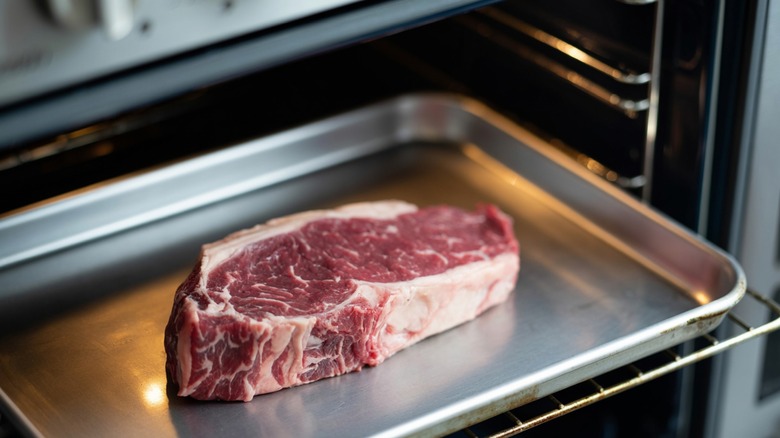
The oil-slicked chaos of kitchens worldwide has cemented the image of a steak meeting a sizzling pan as the path to a perfect sear. While this direct method is a classic for good reason, it is not the only one that demands respect. For a thick-cut steak, like a hefty ribeye or an expansive porterhouse, a more patient and controlled technique often yields a superior result. The now-revered reverse sear inverts the traditional process, beginning with gentle, indirect heat and arriving at a high-temperature blast to finish the steak off.
This method prioritizes even cooking across the entire cut. By slowly bringing the steak up to its target temperature in a low oven (250 to 275 degrees Fahrenheit), you avoid creating a large band of overcooked, gray meat just beneath the crust. The steak cooks uniformly and makes way for a final, intense sear to be applied quickly before the rest.
Any fat is fine for searing
Achieving a proper sear is a function of thermal chemistry, and it begins with selecting the correct cooking fat. Reaching for the nearest bottle, whether it's olive oil or melted butter, is a misstep that will fill your kitchen with smoke and impart bitterness to your steak. The science is simple: Searing requires temperatures that surpass the smoke point of many common fats, which causes them to burn. The goal is to conduct intense heat to the meat's surface, not the ambient air around it.
Every fat has a specific temperature when it breaks down, combusts, and produces harmful compounds. The key is to select a fat that can act as a stable conductor. "Use a neutral oil with a high smoke point in order to heat the skillet as high as possible. Some examples of oils to use include refined avocado oil (about 520 degrees Fahrenheit), safflower oil (about 500 degrees Fahrenheit), and grapeseed oil (about 480 degrees Fahrenheit)," suggests Dave Yasuda. These oils create the essential nonstick surface and efficiently transfer fierce heat to the meat.
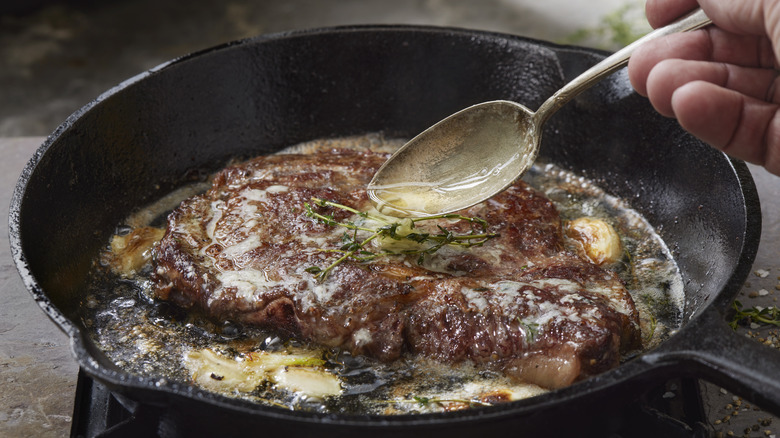
Flavorful fats like butter have a distinctive subsequent role. "Basting your steak in butter at the end of the cook adds flavor, but don't use butter as the initial searing agent," advises Yasuda. "Searing requires high heat, which will cause butter to overheat or burn, which creates off flavors." While steak is the star of the show, it's the correct fat that allows the sear to happen at all.
Never flip your steak more than once
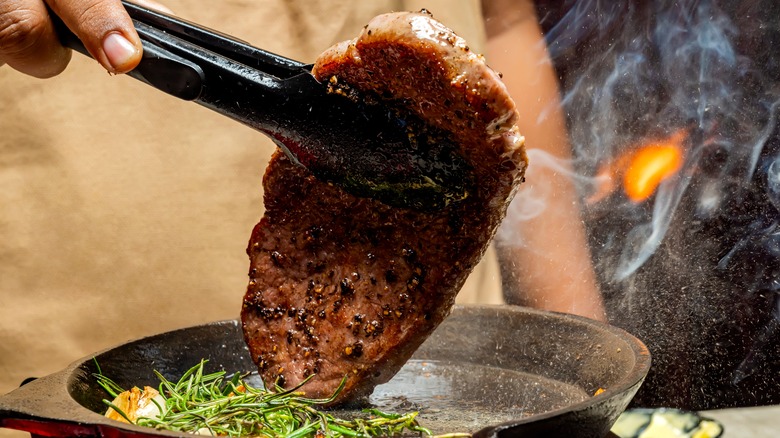
One of the most persistent myths of steak cookery is to leave the meat undisturbed after it hits the heat, flipping it only once to achieve a perfect one-sided crust. This well-intentioned but flawed logic assumes that constant contact is the only path to browning. But experts are leaning in the other direction these days, suggesting that flipping affords greater control. The concern is that concentrating heat on one side can give way to a thick, overcooked gray band of meat under the surface while the center remains underdone.
Dave Yasuda has no issue going against the tide: "Many steak guides warn against flipping a steak more than once, but flipping actually provides a more even cook and a better exterior crust." Consider the science: By turning the steak at intervals, say every 30 to 60 seconds, you create a more uniform thermal environment. Each side receives brief bursts of high heat, thereby accelerating the Maillard reaction without localized scorching, and this yields a faster and more complete cook. Try it yourself with any number of cuts, from a thick ribeye to a delicate tenderloin.
A single medium-rare temperature is perfect for all steaks
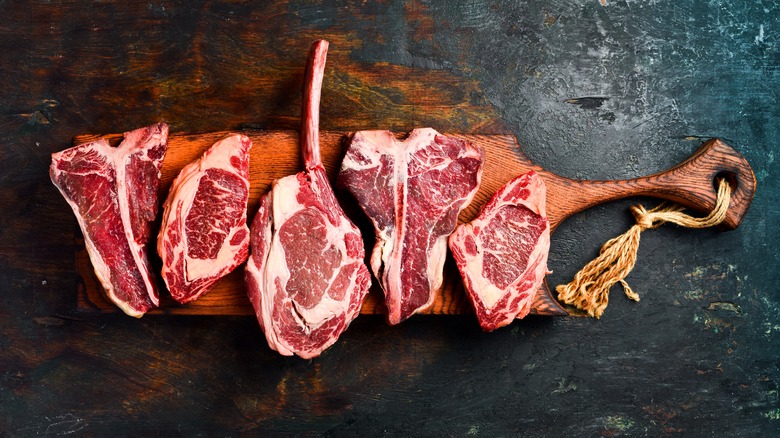
The pursuit of a flawless steak is often reduced to a singular temperature. Yet applying one uniform standard of doneness to every cut is a fundamental misunderstanding of meat composition. The architecture of beef is built from muscle and fat, and each cut of meat exhibits its own ratio of lean to fatty. That variable is known as marbling: those intricate webs of intramuscular fat that must be gently liquified to unlock tenderness and enhance flavor.
Dave Yasuda tells us what to look for: "Consider the amount of intramuscular fat in a steak before cooking it. This is based on the type of beef and the cut. A lean steak, regardless of the type of beef, does not contain a high degree of marbling, so temperatures around 120 to 130 degrees Fahrenheit will produce a nice medium-rare finish. A marbled cut like a USDA Prime ribeye benefits from a higher temp, like 130 degrees Fahrenheit. On the other hand, a [Snake River Farms] Gold steak with marbling several tiers above USDA Prime requires a bit more heat (135 degrees Fahrenheit) to fully render the intramuscular fat and produce tender results."
The goal is to honor the unique composition of each cut. For the best precision, use an instant-read thermometer to calibrate fat content to the desired completion. And be sure to understand the nomenclature of steak temperatures to better prime you for the ultimate finish.
Letting the steak rest is optional and doesn't do much
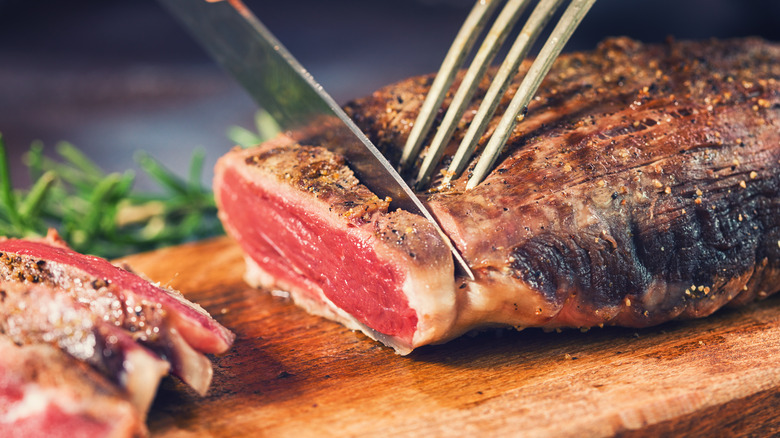
Few will argue the temptation to cut into a steak the moment it leaves the pan, and yet this impatience is perhaps the most costly error when serving up a tasty cut. Instead, consider the resting phase to be the final, critical act of cooking a steak.
Conventional wisdom holds that resting allows muscle fibers to relax and reabsorb expelled juices, a process long-championed by experts (even Anthony Bourdain). Dave Yasuda is among them: "Resting a steak is a critical step to produce excellent results. This allows the internal temperature to equalize, allows the muscle fibers to relax, and [allows] the juices to be reabsorbed. For small steaks, allow five to 10 minutes. For larger steaks, like the tomahawk, rest for 15 to 20 minutes."
Yet the science of resting meat has evolved to offer an alternate understanding of the mechanics at play. Chef Chris Young provides a compelling explanation centered on physics rather than biology. He argues that the visible juice loss when cutting a hot steak is primarily a matter of vapor pressure. The hotter the meat's interior, the more energy its moisture possesses, and that in turn creates higher internal pressure. As the steak rests and cools, the vapor pressure subsides dramatically. Whether explained through fiber relaxation or fluid dynamics, a proper rest is critical for a steak that is evenly warm, structurally sound, and fantastically delicious.