

Forget Lemon Juice: The Spice That Brings Bright, Tangy Flavor
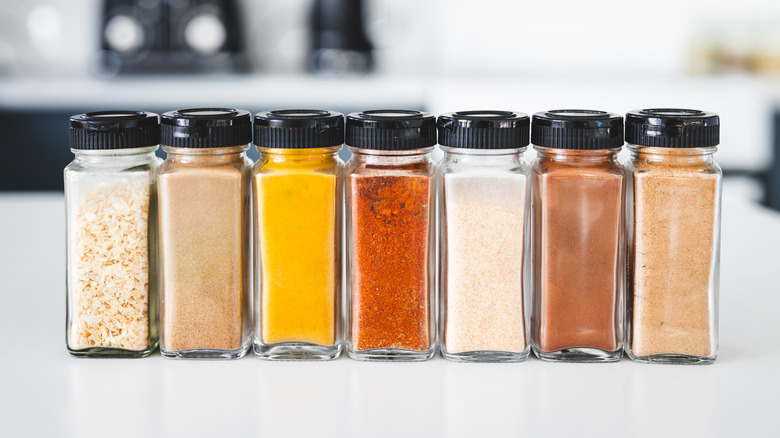
Elevating a meal from good to downright delicious all starts with thoughtful seasoning, each of which has a purpose; Bobby Flay says that salt and pepper lay the foundations, others bring a deep and comforting earthiness while some brighten and lift a dish entirely. Falling into the latter category is lemon juice, with just a small squeeze being all you need to bring the hidden flavors of your dish to life. But this citrus fruit isn't the only way to brighten a dish. One seriously underrated spice that's been adding lemony tartness to food for roughly 2,000 years is sumac.
Sumac is a spice beloved around the world that's criminally underused in many Western kitchens. It's important to note that we're discussing sumac as a seasoning, so we'll be focusing on the Mediterranean-slash-Levantine species rather than the North American variety (aka staghorn or smooth sumac). Before it's ground into a powder, sumac starts out as clusters of small, berry-like fruits (technically drupes) that grow on shrubs and small trees in the genus Rhus. While sumac is most commonly associated with Levantine cuisine, species of Rhus grow naturally across the Mediterranean, Africa, Asia, and even North America, so it has managed to work its way into countless cuisines. Its uses are incredibly varied, and over several millennia, everyone from the ancient Romans to Native Americans has put it to work.
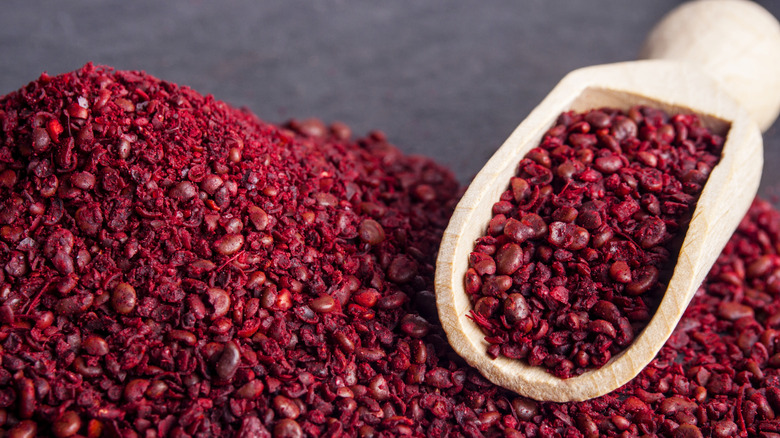
To create the familiar reddish-purple ground spice, the berries are picked, left to dry in the sun, and then either stone-ground or machine-ground into a coarse powder. Sumac is most notable for its tangy, citrus-like flavor, which adds a pronounced layer of tartness to dishes. But sumac operates differently from lemon juice; its sourness is derived from malic acid, which is generally considered softer and fruitier than the sharper, more astringent citric acid found in lemon juice, making sumac an excellent substitute if you want to add a subtle brightness without putting it at the forefront.
Ways to incorporate sumac into your everyday cooking
One of our favorite things about sumac is its versatility; it can be used on everything from meat to salads and can even work in desserts. If you find yourself with a fresh batch but short on inspiration, there's no better place to look than the Levant. In Palestinian and Jordanian cooking, it's central to musakhan, a showstopping dish of roasted chicken served over taboon bread with sweet caramelized onions, olive oil, and toasted pine nuts. It's not just used in meat, either. Sumac is an essential ingredient in fattoush, a Lebanese bread and herb salad famous for its sumac-derived tang that makes it irresistibly refreshing on a hot day. Similarly, you can dust it onto Israeli salad for a refreshingly tart bite. In Syria, you can sprinkle it over your hummus or use it to take some of the sting out of fresh onion.
These are just a few of the many ways sumac is traditionally used in everyday cooking, but there are also plenty of unconventional ways to get this spice to work. Take some inspiration from the icon Alton Brown, who pairs sumac with deep-fried food. It might sound like an odd match, but sumac's bright tartness lifts the greasiness to make each bite enjoyable rather than leaving you feeling overwhelmed or oily.
Another, perhaps even more unusual, way to use sumac is as a cocktail ingredient. You could mix it with salt and use it to rim a spicy margarita for dramatic flair, or go a step further and stir some into homemade simple syrup, then strain it to create a rosy-red syrup with a tangy kick that would work wonders in fruity cocktails or, for those of our teetotal readers, mixed with lemonade or seltzer.