

The Best Italian Olive Oil You Can Buy At Costco (And Where It Comes From)
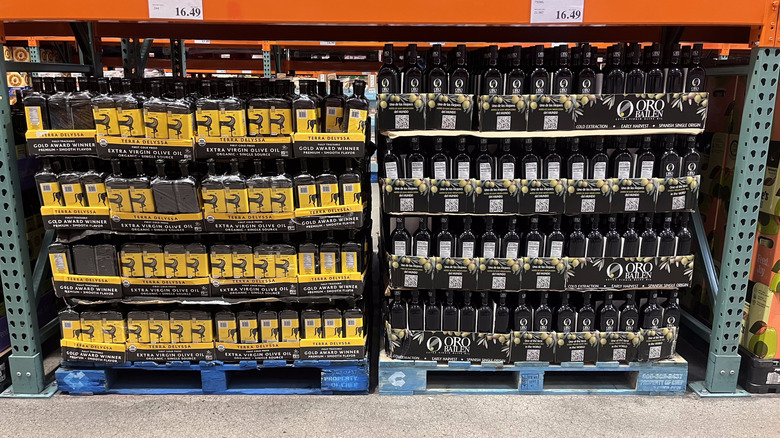
One of the best perks of a Costco membership is exclusive access to its wide range of bulk bargain buys. Its Italian section is among the most impressive, where you can purchase a 72-pound wheel of Parmigiano Reggiano or keep things simple with some dried pasta. But no matter what Italian delight you're cooking up, a good-quality olive oil is where the magic happens. To help curate the best meal possible, we ranked 11 of the best Italian foods you can buy at Costco, and its Kirkland Signature Toscano Extra Virgin Olive Oil landed itself a well-deserved spot.
The oil holds a Toscano Protected Geographical Indication (PGI) designation, which certifies that the extra virgin olive oil was produced in the region of Tuscany, Italy, according to specific standards. Like most Kirkland Signature grocery items, Costco contracts with outside producers rather than manufacturing the oil itself. Unfortunately, Costco keeps its suppliers under tight wraps, so it's difficult to pinpoint exactly where the oil comes from ... but there's nothing stopping us from guessing. Interestingly, oil from Tuscany's Montalbano subzone has been noted to have distinct notes of almond and artichoke, which also happens to be exactly how the taste of the oil is described on the back of the bottle.
While the exact origin of the oil remains a mystery, what we do know for sure is that Tuscan olive oil sits among the best in the world. The region is home to numerous native cultivars, with three main ones making up the bulk of production. Another thing that sets Tuscan olive oil apart is its scarcity. The region only produces a tiny amount of oil compared to major producers like Calabria and Puglia, so consider it a privilege if you're able to get your hands on a Tuscan bottle.
Kirkland Signature Toscano EVOO has loads of green flags
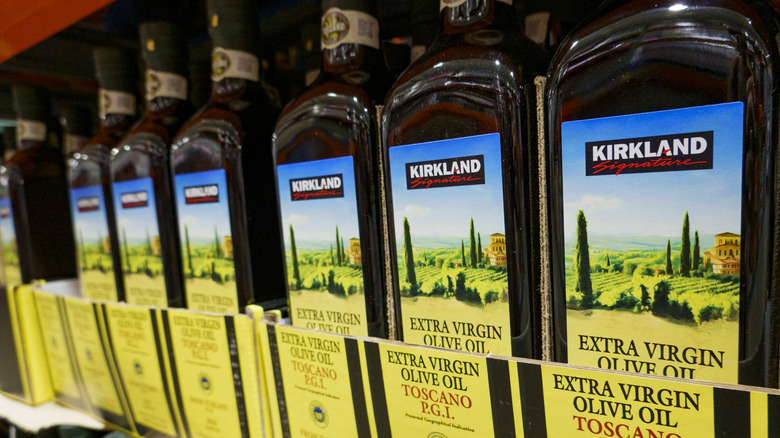
Just by reading the label, you can tell this is an olive oil worth picking up. Extra virgin means the oil was extracted mechanically, without chemical solvents or excessive heat. Olives are crushed into a paste, then processed to separate the oil from the water and solids, all at low temperatures (cold extraction, in other words). Keeping things cool matters because excessive heat can strip away the delicate flavors and aromas that give good olive oil those fruity and peppery notes. That's a sharp contrast to regular olive oil, which is typically a blend of refined oil and a small amount of virgin oil. The refining process uses heat and other treatments to clean up lower-quality oil, leaving something milder and a lot less interesting.
Extra virgin olive oil isn't just the more artisanal option; it's often the more nutritious one, too. Unlike refined olive oils, it retains higher levels of polyphenols and other antioxidants, which may help fight oxidative stress and reduce chronic inflammation. Add in its starring role in the Mediterranean diet, which is widely studied for its long-term health benefits, and it's easy to see why nutritionists love the stuff. It's worth noting, however, that extra virgin olive oil generally has a lower smoke point than refined olive oil, which makes it particularly well-suited to dressings and light sauteing, though it can also be used for many higher-heat cooking applications.