

Skip Gruyère: This Norwegian Cheese Boasts Nutty Flavor & Fewer Calories
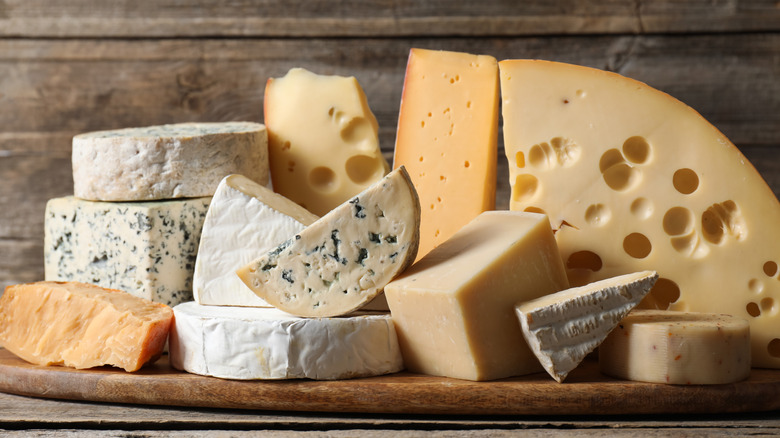
Cheese is one of life's greatest pleasures, but no two varieties are quite the same. Knowing your way around your mozzarella and parmesan is a useful skill that won't just impress your dinner guests but will also transform the way you use cheese in the kitchen. Take Gruyère, for example. If, say, a French onion soup recipe calls for it, and you've had no luck finding it at the store, any cheese connoisseur will tell you that Norwegian Jarlsberg makes an excellent substitute. The two share a similar nutty flavor and melt beautifully, with Jarlsberg also serving a lower-calorie option.
Jarlsberg is instantly recognizable thanks to its large, round holes, and while traditional Swiss Gruyère might lack these holes, it matches Jarlsberg's intensely nutty flavor — although how the two cheeses develop their respective flavors is very different. Jarlsberg gets it from a proprietary bacterial culture called Propionibacterium shermanii, a sub-sect of Propionibacterium freudenreichii. During fermentation, this culture consumes lactic acid to produce propionic acid and carbon dioxide. The acid contributes to the cheese's nutty profile, while the carbon dioxide becomes trapped in the cheese, creating those large holes. Gruyère takes a different approach, developing its signature flavor through a combination of factors, including the unique composition of the high-altitude Alpine milk, its bacterial cultures, and a longer aging process.
Despite sharing a similar taste, their nutritional profiles tell a different story. Jarlsberg contains around 100 calories per ounce, compared with up to 120 calories for Gruyère. That's a modest saving of 20 calories per ounce, which can quickly add up if you're using a generous amount in a grilled cheese or fondue. So if you're looking for a slightly lighter alternative to Gruyère without sacrificing flavor, Jarlsberg makes for a wonderful swap.
The many ways you can use Jarlsberg
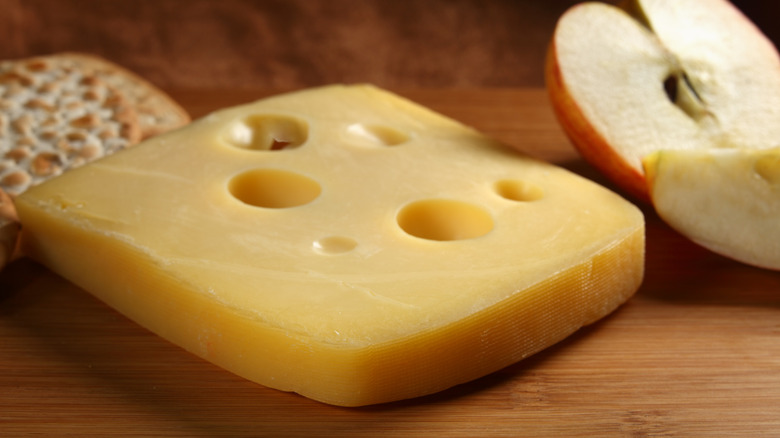
As is the case with Gruyère, one of Jarlsberg's biggest selling points is its versatility. You can always enjoy it as is, pairing it with grapes, crackers, and cold cuts as part of an elegantly presented charcuterie board, or keep things simple and serve it alongside a glass of wine; Jarlsberg goes particularly well with chardonnay and sweet rieslings, as well as low-tannin reds like pinot noir. While there are plenty of ways to enjoy the cheese without cooking it, we think the best way to get the most out of Jarlsberg is to take advantage of its meltability.
Jarlsberg's flavor is comparatively milder than that of sharper Gruyère, making it an excellent substitute if you're after a nutty, creamy cheese that won't overpower everything else, which makes it a great contender for a grilled cheese. If you still want some of Gruyère's intensity, simply combine the two. Their complementary flavor profiles mean neither cheese should overpower the other, giving you a nutty filling with plenty of depth. In a nod to Jarlsberg's Norwegian roots, add in some fresh dill, pickles, and a generous helping of cold-smoked salmon for a Scandi-inspired twist.
Another great way to put Jarlsberg to work is as a pizza topping. Its mild, buttery flavor and excellent meltability make it an obvious fit. Rather than tomato sauce, pair it with mushrooms, caramelized onions, and fresh thyme to let the cheese shine. If white pizza isn't your thing, swap the dough for Danish rye bread to create your own smørbrød, a charming Scandinavian open-faced sandwich. Simply take the buttered bread and add your toppings of choice, layer the Jarlsberg on top, then blast it in the broiler until creamy and gooey.