

10 Protein-Packed Substitutes For Mayo In Chicken Salad
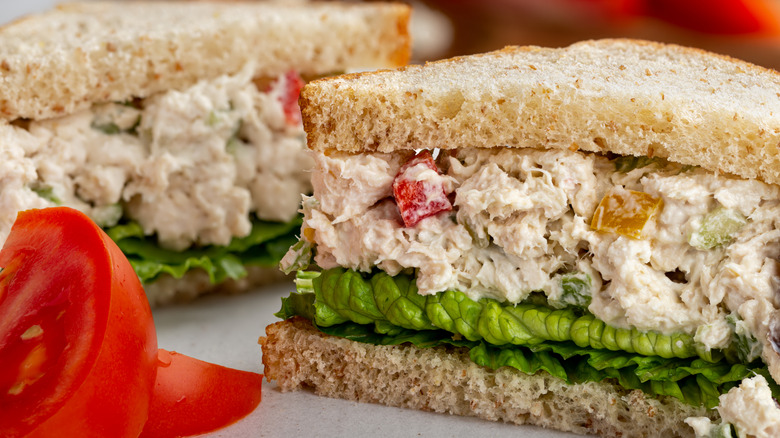
Chicken salad is like edible Americana, a comfort food that's beloved for its taste, nutrition, and versatility. You can find it in the prepared section of your local supermarket or on the menu of your favorite diner. Trying to cut down on carbohydrates? Have a scoop on a salad. Want a light and easy lunch? Have it as a club or between two pieces of toasted whole-grain bread. More importantly, though, chicken salad is like a ball of clay ready to be shaped by your taste preferences. You can take it in infinite directions: Mediterranean, Southwest, Spanish, French, Indian, Vietnamese. Have some extra sprigs of cilantro or half a bag of red grapes lying hanging around the fridge? Add 'em. Don't know what to do with those leftover pecans or knob of fresh ginger? You can throw those in, too.
But the foundation of any respectable chicken salad is its creamy binder. In that regard, mayonnaise is the undisputed classic, turning your basic diced chicken breast into something moist, savory, and luscious. However, plenty of other ingredients deliver that signature smoothness — just with more protein. From tzatziki to silken tofu to labneh, there are tons of options that deliver both texture and an added pop of flavor. Whether you're minding your macros or just looking for a new spin on a classic dish, this list of protein-packed mayo substitutes is for you.
1. Whole milk Greek yogurt
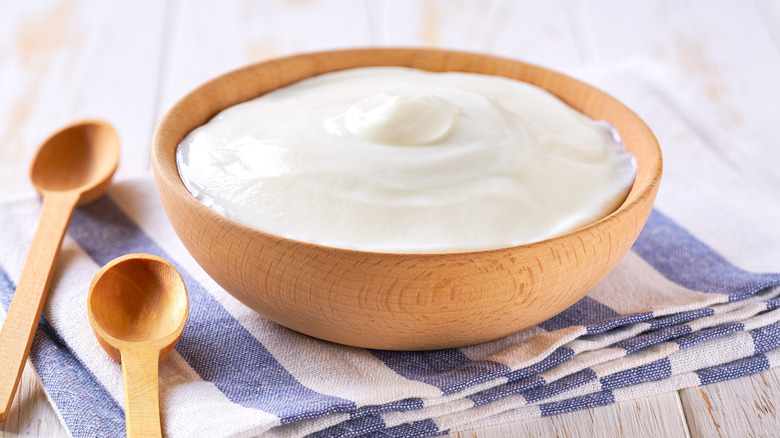
Yogurt has a long and storied reputation as a health food, so long, in fact, that its beneficial properties are documented in Indian Ayurvedic medicinal writings from more than 7,000 years ago. Today, it's seen as a better-for-you breakfast option, loaded with beneficial probiotics, calcium, and, of course, protein. Yogurt, especially the more thoroughly strained Greek variety, has an excellent calorie-to-protein ratio (about 16 grams of protein per 150 calories when made with whole milk), which is why it has become so popular with bodybuilders and wellness influencers.
However, Greek yogurt still has a place in ordinary kitchens, and it's especially useful for people looking for a healthier alternative to mayonnaise, cream cheese, or any other creamy, high-fat, high-cholesterol product, which is why it makes such a great addition to homemade chicken salad. Even when prepared with mayonnaise, chicken salad is a relatively nutritious lunch option, typically made with low-fat chicken breast, fresh herbs, diced veggies, and maybe some nuts or sliced grapes. Whole milk yogurt, which is creamier than low-fat options, builds on that by adding extra protein, moisture, and the richness synonymous with a good chicken salad. It also adds a little tang that complements the subdued nature of poultry and plays well with other common chicken-salad additions, like mustard, dill, or curry powder.
2. Skyr (Icelandic yogurt)
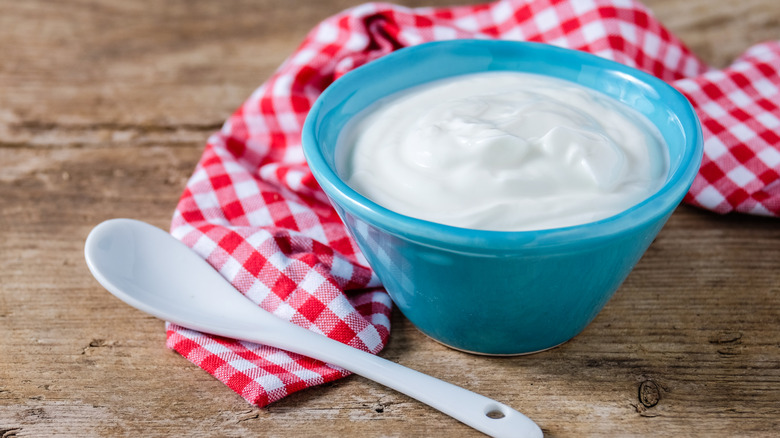
It feels like every week there's another article or study being published identifying the benefits of gut health. This increased focus on the gut microbiome and the trillions of microorganisms that occupy it has brought all sorts of fermented dairy products, which are packed with probiotics and other useful bacteria, back into the nutritional spotlight. In this department, Greek yogurt is king (at least in the United States), but other styles are slowly making their way to the supermarket dairy aisle. One of them is skyr, also known as Icelandic yogurt.
Technically classified as a cheese because its proteins are coagulated with rennet (a naturally occurring enzyme), skyr is dense, almost custard-like, with a mild sweetness and less assertive bite than Greek yogurt. Nutritionally, the two dairy products have an almost identical profile, although skyr is typically slightly higher in protein per serving due to a more rigorous straining process. But it's that straining — and subsequent thicker texture — that makes skyr such a terrific mayo substitute, delivering the same full creaminess without the more forward lactic tang of typical yogurt. How you use it in your chicken salad is a personal preference. If you like your chicken salad on the more unctuous side, use it as is; if you like it a little looser, thin your skyr with a tablespoon or two of milk, which may also help coat each ingredient more evenly.
3. Full-fat cottage cheese
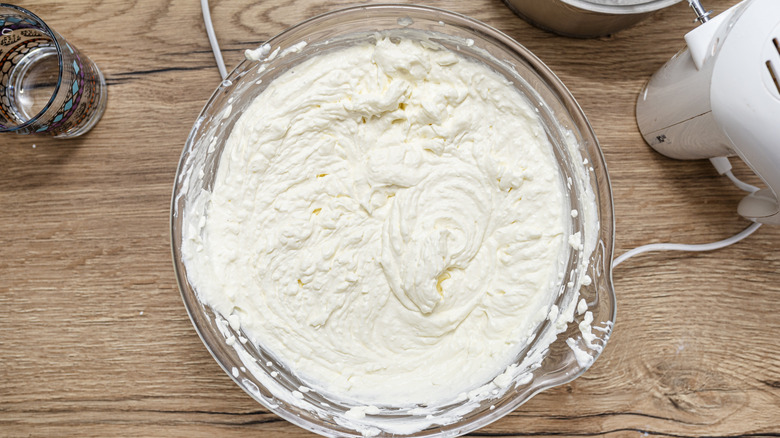
On a per-calorie basis, cottage cheese is hard to beat among high-protein foods, with (on average) 12-14 grams of protein per 100-calorie serving. Unlike yogurt, which is fermented with bacteria, cottage cheese is made through acidification. As milk becomes more acidic and the pH level drops, the proteins denature, clump, and coagulate into tiny little curds. Although the process is simple, there's a lot of variability between brands. Some are saltier or creamier or contain larger curds.
But the most influential factor, especially regarding your chicken salad, is the fat content. While low-fat cottage cheese has fewer calories per serving, it lacks the richness needed to rehydrate dry chicken. Beyond extra unctuousness, full-fat cottage cheese adds salinity, clean milky notes, and a very mild cheese flavor. However, there's one major difference between cottage cheese and mayonnaise: Texture. Straight out of the plastic tub, cottage cheese can be, well, lumpy. This may not bother you in the slightest, but if it does, there's an easy workaround: Whipping the cottage cheese. You can do this with a hand mixer, mini food processor, or even just a big fork; the goal being to break those curds into a finer texture similar to ricotta. You can use the same technique to incorporate this high-protein food into smoothies, dips, and even macaroni and cheese.
4. Hummus
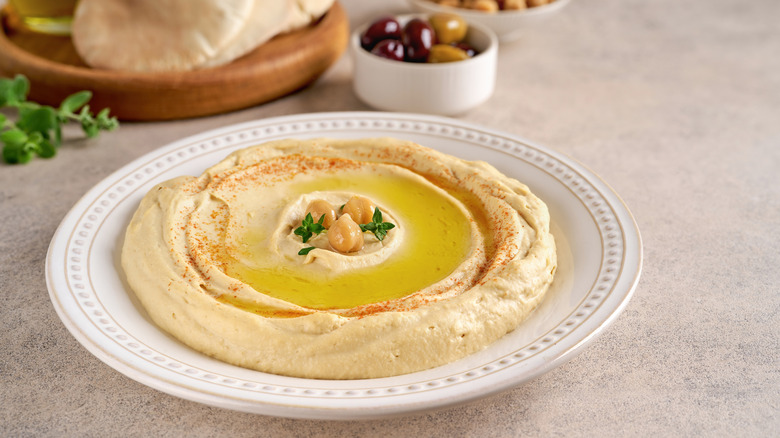
Hummus was the "it" food product of the early 2000s, but in the years since, it has faded in popularity. Maybe we were just given too much, too fast: Beet hummus, carrot hummus, lentil hummus, chocolate hummus — each variation obfuscating the beauty of this simple, timeless, life-sustaining food. Hummus, the type made from chickpeas, sesame paste (tahini), and olive oil, is an ancient form of plant-based protein foundational to Mediterranean and Middle Eastern cuisines. When blended, the ingredients make a velvety emulsion that — depending on how much ice water or oil you use — can be spread or scooped over everything, from bulgur wheat to falafel wraps.
It's also a great addition to salads — including ones made from chicken. Here, hummus provides an extra protein boost as well as some much-needed fattiness. Its blend of Middle Eastern spices — cumin, sumac, garlic, za'atar — contributes a warmth and brightness that cuts through the inherent blandness of cooked chicken breast. If using hummus as the foundation of your chicken salad, consider adding other Mediterranean ingredients, like capers, olives, walnuts, almonds, fresh tomato, or cucumbers. You can use your favorite supermarket brand, or just quickly whip up delicious hummus at home.
5. Silken tofu
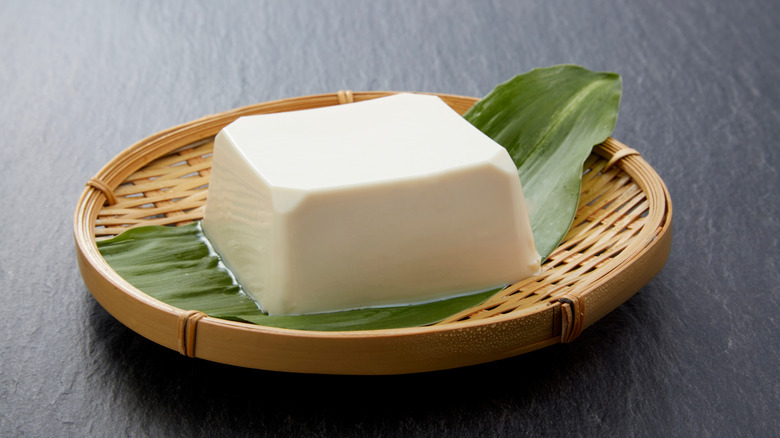
Probably the most underrated ingredient on this list, silken tofu is a centuries-old, plant-based protein with limitless applications. Like other forms of bean curd, silken tofu is made from soybeans, but it's worlds different from soft, medium, or firm varieties. While it comes in similar packaging, silken tofu is hardly solid; it's more like a pudding or flan that will fall apart if you try to pick it up with a fork. However, it's precisely this loose creaminess that makes silken tofu such a terrific substitute for mayonnaise in your next chicken salad.
Besides being a great protein source — containing around 20 grams per 16-ounce package — silken tofu can easily be made smooth and pourable. When blended, it becomes something akin to Alfredo sauce, with a velvety consistency that's ideal for coating chicken. Another advantage of silken tofu is its taste — or lack thereof. You're dealing with a blank canvas here, one that will quickly absorb whatever seasonings, herbs, or sauces you mix with it. It may need some doctoring to get the texture right, but just use this as another opportunity to add flavor. Try adding cilantro and lime, tarragon and sherry vinegar, or hot sauce, for a Buffalo wing-inspired chicken salad.
6. White bean purée
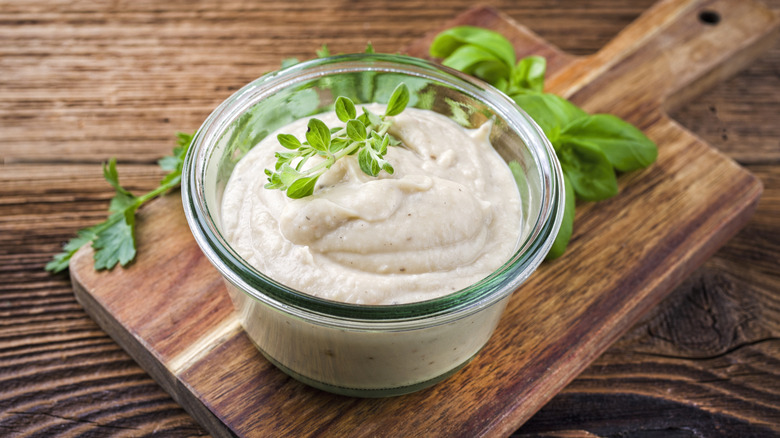
There are only so many ways to add creaminess to food without relying on dairy, a fatty emulsion, or some complicated form of food chemistry. Adding a can of blended beans is one of them. Legumes, like black beans, kidney beans, and butter beans, have a starchy center that turns smooth and pillowy when blended. Most commercial varieties you find at your typical supermarket are good for cooking, but some have a more distinct flavor than others.
When making chicken salad, it's best to use beans with a clean, neat taste and not too much earthiness. For this, white, cannellini, or Great Northern beans are best. They won't overwhelm the other ingredients in your chicken salad, but they also aren't entirely neutral-tasting, either. The key to using these legumes is to purée them with different spices, herbs, and condiments, like Worcestershire sauce, miso, or a splash of vinegar. To achieve a texture that's similar to mayonnaise, you'll likely need to add some liquid or fat. Olive or another neutral oil works, but adding a heavily seasoned broth will give you an even better result. To do this, make a quick pan sauce with sautéed aromatics, seasonings, and stock; add it to your beans, then blend everything in a blender or food processor.
7. Egg salad
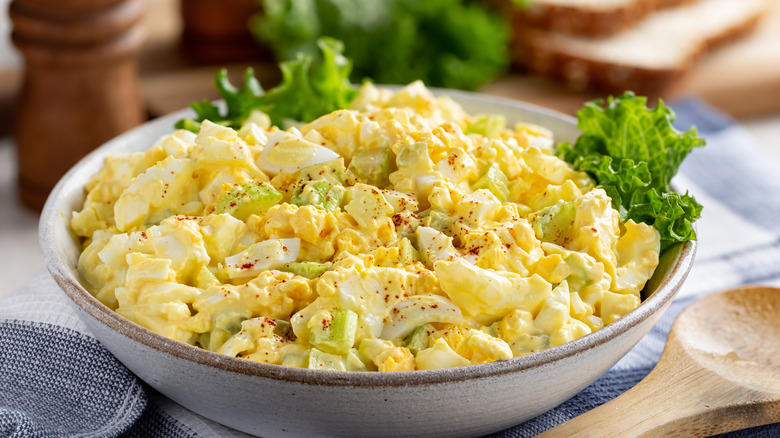
This one is a little sneaky. Egg yolks are inherently fatty, but they also contain natural emulsifiers that turn into a creamy paste when blended. That means you don't have to add a drop of mayonnaise (which, ironically, is made predominantly from egg yolks) to achieve a luscious texture. But egg salad brings more to the party than just creaminess. If you've ever watched a TikTok nutritionist worth their creatine, then you're probably frustratingly aware that egg whites are one of nature's purest protein sources.
This combination of smooth, fatty yolk and protein-rich white makes egg salad an incredible substitute for mayo. It's a tongue-in-cheek pairing, for sure, but this whimsical culinary mashup also delivers on taste. Because eggs are a tad sulfurous on their own, season them generously with ingredients like Dijon mustard, capers, lemon juice, smoked paprika, or even a few shakes of curry powder. However, the key to achieving a natural creaminess is proper egg cookery, which essentially boils down to not overcooking your hard-boiled eggs. The answer: A quick dunk in the ice bath for about 10-15 minutes to halt cooking and preserve those fluffy yolks.
8. Tzatziki
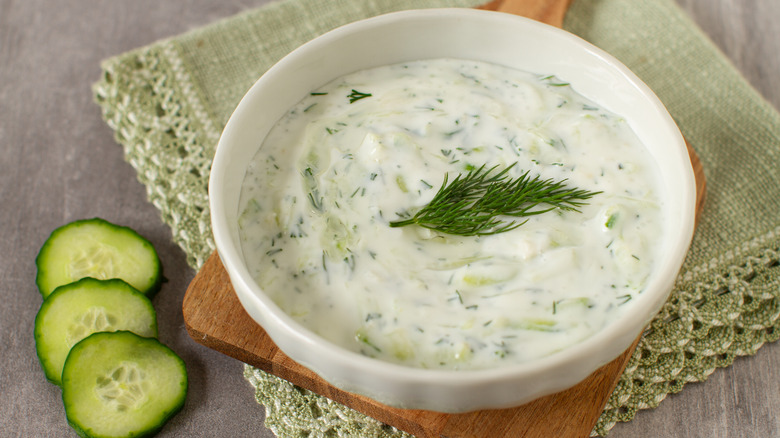
Want the nutritional upside of yogurt with an added burst of refreshing Mediterranean flavors? Sounds like it's tzatziki time. The yogurt-based dip is most closely associated with Greek cuisine, serving as a cooling counterpoint to robustly seasoned grilled meats, fried zucchini, and platters of pita. And, while its protein content isn't on the same level as skyr or cottage cheese, it isn't negligible, either, which is why it's another smart mayo substitute for your next chicken salad.
Tzatziki looks simple, but it delivers a chorus of complex flavors that few condiments can match. It's all things smooth, rich, tangy, and fresh, thanks to a blend of fresh herbs and other aromatics. Besides yogurt, the predominant ingredient is cucumber. Paired with fresh mint, dill, and garlic, this creates a clean, powerful taste profile. It instantly elevates ordinary chicken into something moist and tender. Slip your tzatziki-coated chicken salad into a pita and top with shredded lettuce, tomato, black olives, and sliced red onion for a memorable lunch. While tzatziki is popular, it can be difficult to find good options in your average supermarket. Thankfully, a quality tzatziki sauce is easy to put together; just remember to squeeze the moisture out of your cucumbers. Otherwise, your sauce will be too wet and separate.
9. Labneh
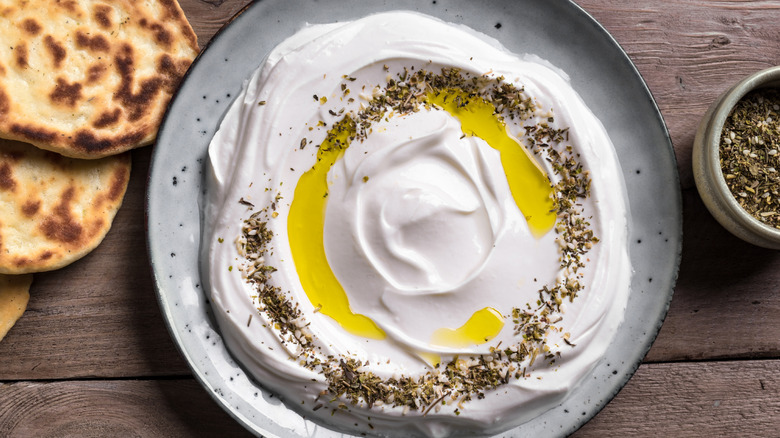
Labneh is made by straining Greek yogurt in cheesecloth until you remove the remaining liquid whey. This not only creates a denser product, but it also concentrates the flavor. It's traditionally made with goat's milk, which is a little grassy on the palate and has a slightly tangier finish than a cow's milk cheese or yogurt. Unlike yogurt, though, which you typically eat with a spoon, labneh is more of a dip, perfect for crudités, pita, lavash, or even grilled fruits. It has a decadent mouthfeel and is decidedly more savory, especially when dressed with olive oil, making it a nice way to rejuvenate an otherwise tired chicken salad.
But there's no reason to pigeonhole this spreadable yogurt as savory or sweet; it works beautifully with both taste profiles. You can roll it in za'atar, sumac, and fresh mint, or crust it with pistachios and drizzle it with honey. Since it's the thickest yogurt-based product on this list, when using it for chicken salad, you'll likely want to add a splash of milk or a non-dairy alternative to loosen it up. If you can't find labneh in stores, you can literally just add Greek yogurt to a cheesecloth, hang it above your sink, and let it drip for a few hours until it's firm and extra creamy.
10. Whipped feta
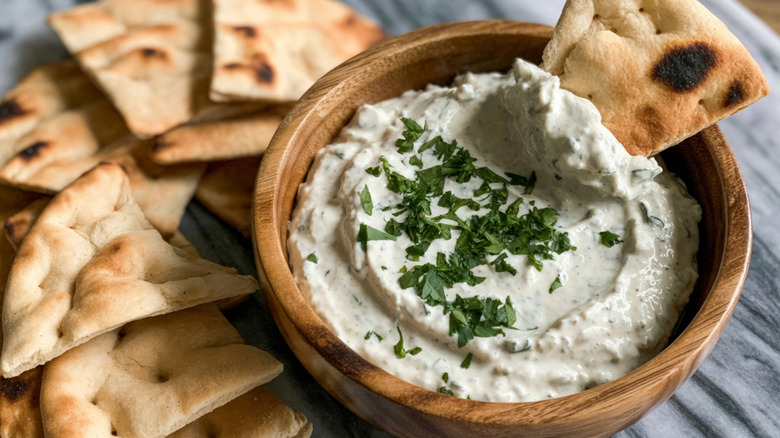
Like most dairy products, feta is a solid protein source, with about 4 grams per 2-ounce serving; however, it differs from other cheeses because it's brined in a salt-water and whey solution rather than traditionally aged. This process helps preserve the cheese while also imbuing it with its signature salinity. If you've been lucky enough to try quality feta, you know that this soft, crumbly cheese packs a punch. In the mouth, it has a clean, fresh cream flavor and mild tang, making it a natural partner for grilled meats like beef, lamb, or chicken.
Feta isn't spreadable, nor does it melt, but you can easily transform its texture by dropping a few chunks into a blender or food processor and "whipping" it until smooth. The result is smooth, salty, and spoonable — and perfect for chicken salad. When using whipped feta, consider both its salt content and mild acidic bite. These are strong flavors that should be balanced with other sweet and savory ingredients. Try pairing it with starchy, nutty, or mildly sweet foods like roasted butternut squash, pistachios, dried cranberries, or nectarines.