

Forget Salmon: This Fast-Cooking Fish Has Fewer Calories
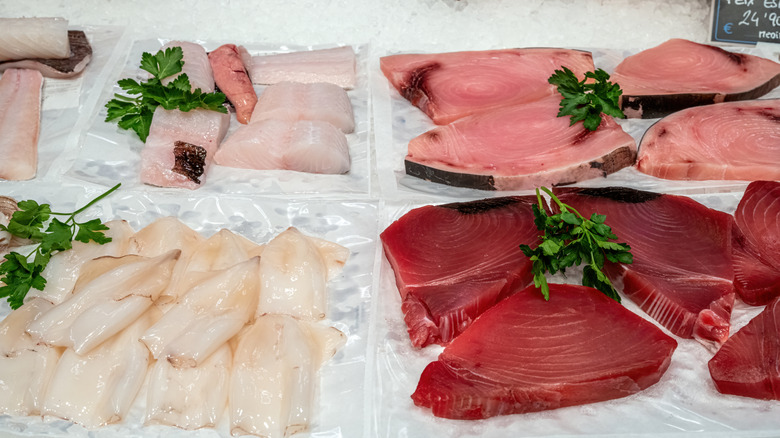
Salmon's rich intensity also means it generally has more calories, which can mean different things based on someone's dietary needs. If you're conscious of this and still want something that cooks up quickly (and deliciously), try flounder, a leaner, lower-calorie option that never lacks flavor.
Exact calorie amounts can vary quite a bit, especially when it comes to wild versus farmed salmon, but even the leanest ones usually sit between 130 and 200 calories per three-ounce serving. Flounder populations, however, have a more uniform lifestyle and consistently clock in at around 100 calories per three-ounce serving. That brown or gray layer of fat may help a salmon migrate and survive cold waters, but flounder are sedentary ambush predators that don't have nearly the same energy requirements. On your plate, this means a fillet of flounder is lean, clean-tasting, and quite mild compared to a richly marbled piece of salmon.
Because flounder is often thinner and far less fatty than salmon, that also means it cooks exponentially quicker. While a skin-on fillet can widen your margin of error, it's still much easier to render your tender fish into a dense, rubbery mess. Your best bet is to treat it like a lean steak and use a hot and fast cooking method, letting a bit of carryover cooking finish the center rather than trying to reach the perfect temperature in a pan or on the grill.
Tips on preparing flounder for a great meal
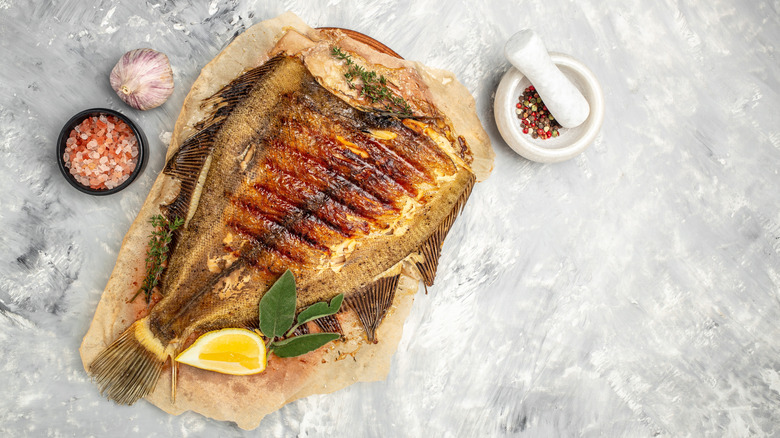
Flounder is delicate, light, and can easily lose its natural flavor if seasoned too heavily. While it's not exactly a beginner-friendly fish, the best ways to cook it are often straightforward and focus on timing and temperature, not technique. Hands-off methods that require little manipulation or rely on a sauce for flavor are usually ideal and keep your meat moist and tender.
If you haven't tried making a meunière yet, it's a classic seafood dish you should try at least once. Made by combining browned butter, lemon, and parsley, it's just flavorful enough to elevate your flounder without overwhelming it. Just about any French butter sauce, from beurre blanc to béchamel, is great with flounder because it adds a bit of richness and is a great vehicle for other tasty seasonings. Plus, they're flavorful enough that you'll only have to pan-sear each side of your fish, reducing the chance that it'll fall apart or overcook.
Flounder grows more delicate the more it's cooked, so preparation methods that rely on you only handling it when raw are also quite ideal. Baking is a precise method, and you only have to move the fish once to transfer it to a plate. On the other hand, flounder is fantastic when deep-fried, and the breading helps it hold its shape. You'll still want to use a large, slotted tool and a delicate hand when fishing it out, but all you need to do is batter and drop it into oil for a great result.