

These 7 Burger Chains Use Frozen Ground Beef — Is Your Favorite On The List?
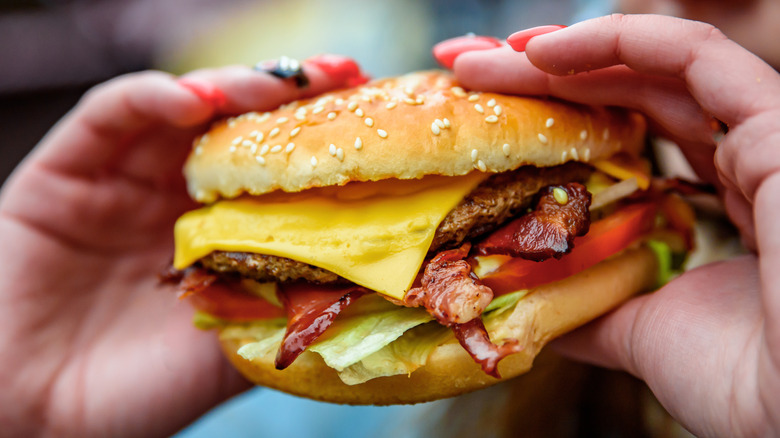
Fast food chains have undergone an interesting transformation in recent years. They're under increasing pressure from customers and regulators alike to offer more nutritious, less-processed food, and much of the debate centers on whether they use fresh or frozen beef in their kitchens. Certain chains, like Chipotle, have even made their commitment to fresh ingredients a central part of their brand identity. But while fresh meat is certainly having a moment, frozen burger patties aren't going anywhere any time soon.
Frozen beef patties play a foundational role in the fast food industry. To operate on the scale of giants like McDonald's, which sells millions of burgers a day, it goes without saying that you're going to need a serious amount of beef. That's where frozen has a serious edge. Fresh, raw beef has a relatively short shelf life, whereas frozen beef can be stored for months. That makes frozen patties a practical way to keep up with demand and avoid having large quantities of meat spoil before they can be used. They also offer consistency. Because patties can be made to precise specifications and frozen until needed, they're uniform in size and weight, helping ensure that every burger cooks at roughly the same rate and comes out looking like the last.
One of the biggest assumptions surrounding fresh and frozen beef is that fresh automatically means better. But this isn't really fair. Freezing beef doesn't do anything to its nutritional profile, and patties are often frozen soon after production to preserve their freshness. Better yet, some chefs even swear by cooking burgers from frozen for a juicier texture and perfectly browned crust. Bet you didn't see that coming. If you still don't believe us, odds are that one of your favorite fast food burgers is living proof of this.
Nearly all of McDonald's burgers are cooked from frozen
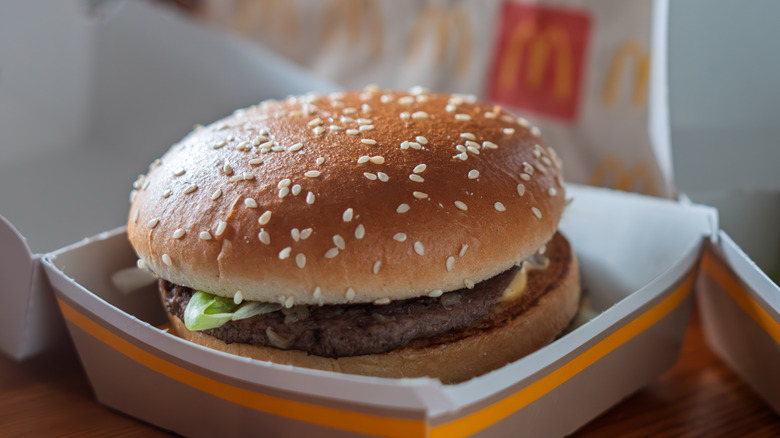
As the largest fast food chain in the U.S., it probably won't come as much of a surprise that McDonald's relies heavily on frozen beef for its burgers, as well as breakfast items like its McMuffins, McGriddles, and bagels. Its frozen beef patties are cooked for around 40 seconds between two heated metal plates before being transferred to heated holding cabinets — that's right, McDonald's patties aren't made-to-order. For decades, this was standard practice across the menu, but in March 2018, the chain shook things up by officially rolling out fresh, never-frozen beef for its Quarter Pounder line.
Don't expect to find any fresh beef served at Burger King
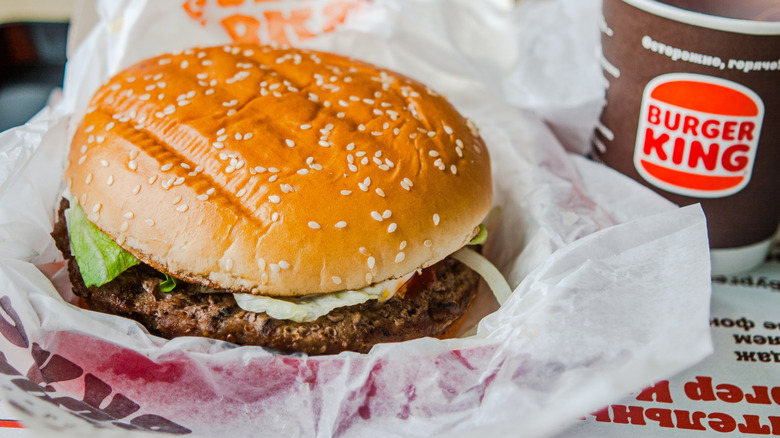
Burger King trails McDonald's as the second-largest burger chain in the U.S., but one area where it hasn't followed its rival's lead is fresh beef. While McDonald's offers one fresh option, Burger King still uses frozen beef across its entire burger menu. The patties are shaped and flash-frozen at centralized processing facilities before being shipped to individual restaurants. And despite the chain's famous claim that its burgers are "flame-grilled," that description doesn't tell the whole story. Rather than being grilled individually over an open flame, the frozen patties travel along a conveyor belt through a flame-broiling oven, where they're exposed to gas flames as they cook. It's this process that gives Burger King burgers their distinctive charred exterior and smoky flavor.
Jack in the Box's quirky burgers all start out frozen
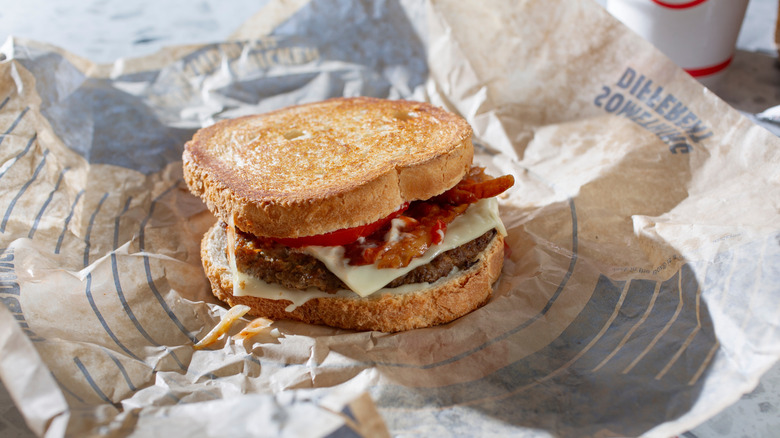
Famous for early adoption of the fast-food drive-thru intercom system (which In-N-Out pioneered), Jack in the Box is best known for its delightfully eclectic menu, which hosts everything from tacos and curly fries to, of course, burgers. There are plenty of unique options to choose from, including the Sourdough Jack, served on toasted sourdough bread, and its newer line of trendy smash-style burgers. But one thing they all have in common is that their patties arrive at the kitchen frozen. So don't expect to find any fresh beef in Jack in the Box. The chain sticks to old-school griddling on a flat-top, but at the same time, it has piloted a batch of futuristic burger-flipping robots at certain locations in San Diego.
We can't say we're surprised Dairy Queen uses frozen patties
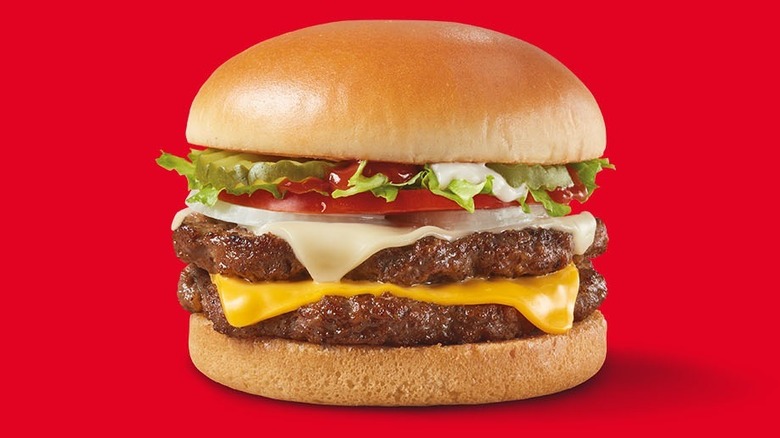
A trip to Dairy Queen is never a bad idea when you're craving something sweet and frozen, but did you know that you can also order a burger to go with your Blizzard? Despite revealing that its burgers don't contain human meat (yes, this really happened), the chain is yet to share whether its beef patties arrive fresh or frozen. Given that we're talking about Dairy Queen here, you'd be forgiven for assuming they spend some time chilling in a freezer. And according to one self-identified employee, that's exactly the case. "[The patties] come frozen," they revealed in a Reddit comment. "We have a 'grill' where we put the patties on a conveyor belt that goes over a flame. Then, they drop down from the machine into baskets, where we put them in a warmer with other patties."
White Castle has been serving frozen patties for decades
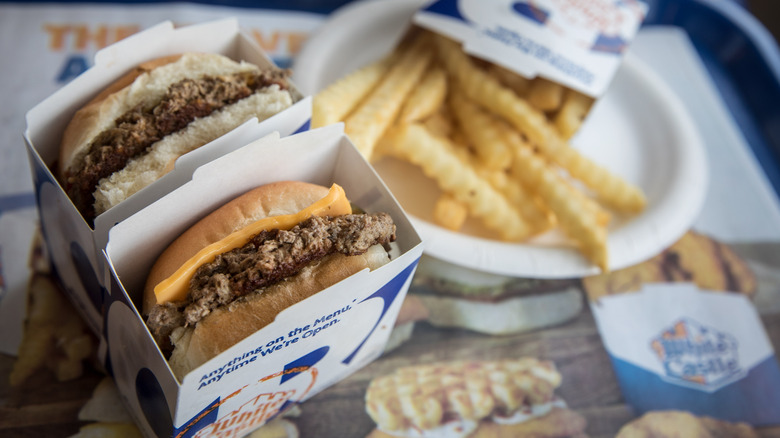
White Castle holds an iconic place in American fast food history as one of the country's oldest burger chains. Founded in 1921, the chain originally used fresh beef, but it didn't take long to make the switch to more convenient frozen patties in 1931. Today, White Castle might not be on the same level as giants like McDonald's and Burger King, but we'll give it points for originality. Its cooking method is truly unlike anything you'll find at most other burger chains. First, a bed of onions is spread across a hot grill, followed by the frozen beef patties, with the buns placed on top. Rather than being seared directly against the cooking surface, the patties are steamed by the moisture rising from the onions. The small holes punched into each patty allow the steam to pass through, cooking the beef from below while warming the buns above.
Sonic's burgers skate right out of the freezer
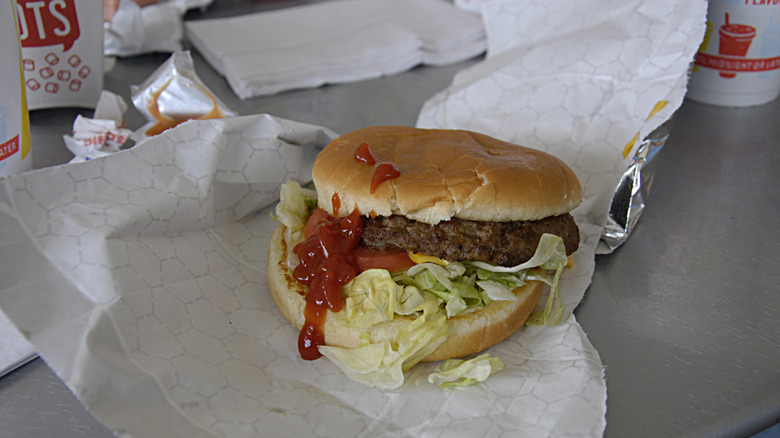
Everything about Sonic is gloriously retro, but there's nothing old-school about how the chain prepares its burgers. Before your burger is (literally) rolled out to your car, workers pull the patties straight from the freezer and place them on a flat-top grill, flipping them as they cook. Like many frozen fast-food patties, Sonic's burgers are also perforated with small holes. To those who have never worked in a fast-food kitchen before, these little bumps and ridges might look alarming at first, but there's really nothing to worry about. They're simply there to help the frozen patties cook more quickly and evenly.
Carl's Jr. is yet to thaw its frozen patties
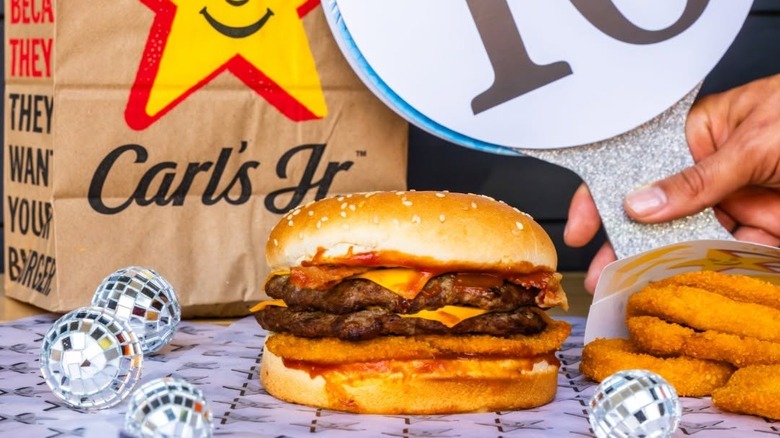
Carl's Jr. is a SoCal institution and has been serving up burgers since 1941. Like Burger King, the frozen patties are passed through a gas-flame conveyor belt, known as charbroiling. Though fans might be disappointed to learn that the chain's (rather pricey) burgers start out frozen, Carl Jr. is actively looking to level up its quality by promising that each and every burger will eventually be cooked-to-order. This means that customers will receive a hotter, fresher burger rather than a batch-cooked one that's been left sitting forgotten in a heating cabinet. As of writing, Carl's has released no official statement on whether the so-called "Burger Revolution" also includes non-frozen patties.