

Skip The Sponge: There's A Better Way To Clean Cast Iron Without Dish Soap
We may receive a commission on purchases made from links.
There are plenty of reasons to invest in a high-quality cast iron pan. Beyond its excellent heat retention and naturally non-stick surface, cast iron is an incredibly durable material. Look after it, and a single pan can last for decades, even generations. That said, cast iron does come with a few basic ground rules. Follow them, and it'll reward you with years upon years of reliable cooking. Ignore them, and you could find yourself dealing with rust or a damaged seasoning layer. That's where a cast iron ringer comes in handy, like the Amagabeli cast iron ringer on Amazon.
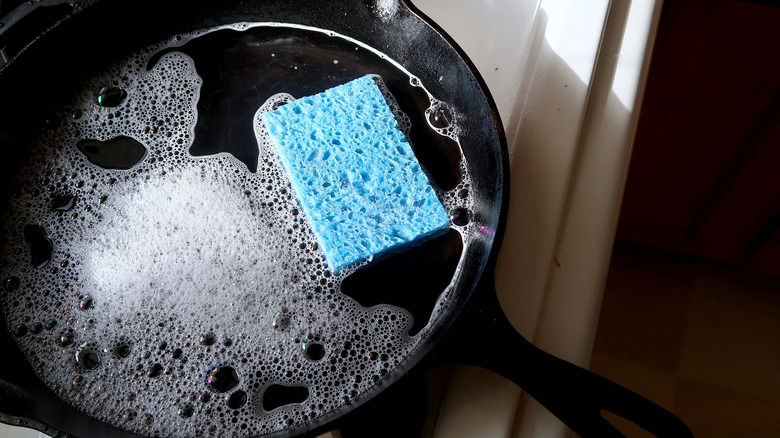
Cleaning is one area where cast iron has earned an unnecessarily intimidating reputation. Its nonstick qualities come from a baked-on layer of polymerized oil, commonly known as seasoning. This protective layer helps prevent food from sticking and shields the iron beneath it from moisture. Leave your pan wet for too long, and rust can develop. Scrub too aggressively, and you risk damaging the seasoning; the same goes for the old advice about avoiding dish soap. Traditional soaps sometimes contained lye, which could strip away seasoning, but modern dish soaps are almost always mild enough to use on a properly seasoned pan. Even so, the aversion to dish soap has stuck around — even Bobby Flay chooses to avoid it.
If you'd rather keep things traditional or avoid dish soap altogether, a cast iron ringer is a useful alternative. Made from interlocking rings of rust-resistant stainless steel, this chainmail scrubber works much like a metal scourer, using friction to lift stubborn grease and baked-on residue. The difference is that, when used correctly, it can remove stuck-on food without wearing away a well-established seasoning layer.
The dos and don'ts when working with a cast iron pan
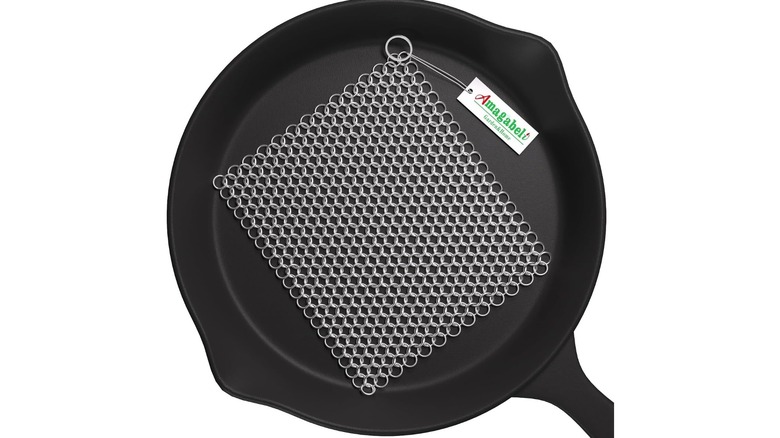
Using a ringer to clean your cast iron is incredibly simple. Just run warm water over your pan and gently scrub away the residue with the ringer, working in circular motions where needed. To make lifting stains even easier, you can also pair it with dish soap — just don't let the traditionalists know! The cleaning is the easy bit; what really matters is how you treat the pan after.
Everybody knows that cast iron and water don't mix. Why? Science, of course. Iron is highly reactive to oxygen and water, and when the two meet, the iron oxidizes and forms iron oxide — better known as rust — surprisingly fast. Cast iron can usually tolerate a quick wash, but it despises sitting in water for long stretches. To keep it in top shape after cleaning, dry it vigorously with a kitchen towel, or set it on a warm stovetop to evaporate any trace of leftover moisture. If you do end up with rust, you can easily scrub it off with a simple mixture of lemon and kosher salt.
One of your greatest protections against rust is the seasoning. Unlike an enamel coating, however, this layer of polymerized oil isn't as hardy. It can be stripped away, worn down, or built back up over time. To keep it in good condition, avoid cooking large amounts of acidic ingredients, never soak the pan, and keep long, roiling boils to a minimum. That's not to say you should baby your cast iron. In fact, cooking is one of the best ways to maintain seasoning, as cooking with oil naturally builds it up. After cleaning, you can also rub a small amount of neutral oil onto the surface to keep it protected.