

7 Common Mistakes With Homemade Ice Cream
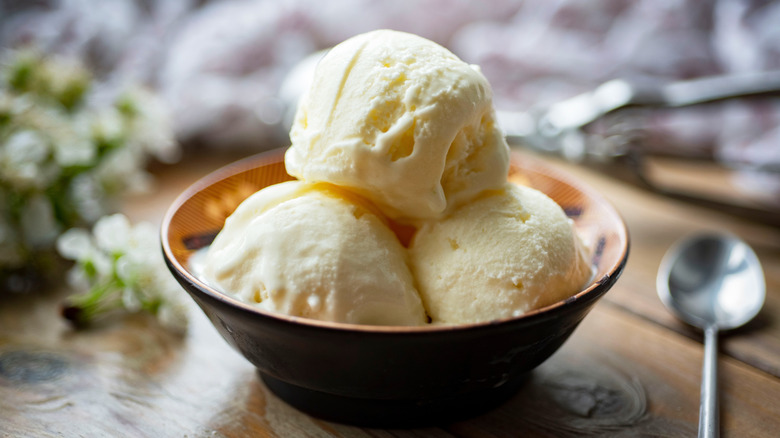
The temptation strikes every home cook eventually. Most likely, it'll come along when you're enjoying an ice cream from your local shop on a hot summer day. Suddenly, it hits you — surely I could do this too, right? I could make my own ice cream! How hard could it be?
Well, it turns out pulling off high-quality homemade ice cream can be rather difficult. Making everyone's favorite frozen confection is a process replete with common mistakes, pitfalls, and potential traps for even the most determined cook that, if not caught in time, will lead to icy, crystal-filled grossness.
But that doesn't mean it can't be done. With the right preparation and insight, perfect homemade ice cream might be within reach. To help you avoid the most common mistakes posed by making homemade ice cream can pose, we spoke with Tyler Malek, co-founder of Salt & Straw, and Tamara Keefe, founder and CEO of Clementine's. With their help and a little persistence, you'll be cranking out quality pints at home in no time.
Not using the right equipment
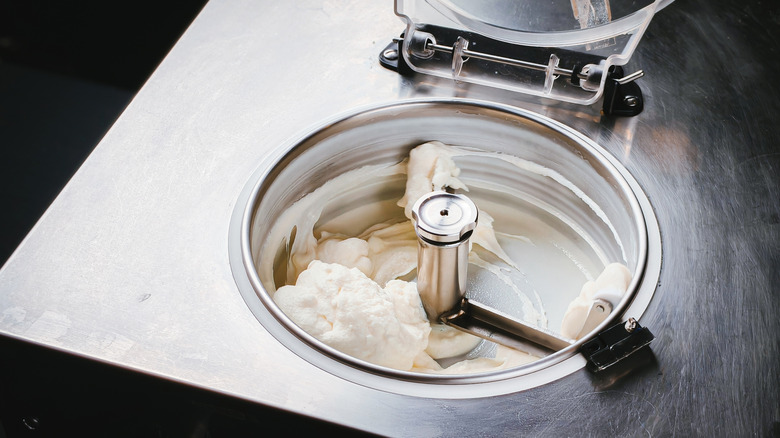
This one probably won't surprise you, but it is worth stating anyway: If you want to do homemade ice cream right, you need the right tools for the job. While you certainly can try making ice cream in a stand mixer, Tamara Keefe argues against this — at least to get started — but also insists you don't need to go overboard.
"You really don't need a commercial kitchen or a fancy setup," she says. "There are some great home ice cream machines out there." Keefe told us that she started Clementine's with a machine she purchased on Amazon. Some can be a little pricey, but it's a good buy if you plan to make ice cream frequently. "The machine really does make a difference in the final texture of your ice cream."
Meanwhile, Tyler Malek noted that you also need the right tools for storing your icy homemade treat. "The biggest thing I always teach new ice cream makers is to use the thinnest, cheapest container they can find to store their ice cream," he says. "The reality is, when we make ice cream, it's still quite warm coming out of the ice cream machine. The thinner material containers allow the freezer cold to penetrate the ice cream and harden it quickly."
Oh and don't forget to clean your ice cream maker properly. That's just good kitchen hygiene. Fortunately, there's an easy way to do that, too.
Letting the recipe become unbalanced
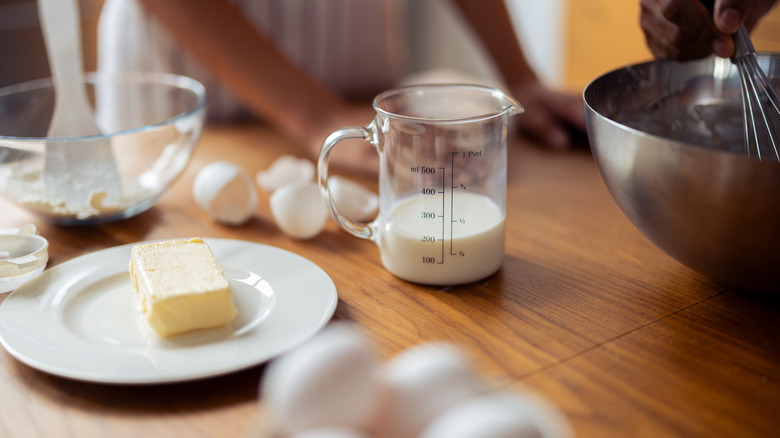
Tamara Keefe and Tyler Malek had plenty of differing perspectives from incredible careers making ice cream for hungry customers. But they agreed on the necessity of avoiding this most common of mistakes: Messing too much with the balance of your ice cream recipe.
"Ironically, the biggest mistake I see even highly trained pastry chefs make is they use too much heavy cream and butterfat in their ice cream," Malek says. "The reality is, if you push the ice cream recipe too far, you literally begin churning butter into your ice cream."
Keefe's insights further clarified the need for keeping everything balanced. "I think one of the biggest mistakes people make is not understanding that every ingredient has a job," she explains. "Fat, sugar, milk, cream, all of it affects the texture. If you start changing things without understanding that balance, you can end up with something that's either really hard or really icy."
In particular, Keefe recommends finding a good base recipe for your homemade ice cream. When you get the hang of things and have a feel for each ingredient's role, that's where experimentation can begin.
Becoming impatient

Patience is a virtue in life — and, as it turns out, when making homemade ice cream. In fact, lack of patience is such a common mistake here that there are several ways it can lead to a less-than-delicious dessert.
Just for starters, freezing the bowl of your ice cream maker is a must, and according to Tyler Malek, you need to freeze it well in advance. "We found that the at home machines with pre-frozen bowls need to be very cold and often need to be stored in the deepest part of your freezer for at least 48 hours," he says.
Chilling your ice cream base for before churning it is also important, according to Tamara Keefe, and should be done for at least 24 hours. "That gives the flavors time to really develop, and it makes a difference in the finished ice cream," she explains. "If you put a warm base into your machine, you're already working against yourself because it will never turn into frozen ice cream."
Keefe also advised keeping a close eye on your ice cream machine to ensure you don't overdo it. "Once it's ready, get it into the freezer as quickly as you can," she says. "You want to keep those ice crystals as small as possible because that's what gives you that really smooth, creamy texture."
Allowing in too much moisture

If you are making ice cream, water is your enemy. Well, actually (and ironically), ice is the enemy. Water freezes into ice (obviously) and ice is not the texture you want in your ice cream. So you'll want to keep water and generally moisture out, both as you make it and after it's ready to be stored.
While making your ice cream, that means reducing as much moisture as possible in any added ingredients. "If you're making fruit ice cream, roast your fruit first," Tamara Keefe offers. "Roasting helps cook off some of that water and concentrates the natural flavor of the fruit, so you get a richer, more flavorful ice cream with a much better texture."
Meanwhile, Tyler Malek offered a creative trick for limiting moisture when storing your ice cream — placing it in a resealable freezer bag. "Typically, the biggest damage I see when storing ice cream in home freezers is the condensation creating 'freezer burn' on the top layer of the ice cream," he explains. "A zip-lock bag can help decrease that condensation breaking into the ice cream and refreezing into icy messes."
Going overboard with flavors and add-ins
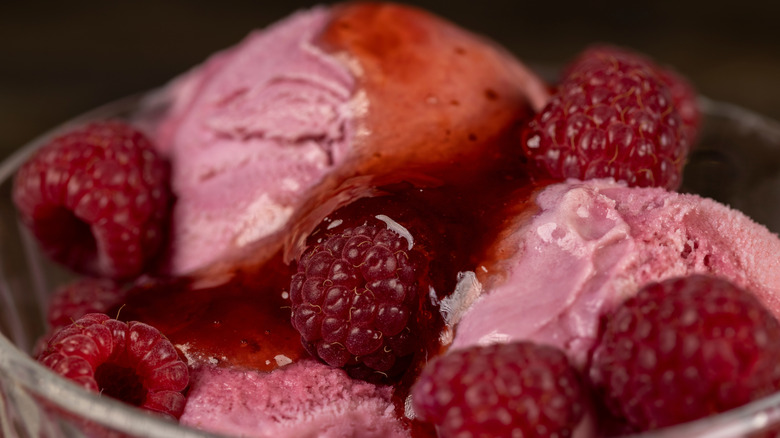
Listen, we get it. Vanilla ice cream is delicious, but isn't going to cut it all the time. If you're making ice cream at home, you want something elaborate. Exciting. Daring. Maybe even something boozy, like a bourbon ice cream? But beware, because the wrong flavors can absolutely ruin your ice cream.
"I have a list I call 'the tasty three anti-freezes' including: sugar, salt, and alcohol," Tyler Malek says. "Ice cream flavors that are especially high those three ingredients are very very tricky." He's totally right: All three can alter the freezing temperature of your ice cream base and leave you with a goopy mess.
Tamara Keefe also cautions against going too overboard with your flavors. Trying to do too much at once is a recipe for disaster, whereas more straightforward combinations provide an opportunity to branch out.
"The best flavors usually have a really clear point of view," Keefe explains. "Start with something you love and think about what would make it even better. Maybe it's really good chocolate with espresso, or strawberries with a little something unexpected. You want the flavors to work together instead of competing with each other." In other words, don't overdo it, but don't be afraid to be creative. But also maybe don't start with oyster flavor.
Not tasting as you go
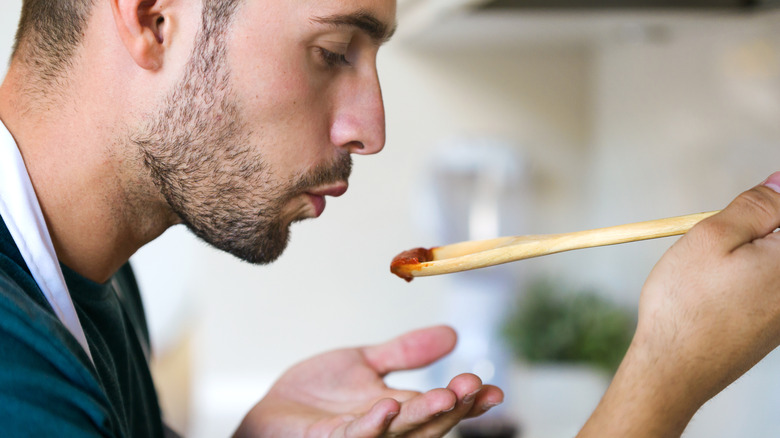
Granted, this mistake applies to pretty much all cooking, not just homemade ice cream. Home cooks just forget, or even refuse, to taste as they go. And since making ice cream might already be a new, unfamiliar process, tasting it along the way becomes that much easier to forget. If you don't taste as you go, though, you are flying blind and will find yourself in a heap of icy trouble.
"If the flavor isn't great before it goes into the machine, the machine isn't going to magically fix it," Tamara Keefe says. "Pay attention to your ingredients, your temperatures, and your texture, and then have some fun with it."
Tyler Malek agrees wholeheartedly. "I always teach people to flavor their ice cream base as if they were making soup," he says. "Add your flavoring ingredients (i.e. spices, salt, vanilla) in pinches at a time and taste constantly until it is exactly what you want."
Sometimes the best advice isn't all that complicated. Paying a little extra attention to your culinary creation makes all the difference.
Thinking it's not worth it
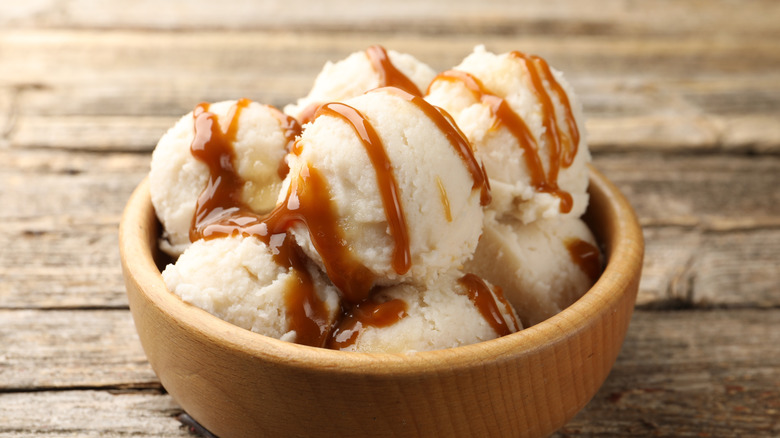
By now, you might be feeling that maybe this whole making ice cream thing isn't worth the time and effort. But that might be the biggest mistake of them all.
Both of our experts were unequivocal in their love for homemade ice cream. "There is no way to compete with fresh churned ice cream," Tyler Malek says. "Even scientifically, it's the best the ice cream will ever be, and [it] only begins degrading the moment it goes in the freezer. Flavors pop stronger, texture is decadent and creamy, and the ice crystal formation is silky smooth."
Naturally, customization is also a major perk of making ice cream at home. "You can play around with flavors, use really good, high-quality ingredients, and make something that you probably can't find at the grocery store," Tamara Keefe says. She also emphasized the satisfaction and fun that comes out of starting the process from scratch and guiding it every step of the way, from base to bowl, as something that's completely your own.
"The best part is that you get to keep learning," Keefe says. "Maybe the first batch isn't perfect. That's okay. Make another one. That's how you figure out what you like." And isn't that what home cooking is all about?