
Who Makes Costco's Kirkland Signature Brut Champagne?
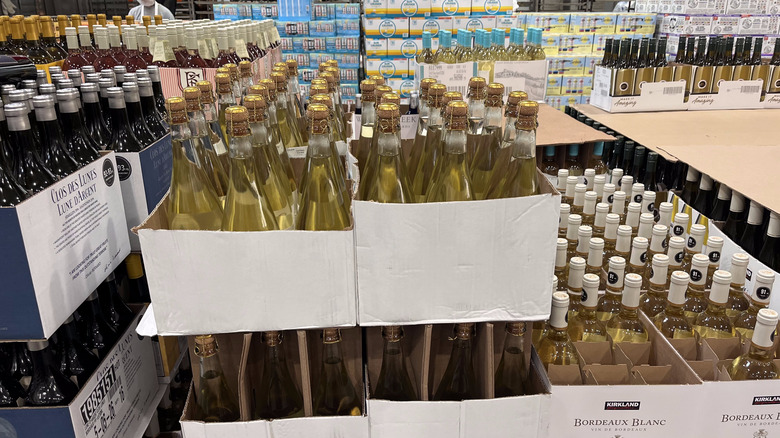
Costco's Kirkland Signature range is famous the world over thanks to its consistency, quality, and great value. Behind many of its products are big-name brands, but Costco isn't known to hand that information out willingly. But in a rare break from precedent, the bulk-buy chain has revealed the maker behind its Kirkland Signature Brut Champagne. Well, kind of. Eagle-eyed shoppers have spotted that on the bottle's label, Manuel Janisson of Verzenay is clearly identified as its maker.
Manuel Janisson is a French third-generation winemaker and the founder of the Champagne house Janisson & Fils, located in the Grand Cru village of Verzenay in the Montagne de Reims region of France. Verzenay is only one of 17 Grand Cru villages within the entire Champagne region. Historically, a "100% Grand Cru village" rating meant that growers and producers in these villages could charge 100% of the fixed baseline price set for Champagne grapes. This official price-setting ladder was eventually phased out, but its Grand Cru label remains a reliable marker of historical prestige and high-quality terroir.
Fittingly, the Kirkland Signature Brut is a blend of all three principal Champagne varieties — pinot noir, chardonnay, and meunier – reflecting the broader grape growing identity of the village and the region. Verzenay itself is particularly associated with pinot noir, which dominates the village's vineyards, alongside smaller plantings of chardonnay. That said, while Manuel Jannison is based in Verzenay, that doesn't necessarily mean every grape in the blend came from Grand Cru-classified vineyard parcels (a topic of heated debate within the wine community). But regardless of whether or not the wine was made using 100% Verzenay grapes, the bottle has recieved a stellar reception from casual drinkers, connoisseurs, and critics alike, all of whom consistently praise its exceptional value at under $30.
What makes a brut Champagne distinct from other styles?
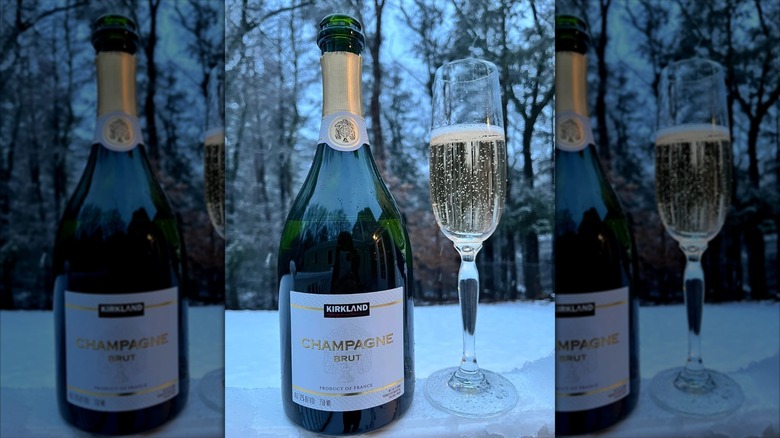
If you're browsing Costco's impressive Champagne collection, you'll notice bottles like Kirkland Signature Brut Champagne sitting alongside bottles simply labeled as "Champagne." This isn't an accidental omission. Champagne is the broad category, used to describe sparkling wine made exclusively in the Champagne region of France. It's produced using specific traditional grapes, either on their own or in a blend, and follows a strict traditional-method production process that involves a second fermentation in the bottle, which is what gives Champagne its natural carbonation. It can come in a range of sweetness levels, from bone-dry to very sweet, and this is where brut comes into play.
Brut is a French term meaning "dry." Specifically, it's used to describe Champagne containing less than 12 grams of sugar per liter. The term is also used for others styles of sparkling wine, including Prosecco and Cava. The result is Champagne that's generally crisp and dry, rather than rich and noticeably sweet. Sitting toward the sweeter end of the spectrum is demi-sweet, which contains between 32 to 50 grams of residual sugar per liter. Given its pronounced sweetness, it's particularly well suited to pairing with dessert.
There are plenty of other terms that can boost your Champagne knowledge, too. Vintage Champagne is made from grapes harvested in a single year, typically one deemed exceptional by the producer, and must be aged for at least three years before release. You'll most famously find it in prestige bottlings from houses such as Dom Pérignon. Then there's Blanc de Blancs, which is made exclusively from white grapes, and Blanc de Noir, made entirely from, you guessed it, black grapes. Once you get your head around these terms, navigating the Champagne aisle becomes a whole lot less intimidating.