
14 Japanese Dishes To Try Besides Sushi
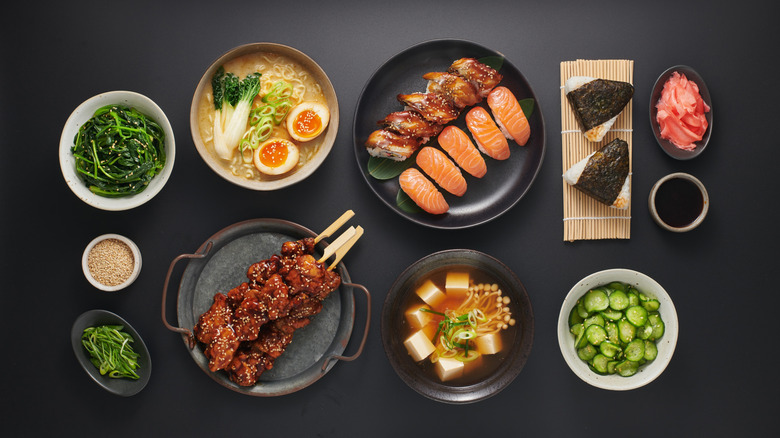
When you think of Japanese food, odds are sushi is one of the first things that come to mind. That's not surprising considering how prevalent the meal has become over the past few decades. But there's far more to Japanese cuisine than just finely prepared fish and wasabi.
With an emphasis on freshness, simplicity, and letting the food's essence shine, Japanese restaurants are spreading across the nation. In fact, 28% of Asian restaurants in the U.S. serve Japanese foods, according to a 2023 study by the Pew Research Center. While you're sure to find familiar dishes, like sushi, hibachi, and ramen, at these eateries, you'd be doing yourself a disservice to not try some of the island nation's lesser known meals.
This list showcases some of Japan's favorite dishes, from street foods to home-cooked meals to fine restaurant fare. While you may have to look for a restaurant in your area that serves some of the rarer items, it's well worth the search. And be sure to check out our guide to dining at a Japanese restaurant for a few essential phrases and more on what to expect during your visit.
Omurice

Followers of food accounts on social media might have seen videos of people using chopsticks to create soft omelets that are laid across piles of fried rice. This incredible meal is called omurice, and it's been a comfort food in Japan for decades. Often considered nostalgic because of its inclusion on children's menus throughout the country, omurice is experiencing worldwide popularity, thanks to those viral videos.
The dish has many variations but is generally an omelet cooked very soft with rice, ketchup, and other fillings either inside or under the eggs. The omelet is cut open to reveal its runny interior, which then mixes with the rice, veggies, and meats. Nearly anything can be included in the meal, from seafoods to stews. There are even cooks that swap the rice for noodles to bring in a different experience in texture and taste.
One of the main draws of the dish is how easy it is to adapt to your personal taste and what you have at home. If you don't mind a bit of trial and error, making omurice for yourself can help you use up those take-away leftovers and enhance your omelet-making skills. And even though it'll take a few tries, the "failed" omelets will still be delicious along the way.
Takoyaki
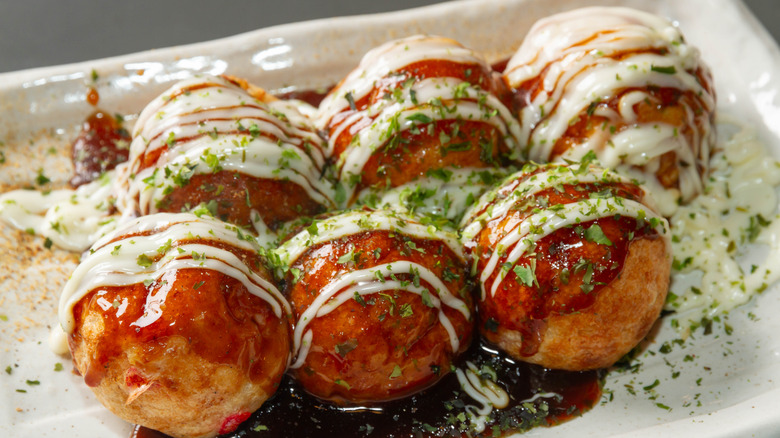
Takoyaki is one of the best known street foods in Japan. Served as a fast food option in many convenience stores (yes, Japanese convenience stores differ greatly from those in the U.S.), the dough balls are grilled in specially made pans and turned with skewers. Especially popular in Osaka, the treat is made from a wheat flour batter and pieces of octopus, green onion, and pickled ginger. The balls are often eaten on the go, after being topped with ingredients like seaweed and bonito flakes. Takoyaki, a sauce named for the dish, is reminiscent of Worcestershire sauce and is served with the dish, along with mayonnaise.
Octopus is the traditional filling for takoyaki, but different cooks will use foods as diverse as corn, bacon, cheese, and other veggies and seafood in the dish. You'll find the treat in storefronts on paper trays and on many restaurant menus, but wherever you choose to grab a few of these octopus balls, they'll likely come out very hot. So be careful not to try one before letting it cool a bit.
Tonkatsu
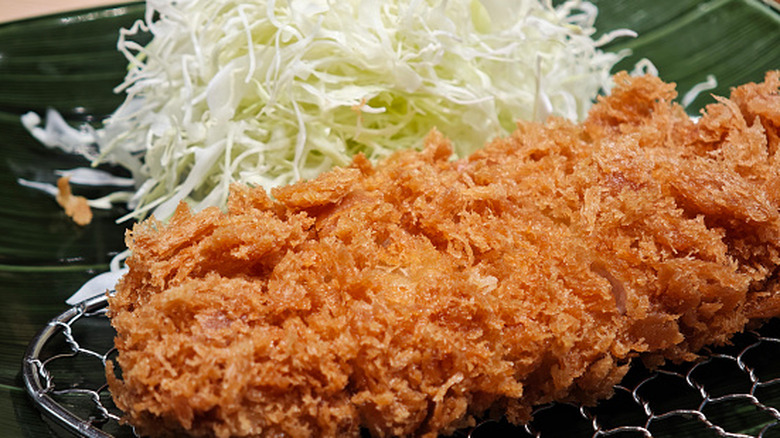
Tonkatsu is one of the items on this list that's likely to be familiar to Western palates. Made from a pork cutlet that's breaded in panko crumbs and deep fried, the dish is increasingly available on many Japanese-American menus. The crispy pork was created in Japan in the 1890s and quickly became a popular Western-style item that was incorporated into sandwiches and paired with a variety of curries, noodles, and other dishes.
Commonly served with shredded cabbage, tonkatsu is anything but ordinary. Some chefs will choose specially bred pigs for their version of the cutlets because the pigs have been fed an exact diet to influence how much fat they gain. The fat melts during cooking, giving the tonkatsu a sweet, juicy flavor that can't be replicated. Even if you're not able to try the more elite versions of the meal, any pork in the hands of a seasoned cook will be delicious.
Japanese Curry
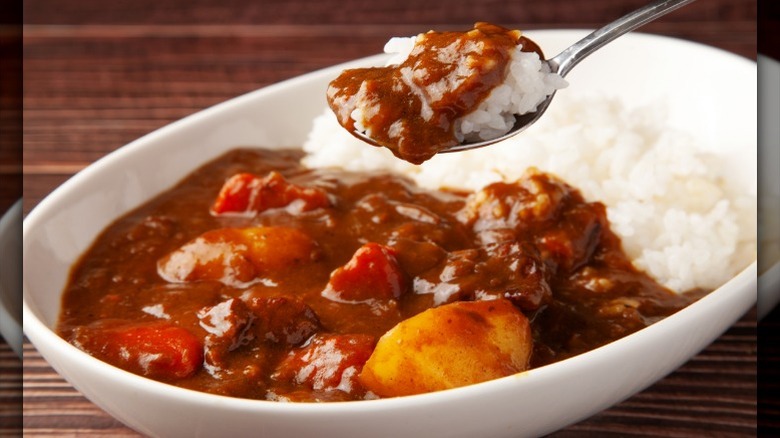
Japanese curry isn't very well known outside of the country, but within Japan, it's one of the most popular meals there is. Introduced to the country through contact between the British and Japanese Imperial navies, the dish was quickly adapted to be served over rice. A roux was also introduced into the base of the curry, making it rich and thick, which is now a hallmark of the meal.
Children eat it in school, and navy members eat it every week during their service. There are many variations of the dish from region to region, and every family seems to have their own special take on the meal, too. It's so popular that solid cubes of curry roux are sold to kickstart the process for people making it at home.
Japanese curry uses ingredients like potatoes, peas, chicken, or other proteins to turn it into something resembling a stew. Some of the most common accompaniments to the curry include tonkatsu, shredded cabbage, fried chicken, and pickled ginger. You can find Japanese curry at many restaurants throughout the country, and there's even a chain called Coco Ichibanya with more than 1,200 locations that specializes in the dish. If you're not visiting Japan soon, the chain can also be found in many European cities.
Shabu Shabu
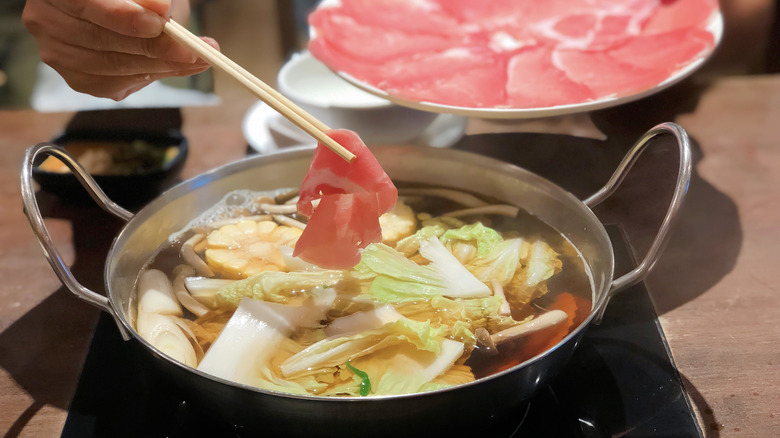
Many of Asia's diverse cultures feature a communal-style meal known as a hot pot. These dishes consist of simmering broths, in which a variety of meats and veggies cook, creating numerous distinct meals across each culture. In Japan, one such hot pot is known as shabu shabu, and it gets its name from the swirling sound the meat makes when it's dipped into the broth to quickly cook through.
While vegetables are a big part of shabu shabu, it's often beef that steals the spotlight. Shaved into ultra-thin slices, these pieces of protein are beautifully marbled and especially tender when cooked rare. Specialty sauces are served with the shabu shabu, too. One is citrus-based and the other is made from ground sesame and soy sauce, giving distinct flavors to the different meats and other ingredients.
Versions of the dish have been around for centuries, but the modern option came into fashion immediately after WWII. Many restaurants now offer split pots, so that you can choose two different flavors of broth.
Okonomiyaki
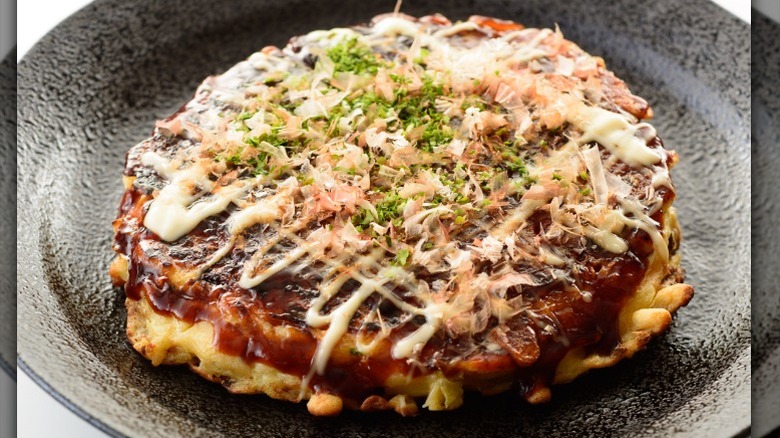
If you've ever visited Osaka or Hiroshima, you probably encountered a veggie-based pancake called okonomiyaki. The dish originated in Hiroshima, but the name came from Osaka. However, there's no doubt that both cities serve its version with pride.
In Osaka, a variety of veggies, including cabbage and mountain yams, are mixed with wheat flour and eggs to create a thin batter. All of it is cooked together and topped with things like bonito flakes, Kewpie mayonnaise, and other sauces. The Hiroshima version is made with all the different ingredients cooked in thin layers before being put together and topped with an egg. Yakisoba (which we'll talk more about in a moment) gets incorporated, too, so the Hiroshima okonomiyaki is a hearty meal.
The pancakes can be vegetarian, but plenty of people enjoy pork belly or seafood incorporated into them as well. In some areas, you can even find various cheeses on top of or inside the dish. Really, it's up to the cook and/or the diner to decide what comes on or in the pancakes, which makes sense — the name okonomiyaki translates to "as-you-like-it."
Yakisoba
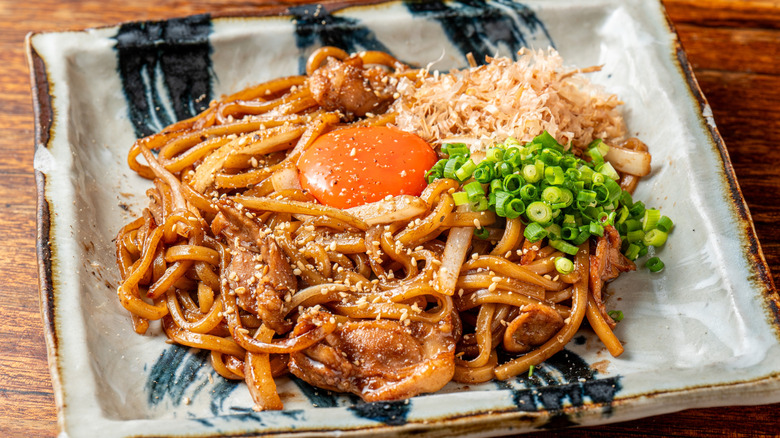
Made from wheat flour, the noodles in yakisoba are thick and chewy and can be served as part of a sandwich or stir-fried. While many people think that traditional buckwheat noodles are used in the dish because of the name "soba," the noodles here are called mushi chukamen. These noodles are steamed before being stir-fried with a sauce and a variety of vegetables and meats. The sauce is savory, a little sweet, and often made from Western ingredients like ketchup and Worcestershire sauce, alongside soy sauce, sugar, and oyster sauce.
Yakisoba is a popular street food in Japan, and, thanks to it being so easy to make, is whipped up by home cooks, too. Like so many Japanese foods, there are quite a few varieties, depending on which part of the country they originated in. For instance, Shio yakisoba doesn't have a sauce with the noodles. Instead, the dish is primarily flavored by salt. Ankake yakisoba, on the other hand, has a savory sauce that clings to the noodles because of the corn starch used to make it.
Udon
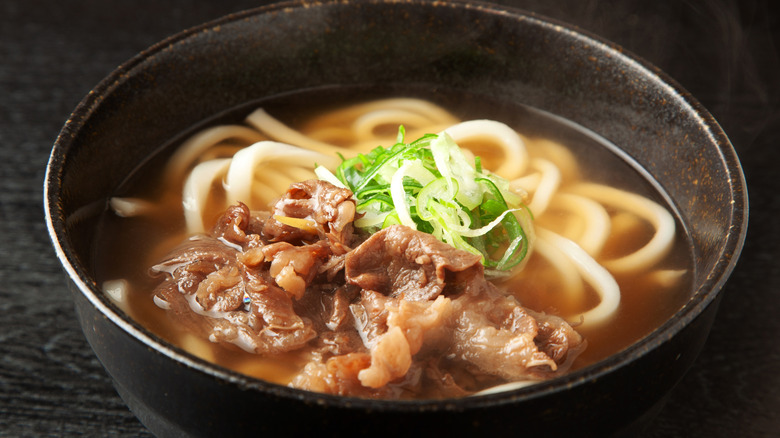
When you think of noodle dishes in Japan, it's likely that ramen is the first meal to pop into your mind. And while that's an incredibly popular and versatile dish, udon is another comforting classic that's been adapted to a variety of regional tastes. The noodles are made with salted water and wheat flour and can be made into long, thin strips or thick, round shapes depending on where you try them in Japan. Typically served in a dashi broth, udon is simple and makes a hearty meal.
The dough is so tough that it was traditionally kneaded with the cook's feet before being cut and boiled until the noodles floated in the water. Once reserved for special events and festivals, udon is now eaten daily throughout Japan and can be served hot or cold. There are several varieties you can easily find, such as curry udon, which is served in a saucy curry, or yaki udon, which is a stir-fried version of the dish with various meats and veggies. But the most common is kake udon, which is a portion of the noodles in a dashi, soy sauce, and mirin broth.
Karaage
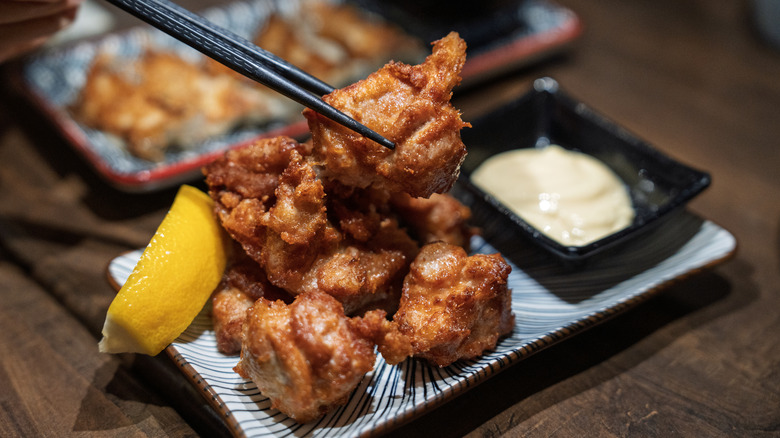
Many of the world's cultures have their own version of fried chicken, and Japan is no different. Called karaage, this dish has been around since the 1500s when Portuguese sailors introduced their methods for deep-frying to the island country. Through the centuries, the technique evolved to create a meal that's crispy, juicy, and surprisingly light, thanks to the potato starch that gives the crust a shattering texture. Found throughout Japan, karaage is a popular choice for people drinking in an izakaya, or gastropub.
Even though the dish has a long history, it wasn't until the 1930s that it started gaining steam in the country. That's partly due to the fact that chickens were expensive until U.S. restructuring projects began importing them after WWII and partly because until then karaage was made with a variety of ingredients, such as tofu and fish. But as soon as people began trying the frying method with chicken, something clicked, and the meal became a national staple. There's even a national Karaage Grand Prix each year in Tokyo where chefs can show off their skills and recipes. That's one trip we'd definitely like to take.
Yakitori
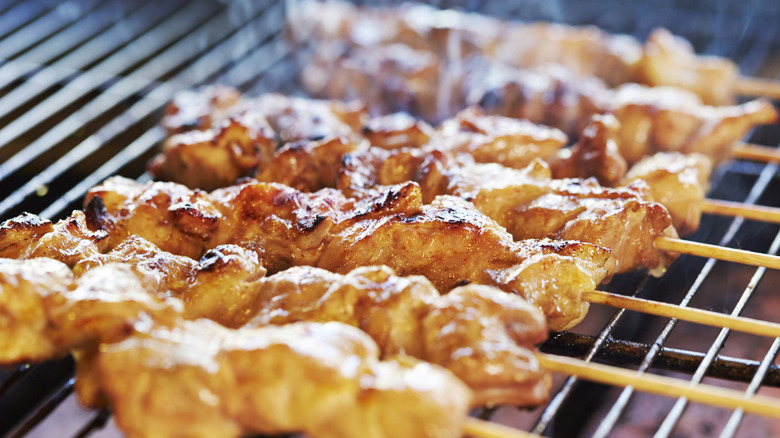
Yakitori is something you've probably seen on the menu at Japanese restaurants. This dish consists of grilled skewers of nearly every part of a chicken, from the breast and thigh meat to the cartilage to the skin. This meal is quite informal and is often found as a bar food or in specialized yakitori restaurants. Cooked over charcoal, the meat is glazed in a sauce before and after grilling, giving it a distinctly savory taste and a smoky char.
The meal is fairly new because meat was forbidden in Japan for over 1,200 years, with the prohibition being repealed in the 1800s. That's when roadside stalls began grilling the castoff parts of chickens and other birds. The dish really took off in the 1960s when chickens became more popular and widespread across the country. Today, yakitori restaurants cook a variety of meats on skewers, and veggies are often included spaced between the pieces of meat or on sticks by themselves.
Donburi
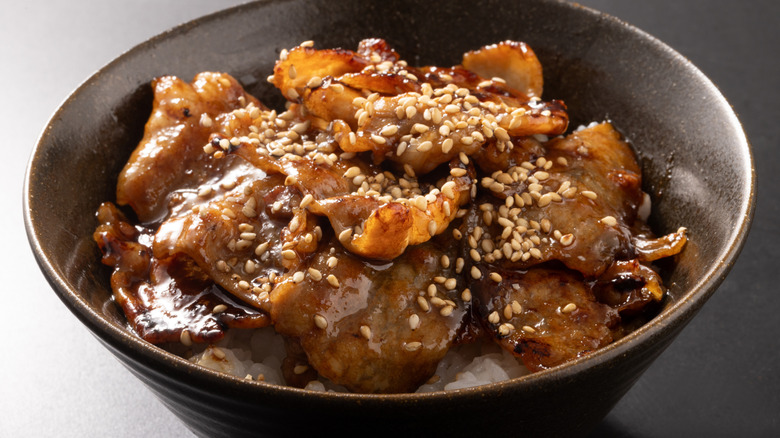
Donburi is one of Japan's ultimate comfort meals. This hearty, filling meal is essentially a rice bowl that's topped with meat and/or veggies that have been simmered in broth. There are several popular versions of donburi, such as kaisendon, a seafood bowl, tendon, a tempura bowl, and katsudon, a pork and egg bowl.
The dish has been around for hundreds of years and has evolved to have its own serving bowls that are larger than the usual ones used for rice. That's because this is an all-in-one meal that needs the extra space to hold the rice, toppings, and broth. That one-bowl approach helps give the meal a homey, informal feeling.
The meal is also inexpensive, as you can use just about any meat or vegetables on it. But if you wanted to use higher quality ingredients, the price will go up. If you want to try making your own donburi at home, Costco has several Japanese ingredients, like rice and Kewpie mayo, to get you started.
Onigiri
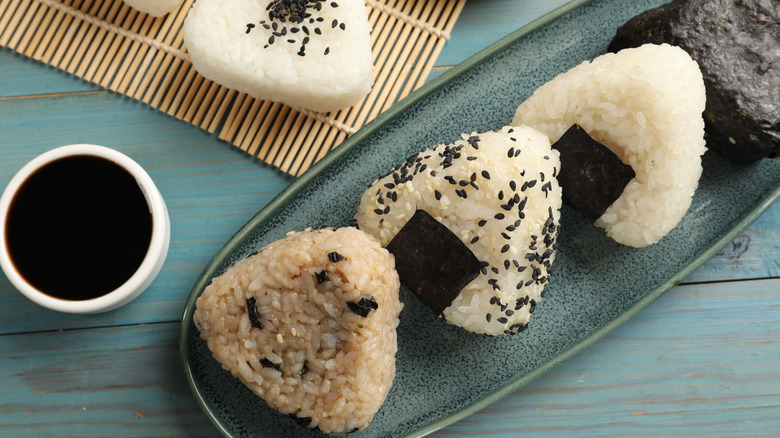
Fans of anime are sure to have seen rice molded into triangular, cylindrical, or round shapes and filled with various ingredients being eaten by one of the characters. These portable snacks are called onigiri, and they're often covered or decorated with pieces of nori, a kind of dried seaweed. The rice treat is experiencing a renaissance because of its popularity on social media throughout the world.
Onigiri can be found at a wide variety of shops in Japan, including convenience stores, but the rice balls have been around since at least the 8th century. Traditional fillings include pickled plums, tuna flakes, salmon, braised pork, fish roe, and seaweed, but as onigiri's popularity grows, people are becoming more inventive with what goes into the molded rice. Now you can find them with chicken, avocado, kimchi, cheese, and more.
Yakiniku
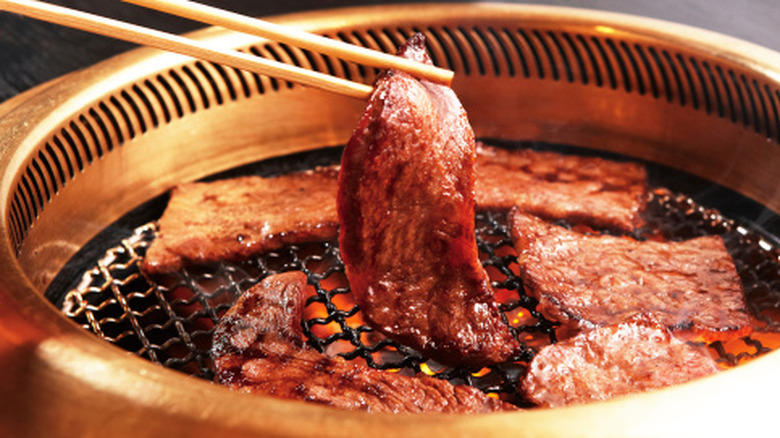
You're probably familiar with Korean barbecue, but did you know that there's a Japanese version, as well? Called yakiniku, this style of tabletop grilling is a combination of Japanese and Korean traditions that started in the years after WWII. The Japanese version relies on subtle sauces that let the flavors of thin pieces of meat shine, and people even use the interactive experience as a way to try some of the best Wagyu beef the country has to offer.
Eating yakiniku is a communal event, although there are plenty of restaurants where people can dine solo while grilling their meal. The roasters are often built into the table itself and have extraction fans that keep the smoke from covering the diners. There's also a particular order to cooking the meat, with leaner pieces coming before the fattier pieces. That's to keep the grill from flaring up and to keep your tastebuds from being coated with oil too early.
The other thing to be careful of is not overcooking the meat. The pieces are very thin, so they generally cook in just seconds. When you're paying for premium cuts like Wagyu, the last thing you want is for it to be tough and dry. So just let the meat sear for a moment before removing it from the heat and enjoying the tender, unique taste.
Gyudon
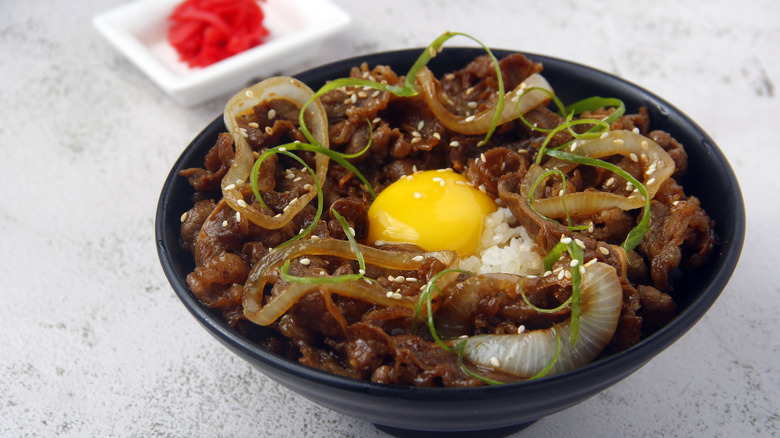
Gyudon is a type of donburi with thin slices of beef, onions, and soy, sake, and other sauces. It comes from the late 1800s when the creator made inexpensive food for fishermen. Gyudon is a quick, comforting one-pot meal that's both filling and incredibly tasty. That's why it's one of the most popular dishes travelers find in Japan. In fact, there are several restaurant chains in Japan that are devoted to the meal.
While the base of gyudon is largely the same no matter where you get it, but there are a variety of toppings to add a bit of individuality to the bowl. An egg with a runny yolk is one of the most common ways to add a bit of rich silkiness to the meal, and toasted sesame seeds give the dish a hint of nutty bitterness. Scallions add some crunch, and shichimi, or Japanese seven spice, can punch up the flavor with a bit of heat.