

12 Foods Prospectors Ate During The California Gold Rush
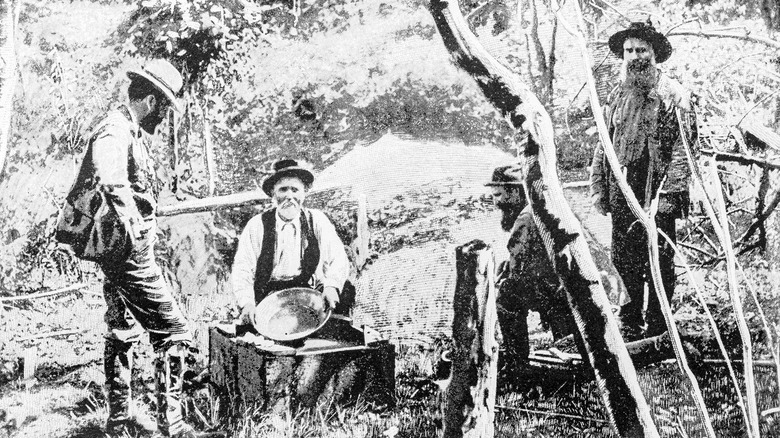
Being a gold prospector during California's gold rush was, perhaps surprisingly, not the most glamorous existence known to man. Visions of rivers twinkling with gold and the luxuries such a discovery would bring quickly ceded way to the realities of the hard, lonely, and dirty work required to hit it rich.
Prospectors came from all over the country, and far beyond, in search of their fortunes. In doing so, they brought cultural culinary practices and expertise that would go on to influence the region for years to come. So the question is: what did these rugged dreamers eat when they were gathered around their campfires at night? Here's a look onto the plates — or should we say, tins — of gold rush prospectors.
Fresh meat, both hunted and imported

The Sierra Nevada mountains, which much of the gold rush radiated out from, has always been a lush ecosystem of flora and fauna. This was good news for gold miners, who could be away from civilization for weeks at a time, as they could take advantage of the deer, bears, and game birds that resided in the area. Some were even able to create income streams by selling the freshly-killed meat in San Francisco. With the influx of residents the gold rush brought, there were more mouths to feed, meaning more people hunting for game; in fact, that the local elk population was nearly wiped out.
The amount of money and people moving around during this time also opened up new business opportunities. Sailors began importing Galapagos sea turtles by the hundreds, which were turned into the classic turtle soup – a favorite of U.S. President William Taft, among other folk with the money to buy it. Turtle meat could sell for up to $18 a pound, the equivalent of over $700 today. Turkeys and Atlantic cod were also brought in to supplement the region's naturally-occurring sustenance.
Beans
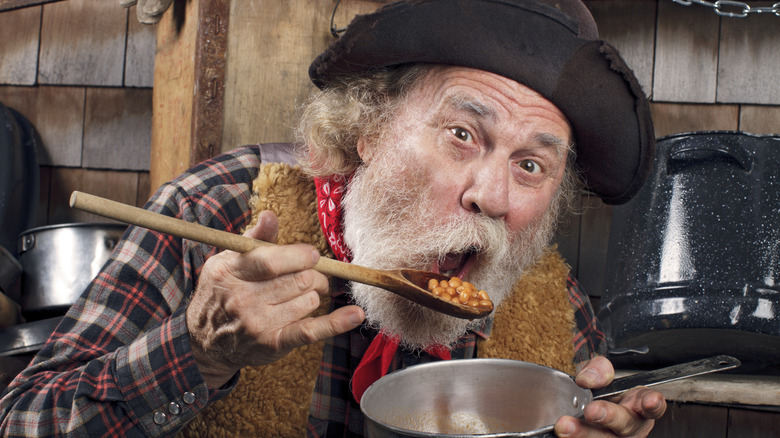
If there's one food most associated with nights spent around a gold mine campfire, it's beans, and not just because of the legume's cameo in "Blazing Saddles." An inexpensive, non-perishable food hauled by the sack-full and packed with protein and fiber, beans were the perfect camp meal.
Charro beans were a staple among cowboys of the Old West. Also known as bean stew, this meal called for cooking the beans with a chunk of cured meat, onions and garlic if available, chilies, and herbs, making it an early Mexican-American fusion meal. It wasn't glamorous and it wasn't gourmet, but it was often all that was available to those who had yet to hit it big and come into real money. As Mark Twain's 1871 poem "Miner's Lament" goes: "Amid these dark and dismal scenes, I've struggled with an adverse fate, And lived, ah me! on pork and beans." The title reflects the time period in which these legumes were a major source of sustenance for many.
Salt pork, bacon, and jerky
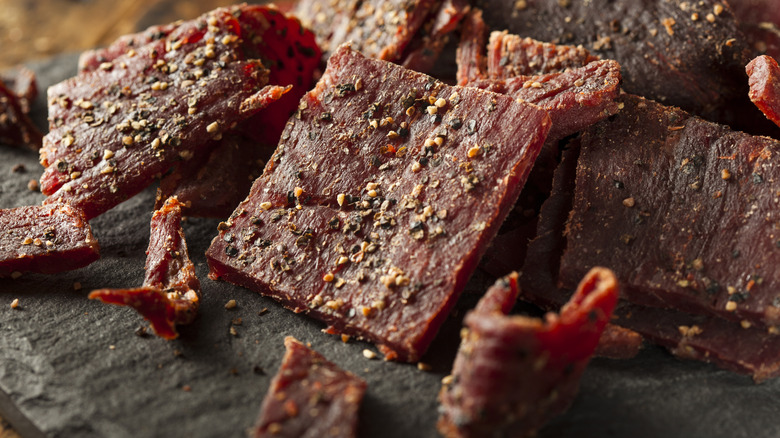
Cured meats were a dietary staple of those born to roam in the time before refrigeration. For groups from pirates to gold prospectors to cowboys, salt pork, jerky, and bacon were perfect foods to bring on a long journey. They kept many a prospector going through the lonely nights and long days away from their families and the rest of the world.
Jerky, a name originating from the Quechua term ch'arki, could be bought from traveling merchants or on the sporadic trips into towns and cities, but the Old West meaty snack could also be made by sun-drying strips of the seasoned meat until all the moisture evaporated out of it. Salt pork wasn't fully dehydrated, but rather, as the name implies, required a salt rub to remove some of the water and kill bacteria, making it similar, though different from, bacon, which utilizes flavored smoke to impart its signature flavor and delicious odor.
Hardtack
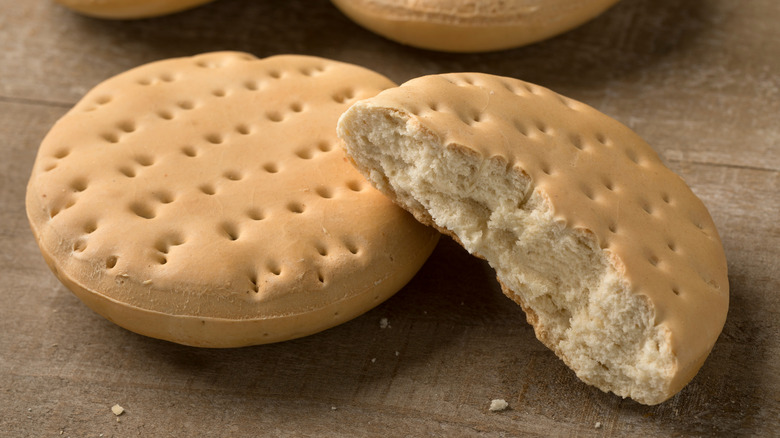
Hardtack might not have been tasty — heck, it might have been just barely edible — but it served a vital purpose as a cheap food to travel with and fill out an underwhelming meal. The nicknames it accrued over the years (molar breakers, tooth dullers, sheet iron, and worm castles, to name a few) indicate that it was a less-than-beloved food source; nevertheless, its utility was clear, as variations of the nearly-indestructible biscuit have kept people fed for thousands of years.
To eat hardtack, miners would often dip it into some form of liquid like coffee or water first. This would not only soften it up and make it safer to consume (since it's not like they had dental plans), but also would hopefully drive out any insects that had taken up residency — after all, that "worm castle" nickname wasn't chosen arbitrarily. It could also be thrown into stews or soaked in water to create a mash that was then fried in leftover pork fat, if any was available, or simply chewed and sucked on while working until it finally became something more easily identifiable as "food."
Chili
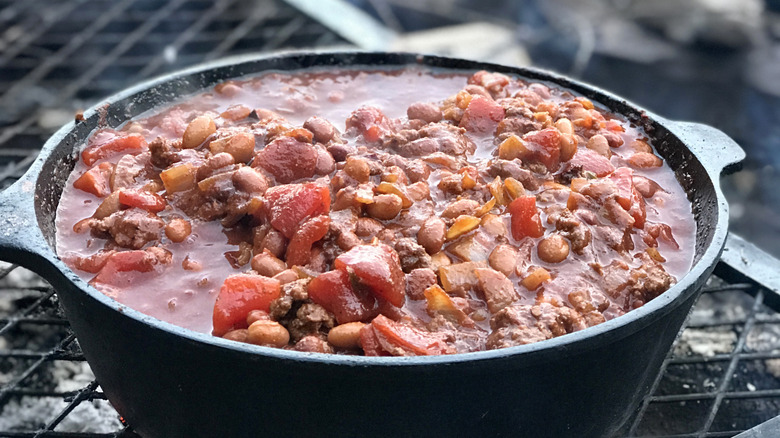
By the time the gold rush was up and, well, rushing, the influence of Mexican food had already begun creeping into the diets of cowboys of the Old West, thanks to interactions with their hispanic counterpoints, the vaqueros. This led to the popularization of one of the first dishes in Tex-Mex history: chili con carne.
While this classic stew is considered to have risen to widespread national fame thanks to the 1893 Columbian Exposition in Chicago, there are records that indicate that chili was invented by Texans for their journey to the California Gold Rush. They fused dried beef, chili peppers, spices, and some kind of fat together into dehydrated bricks, which they would bring on the road and rehydrate with boiling water for a tasty, hot supper after a long travel day. In essence, that makes chili con carne the prototype of modern instant ramen. We can't say we're too upset that we left rehydrate-and-eat chili in the past, though.
Cornbread
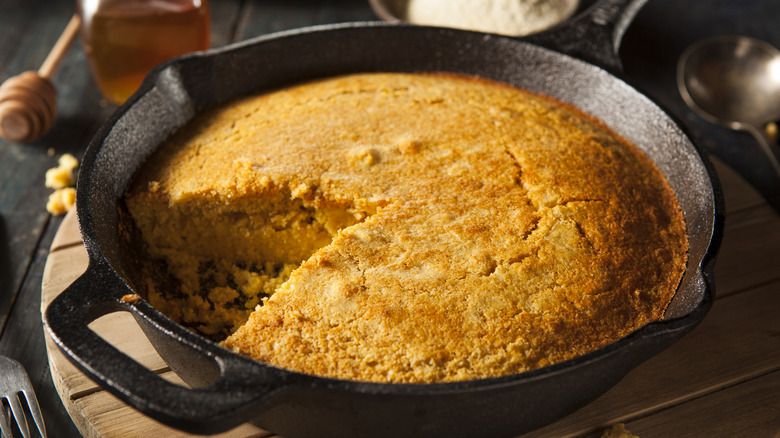
The expression may be "as American as apple pie," but if there's one dish that truly deserves the mantle of America's iconic food, it may very well be cornbread. Cornbread took root as an early combination of indigenous ingredients and techniques and colonial bread-making practices, and it has taken many forms as it has traveled throughout the country. Sometimes it's more cake-like and sweet, other times more dense and savory.
In gold rush-era California, cornbread was more sustenance than sweet treat. Sourdough starter was often used as a leavening agent, and miners would cook it on a skillet over a campfire. Often, the dish was less like the pans of cornbread modern day diners are used to and closer to the the old-school cowboy snack corn dodgers. This corn-based staple was a dough made of corn meal, pork grease, boiling water, salt, and sometimes sugar, which was then fried in patties, making them closer to an offshoot of hush puppies.
Flour mush
Despite the somewhat extensive nature of this list, it shouldn't be forgotten that a majority of gold prospectors were roughing it in the most literal sense of the term. Only a small fraction of prospectors got rich from their discoveries, and those who did often found that money difficult to hold onto in the boomtown economy built around taking advantage of newfound wealth.
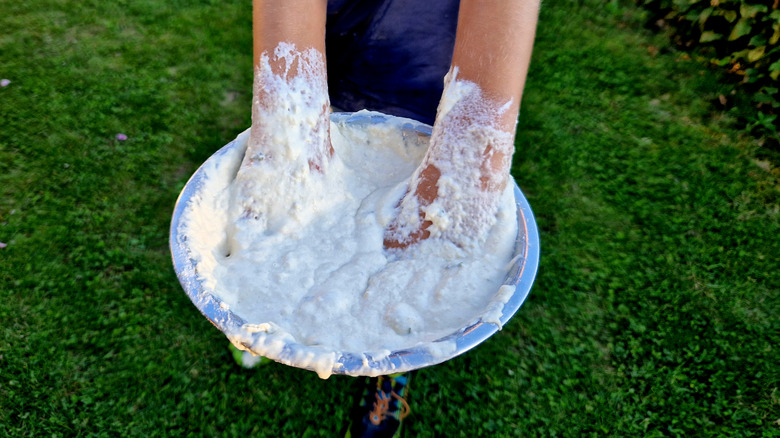
Because of those hard conditions, there were plenty of times when there simply wasn't enough food to make an honest meal. Desperate, miners had to get creative to stretch what few ingredients they had. One such concoction was a mush made from combining flour, cornmeal, and sour milk. That may sound alarming, but some bakers actually prefer using sour milk for bread, as the buttermilk-like dairy provides both a tangy, sourdough-like flavor while working as a natural leavening agent. While it's not something you'd want to take a swig of, it's generally considered safe to use in the baking process.
San Francisco sourdough
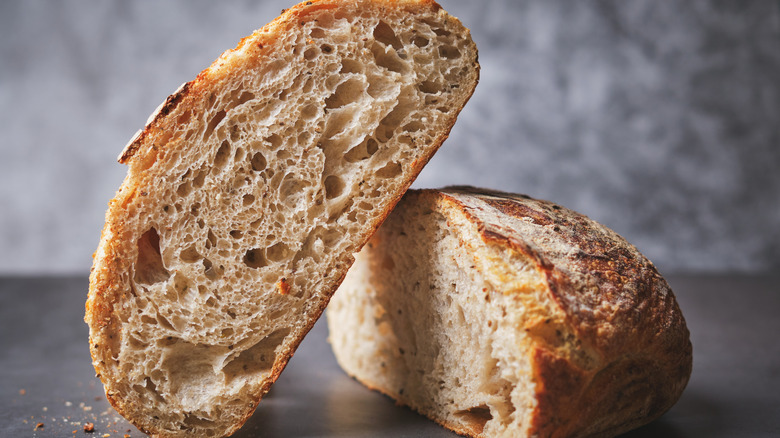
One particular food staple of the California Gold Rush became so ubiquitous that the city of San Francisco is still known for it to this day. Sourdough starters became one of the most relied-upon ingredients in a miner's life, with many prospectors even cuddling them to keep the starters warm on chilly nights to prevent the cultures in the sourdough starter from dying. Starter could be maintained easily even in sparse conditions, providing many loaves of bread throughout its life. Don't forget: the world's oldest sourdough starter was revived 4,500 years after it seemingly died.
Sourdough was so tied in with the culture of the gold rush that the miners who had earned their stripes and put in time on the scene became known as "sourdoughs." It wasn't necessarily the deliciously tangy carb you might be envisioning, though. Instead, it was more often made into hard, tough loaves that could easily make you sick; most of the lone, unmarried men usually had few cooking or baking skills. Still, good things came from it. Bean stew with sourdough became a classic dish of the day, and the legacy of the bread lives on in San Francisco's Boudin Bakery, which has been known for its sourdough since 1849.
Ash-baked fish
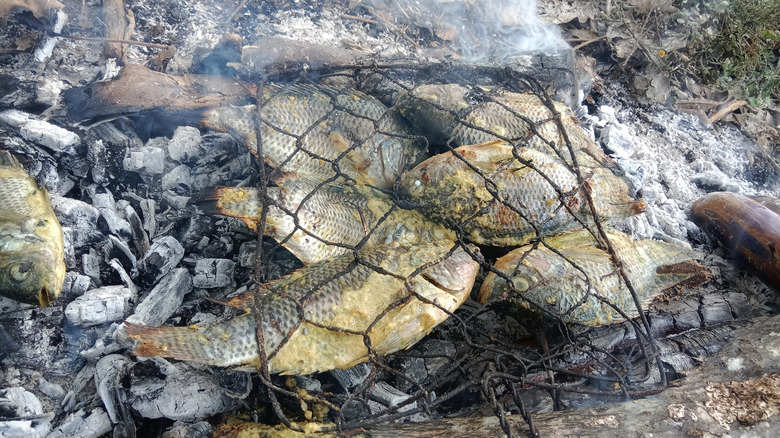
One of the common places to hunt for gold was in the pristine California rivers, which became progressively less beautiful as the gold rush industrialized and left mercury contamination in its wake. Early miners hand-panned for that precious bullion, and as they did so, they would undoubtedly have noticed the rivers filled with sustenance-giving life.
Salmon, rainbow trout, and other fish swam in the waters fed by the Sierra Nevada mountain range, and often provided a much-needed ration of fresh food to the isolated fortune-hunters. Prospectors could build a fire, wrap the fish in leaves, and cook it buried in the ashes. If they knew what they were looking for, herbs like sage and onion grass could sometimes be found as well, turning a simple fish into a feast for bedraggled 49ers. Since this technique didn't require any pans or cooking equipment, it was an easy way to get in what surely felt like an extravagant meal at the time.
Butter on ice
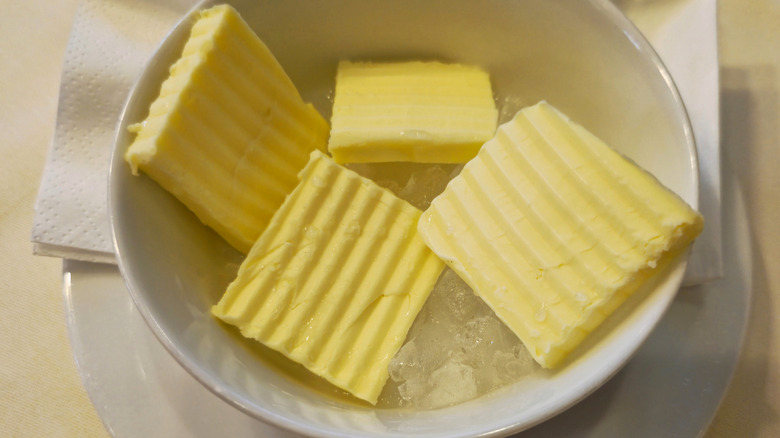
While it may have been fewer and further between than people expected or hoped, some miners, also known as Argonauts, did, indeed, hit the jackpot and become rich from gold prospecting. For them, an industry of exotic delights awaited in the nearby San Francisco, and soon a few people were leaving the wilderness with more money than they knew what to do with.
Extravagant displays of wealth are endemic to any group of nouveau riche, and miners were no exception. Some people blew their hard-won gains on alcohol, gambling, and other vices. Others bought real estate. And still others ate butter on ice. If that doesn't sound like the life of luxury to you, well, don't knock it 'til you try it? Okay, we admit, it's hard in the modern day to make that sound like a real treat, but at the time, both butter and ice were prized commodities. A pound of butter could go for $20 in California in 1851, the equivalent of roughly $870 today. Meanwhile, ice was imported straight from Alaska, which was Russian-controlled at the time, to San Francisco to accommodate the styles and fancies of the newly-rich. Thus, butter on ice was a status symbol that was hard to beat.
Hangtown Fry
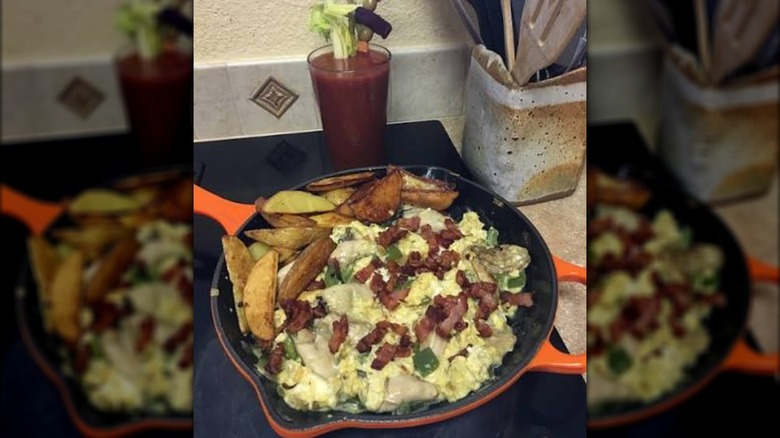
Anywhere that experiences such a rapid population influx from so many different places is naturally going to end up with some interesting culinary innovations. One of the gold rush's enduring legacies is a breakfast dish that, even for today's standards, feels indulgent: the Hangtown Fry.
Like butter on ice, the Hangtown Fry's raison d'etre comes down to a simple equation: what is the fanciest combination of ingredients available? The legend goes that a miner, presumably fresh off a big score, called for the most expensive meal the El Dorado Hotel in Placerville, then known as Hangtown (the less about that, the better), had to offer. The kitchen accepted the challenge and responded with an omelet loaded with bacon and oysters, with the explanation that the eggs had to be packed carefully to survive the trip from the coast, the bacon was imported from back east, and the oysters were brought daily on ice from the San Francisco bay. The dish was such a popular concoction that it can still be found throughout the wider Bay Area to this day.
Chinese food
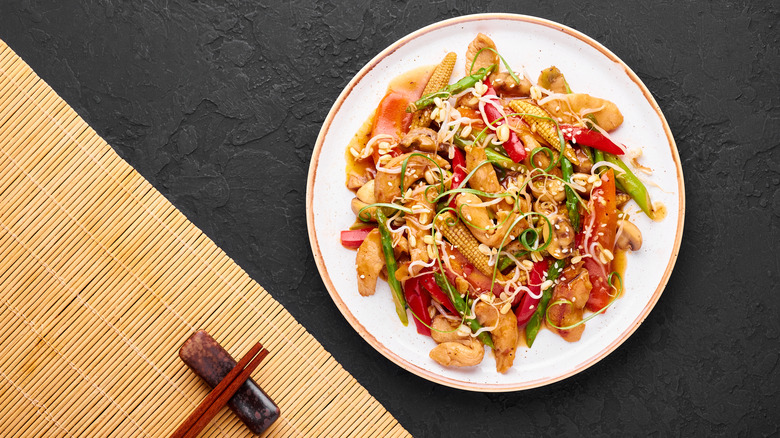
While a 49er camp might not be generally thought of as an ethnic melting pot, there was some real cultural exchange taking place. Thousands of Chinese citizens immigrated to California during this time. The population went from the hundreds to the tens of thousands in just a few short years; a majority came from the Cantonese Guangdong province. Many set up residence in San Francisco, where they established North America's first Chinatown.
This directly led to the rise of Chinese food as one of the most popular and widespread cuisines in America to this day. The origins of sweet and sour sauce as we know it today are rooted in the gold rush, as is the country's love of chow mein. The dish chop suey was allegedly invented out of necessity one late night when a miner came to a Chinese restaurant, known at the time as a chow-chow house, that was almost out of ingredients. The cook threw whatever was left together and unknowingly invented a staple of Americanized Chinese food.