

Cowboys Enjoyed These 5 Mexican Meals In The Old West
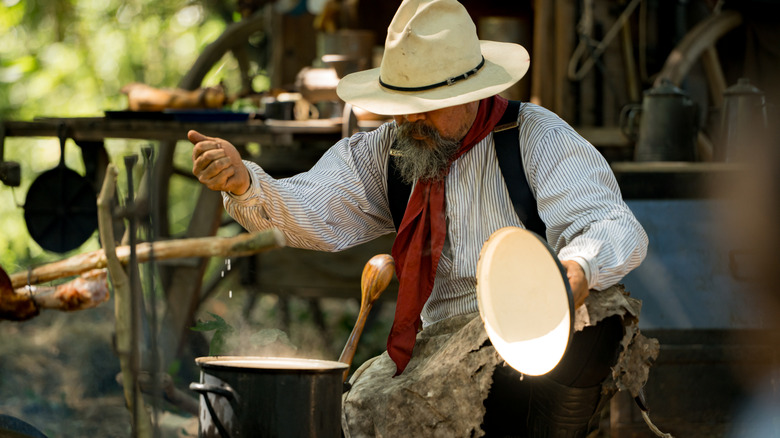
The settlement of the American West has become the stuff of romance and legend, depicted in countless works of literature and film. The veritable knights of the Old West were the cowboys, moving livestock, sleeping under the stars, and cooking their meals over campfires. But what exactly did these wranglers of the American Frontier eat as they stared into the flames and glowing coals?
The cuisine of the Old West, including that very strong cowboy coffee, was hugely influenced by food supplies and recipes brought by the Mexican vaqueros. Various familiar Tex-Mex dishes found in U.S. restaurants and kitchens today were first found on the plains among the vaqueros and cowboys.
Known as the "original cowboys," the vaqueros had been honing the skills of cattlemen for generations before moving into the Western and Southwestern regions of the United States. For vaqueros, ranching had been a matter of survival, not just a way of life, for centuries, and they were good at their trade. These highly skilled ranch hands and horsefolk found abundant work in the new territories of the United States, and their ways of living, dressing, and eating largely shaped the formation of the American cowboy as we know him today.
Many of the food practices used by cowboys in the Old West were learned from the vaqueros, who had cultivated methods of surviving on the trail long before, using foods that could be carried along in their saddlebags or hunted and foraged along the way. The creation of the chuck wagon expanded food options on cattle drives, but many of these foundational Mexican staples and methods remained integral components of cowboy cookery.
Son of a gun stew used up less desirable cuts of meat
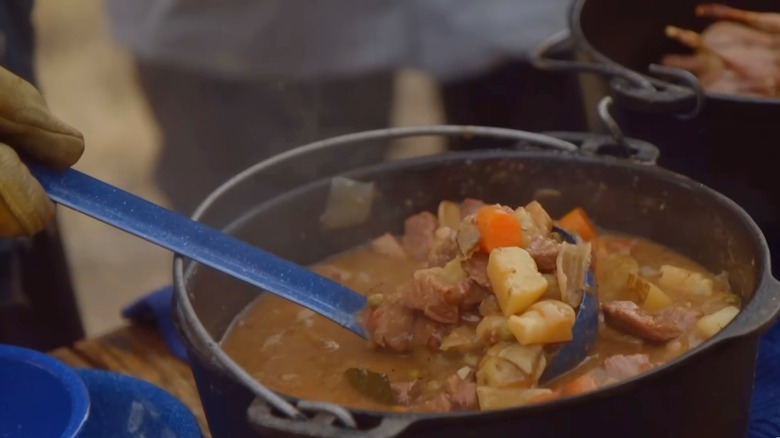
The dish that came to be known as Son of a Gun Stew — the less polite name being Son of a B***h Stew — didn't evolve much from its Mexican origins, being very similar to a Mexican soup like menudo or pozole. The stew utilized the organ meat and other unwanted elements from animal carcasses that couldn't be sold. Rather than throwing out these components, though, the frugal cowboys, vaqueros, and chuck wagon cooks utilized them to create filling, nourishing soups that would help sustain them on the trail.
Refrigeration was not an option until the early 20th century, so ingredients like vegetables were scarce on the trail, due to their perishable nature. The most one would encounter in a Son of a Gun Stew cooked on a cattle drive might be an onion or two — nicknamed "skunk eggs" by the cowboys. Well-stored onions can last for months, so they were one of the few practical take-along options for fresh produce.
Son of a Gun stew was literally a "pot luck" affair — you never quite knew what you might be getting in your bowl. Whatever was on hand at the time of preparation is what went into the dish. So, on any given night, a cowboy could find himself dining on the brains and entrails of a steer that couldn't keep up with the herd or eating the boiled head of a calf. If some wild game was procured along the trail, offal from that creature might go into the pot, too.
Tacos were a staple
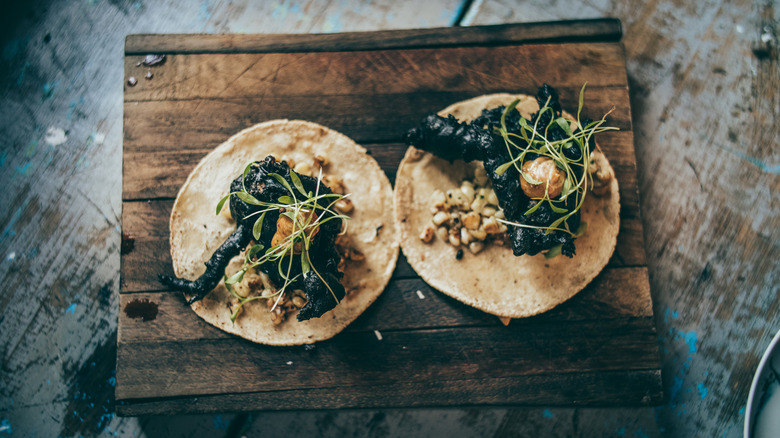
The Mexican tradition of harvesting corn, forming it into tortillas, and filling it with ingredients has ancient origins — though folks identifying the resulting dish as a "taco" came later. Vaqueros, Mexican railroad workers, and other migrants brought the practice of eating this foldable, portable food with them as they settled in the United States, giving rise to the widespread culinary phenomenon that became tacos as we know and eat them today.
The version of the taco that Old West vaqueros and cowboys ate wasn't quite the same as the crispy-shelled, sour cream- and cheese-topped affairs we enjoy now, though. As with son of a gun stew, any fillings you had on hand were what ultimately lined the inside of your tortilla. If you were traveling with a chuck wagon and its more plentiful supplies, that might include things like beans and corn. In Mexico, silver mine workers often ate small tortillas filled with organ meat or fish. On the prairie, range critters like rabbits or deer might make the cut if a cowboy was lucky enough to kill or snare one. The offal from these animals would most certainly be put to use inside a taco, as well. If a rattlesnake slithered into camp, it might also become a dinner component. Even insects could be used to add protein if that's all that could be scavenged.
A jerky-like form of cured meat carried by the vaqueros and cowboys was also sometimes used as a handy filling for tacos. These dried, sometimes salted strips of meat were also used in soups on the trail, which tortillas could be dunked into.
Mexican hash used up leftovers
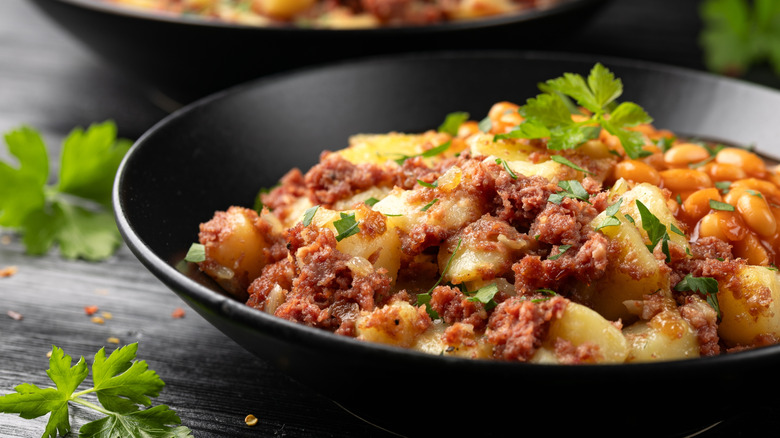
The concept of hash — chopping up various ingredients and combining them in a skillet — dates back generations and covers various nations and cultures. It has repeatedly emerged as a useful method for stretching food supplies and making new meals from old leftovers. In the United States, it was widely utilized during the Civil War as a means of stretching rations to feed soldiers. In the Old West, it became a commonly used trail recipe, enabling cowboys and camp chefs to make use of whatever was available.
As expected, the components of a cowboy hash varied according to what was on hand. This could include the tough hardtack crackers cowboys carried with them for sustenance. If the previous night's supper had included beans or rice, those leftovers were likely going into the morning hash. Stale biscuits could get tossed into the frying pan, along with the remnants of any wild game caught and cooked the previous day. According to noted cowboy cook and historian Cowboy Kent Rollins, star of Outdoor Channel's "Cast Iron Cowboy" and repeated guest on the Food Network, the motto out on the prairie was, "If it moves, it's stew. If it's left over, it's hash" (via YouTube).
While hash was a practical food prepared to help sustain strength and stretch ingredients, the influence of the Mexican vaqueros transformed it. The dried chilies, peppers, and preserved meats like chorizo that vaqueros carried with them, and showed their Western compatriots how to use, brought flavor dimensions to the hash that delighted the taste buds of trail-weary cowboys.
Chili con carne was a hearty classic
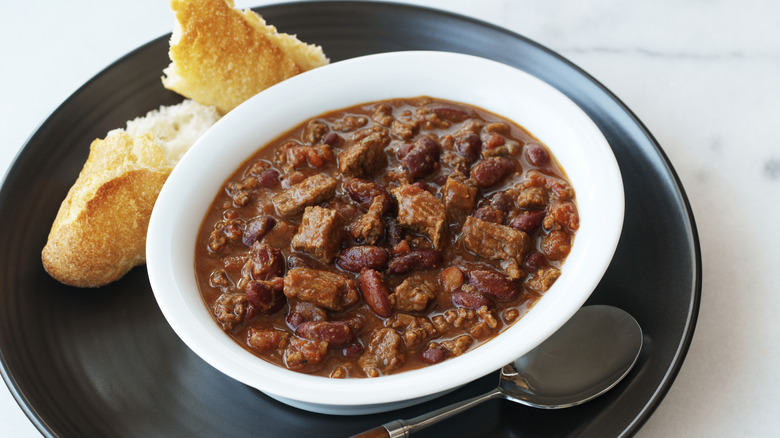
One dish the vaqueros brought with them to the frontier was chile con carne – chile with meat. This meal utilized the flavorful dried chiles that the vaqueros packed along with them. When stewed up with meat and perhaps some lard, they created a tasty — though certainly spicy — sauce.
The meat might be any variety of handy prairie creature — armadillos, opossum, rattlesnake, raccoon. Though cowboys drove cattle across the plains, they didn't often get to dine on the livestock itself (that was the boss's moneymaking trade, after all). If a steer was butchered, it was not a prime member of the herd but might be too old, sick, or weak to keep pace with the other cows. So, enjoying beef in one's chile con carne was a rarity.
There's a modern debate as to whether chile con carne did or didn't contain beans. Whether the legumes were mixed right into the chile con carne or served on the side, though, they most definitely would have been included. Researchers believe ancient Mexico is one of the places where beans originated, and the legumes have certainly been a mainstay of the Mexican diet for a long time. When vaqueros and other Mexican workers came to help settle the Old West, beans were one of the foodstuffs they packed with them, along with traditional methods of cooking and spicing them. Beans were also a foundational staple of the cowfolk diet, providing much-needed protein to fuel the long hours of grueling work.
Huevos rancheros were a cowboy mainstay
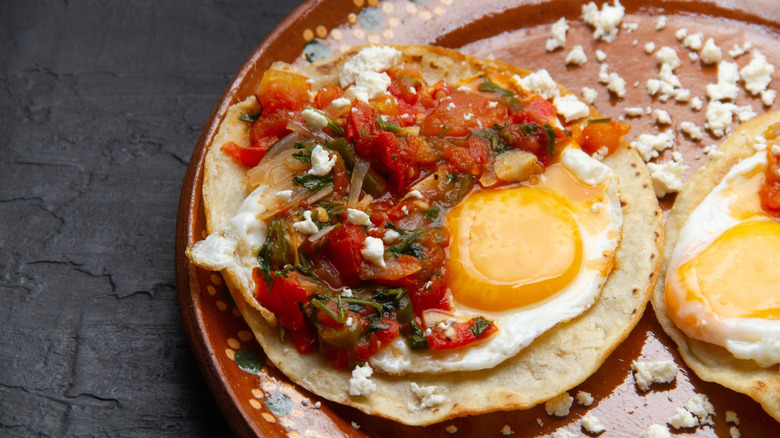
As with many other Mexican dishes, huevos rancheros — which translates to "rancher's eggs" — came to American cowpokes via immigrant workers like the vaqueros. The name of the dish is quite literal, as huevos rancheros traces its origins to Mexican ranches and farms, where it was commonly served as a second breakfast to replenish workers after their early morning labors.
The fundamentals of the dish include fried corn tortillas, eggs (traditionally sunny-side up), and a tomato-, chile-, and pepper-based ranchero sauce. The vaqueros would reportedly prepare the sauce the night before it was served for breakfast, cooking tomatoes and peppers to softness and a thick consistency. Their eggs were fried in lard in those days, and the dish was layered up together with the sauce, topping it off.
Out on the trail, the needed components for huevos rancheros often weren't readily available, like fresh eggs and tomatoes. But in the Southwest region, they were abundant. For ranch wranglers living in bunkhouses or encampments, huevos rancheros was a frequently consumed breakfast dish.