

Cowboys Loved This Meaty Snack In The Old West
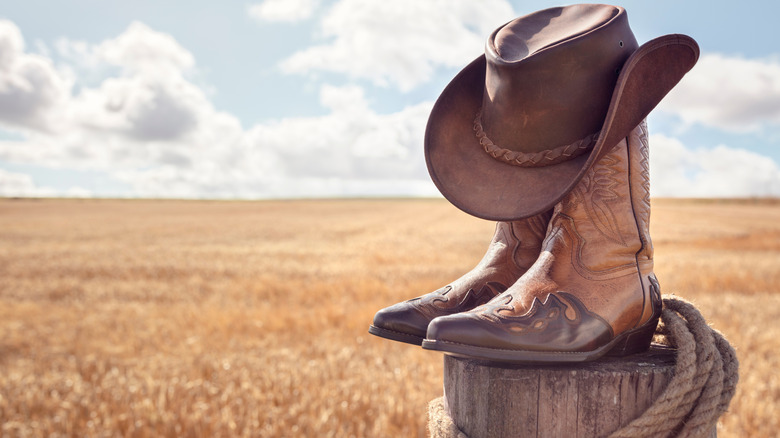
The Old West is often romanticized as a lawless, action-packed frontier, with the lone-ranger archetype breezing through every danger that came his way. The reality, however, was far less glamorous. Between brutal weather, deadly predators, and stretches of isolation that could last many months, cowboys faced no shortage of obstacles. But one of the biggest threats wasn't outlaws or rattlesnakes; it was simply staying fed. Months away from civilization meant no grocery stores or refrigerators, so cowboys had to get creative with their diets. Enter beef jerky. These days, it's mostly known as a gas station snack or a gym-bro's go-to protein source, but back on the trail, it was often the difference between life and death — especially before chuck wagons became popular.
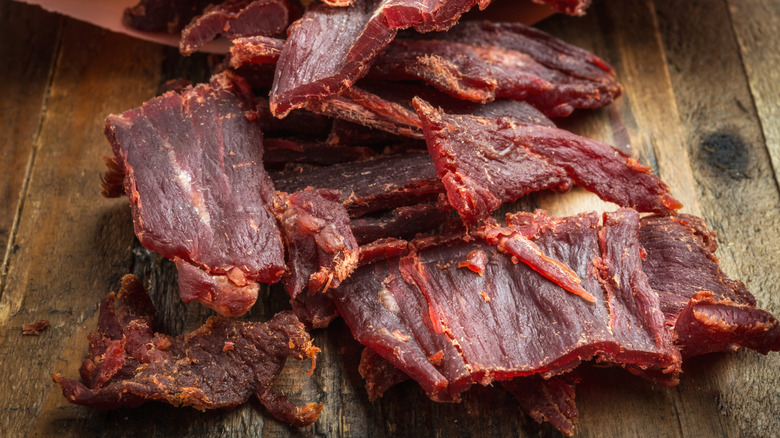
Beef jerky utilizes one of the most ancient food preservation methods out there: dehydration. To prepare it, you take the best cut of meat for the dish and trim it, slice it into strips, season it, and leave it out to slowly dry in the sun. As the moisture evaporates, what's left behind is a tough, chewy strip of muscle meat that's hostile to bacterial growth, and therefore spoilage. This removes the need for refrigeration, providing cowboys with a reliable, long-term food source that could keep for several years if prepared and stored properly.
Another reason jerky earned its spot in the saddlebag is because it worked as fuel. Life on the trail was known to be arduous, and jerky's dense protein, zinc, and iron content gave cowboys the sustained energy they needed to get through long days in the saddle. Beyond its long shelf-life and energy-boosting properties, it also served a utilitarian purpose. The beef shrinks as it dries, leaving behind small, lightweight strips that are easy to store without taking up much-needed space.
How else did cowboys stay fueled during their time on the trail?
The cowboy diet wasn't exactly famed for its diversity. Only a select few foods were suited for life on the trail, so taste and nutritional value often ended up being an afterthought. Fresh meat was a rare luxury, so cowboys' options were pretty limited when it came to energy-rich foods. Aside from beef jerky, salt pork was the other trail staple that showed up time and time again.
Much like jerky, salt pork's appeal came down to its long shelf life, but instead of dehydrating the meat, fatty pork cuts (think belly or sides) were coated in a heavy amount of salt, drawing out moisture to keep spoilage at bay for weeks at a time. This process, known as dry-curing, is also how bacon — another trail essential — was made. Both options are super calorie-dense too, making them an excellent source of essential fuel.
Meat wasn't the only good source of energy for cowboys, though. They were also famously known to enjoy a good ol' cup of coffee, which they brewed using their own rustic method. However, roasted coffee beans lose their freshness quickly, which meant cowboys often had to buy them green (raw) and roast them while out on trail. The problem was, roasting is a notoriously temperamental process — one that Arbuckle's Coffee (which is still around today) found a clever way around. Known as the "Original Cowboy Coffee," the brand developed an egg and sugar glaze to lock in the flavor and aromas of roasted beans. Like preserved meat, these beans would keep for far longer than their untreated counterparts, giving cowboys one less thing to worry about on their journey through the New Frontier.