

McDonald's Cooks Aren't Flipping Your Burgers
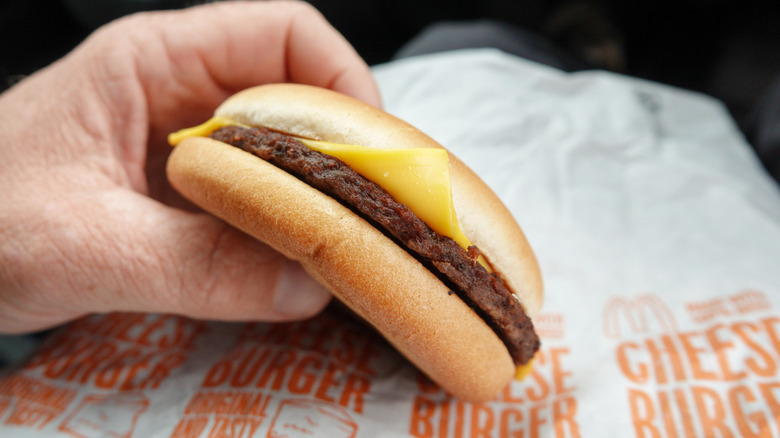
When you think of a McDonald's cook, what do you envision? Perhaps in your mind's eye, you see them in their uniforms, standing over the grill, flipping burgers. However, this image of the typical McDonald's employee is outdated — by nearly 40 years. While they still might be referred to as "burger flippers" by derogatory (and, frankly, disrespectful) people who don't know any better, McDonald's stopped requiring this action of its cooks in the 1980s, when it switched from flat-top grills to what's known as clamshell grills.
The clamshell grills were and are definitely an upgrade for the employees; they get their name from the upper grill plate, known as a platen, which lowers over the beef patties the way a clamshell closes. This platen is also heated, which allows the grill to cook both sides of the hamburger simultaneously, thus cutting down the time needed to cook it through. With the clamshell grills, it takes as little as 47 seconds to get those all-beef patties (sourced from Keystone Foods and Lopez Foods) sizzling hot and ready to serve.
Even better, the platens lower and raise themselves based on the pre-timed patty option that the cooks select when they put the meat on the bottom flat-top. This allows them to then easily season the burgers with McDonald's proprietary blend of salt and pepper (which also makes its breakfast egg patties taste phenomenal).
A unique issue with McDonald's clamshell grills
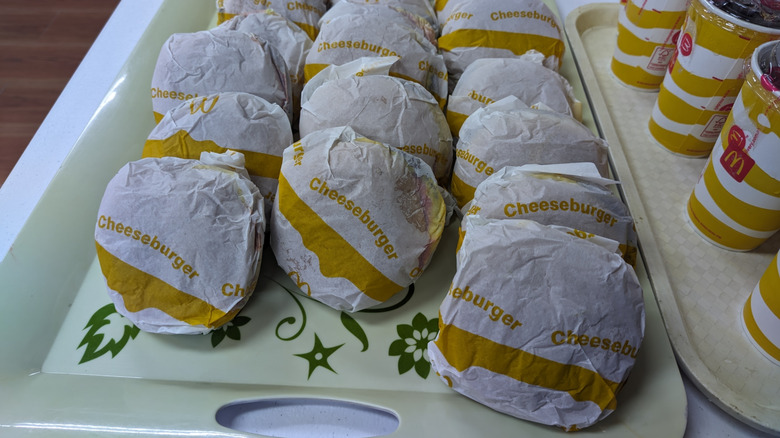
As helpful as these grills are so that employees never break the burger rule of following a specific assembly order, all while ensuring hands-off, even cooking of the beef patties, they do present unique issues and challenges for the workers that you might not have considered. For example, it seems that while the grills often come with Teflon sheets on the upper platen, burgers can actually stick to the upper portion, even lifting off the flat-top when the timer goes off and the platen automatically rises. One poster on Reddit even shared an image of this occurring, and a commenter in the thread below wrote, "Oh[,] that happens literally ALL the time," continuing that it's an every-shift kind of thing and that it happens so frequently at their location.
There might be a handful of causes for this blip in clamshell grill efficiency, chief among them the fact that the Teflon might be dirty or have residue from past burgers stuck to it. And as another Redditor described, it could be worsened by employees taking a metal spatula and trying to scrape the Teflon clean, which scratched the material and actually worsened the problem. So while the inherent issues with burger flipping, like efficiency and worker safety, have been fixed, the clamshell grills clearly aren't perfect either.