

The Iconic Kitchen Appliance Brand That's Owned By Whirlpool

Whirlpool is a brand needing no introduction. Founded all the way back in 1911, it has been designing, producing, and selling kitchen appliances for many decades. Over the years, it has also added several other brands to its impressive Rolodex, and chief among them is KitchenAid, which we all know and love for its colorful range of top-quality stand mixers.
We're not being dramatic when we say a KitchenAid stand mixer is one of those countertop appliances every kitchen should have. Back in 1908, engineer Herbert Johnston decided that mixing and working dough didn't need to be a long, arduous task. By 1919, he had conjured up a KitchenAid stand mixer, though these earlier models were a bit more rudimentary than the ones we're used to today.
The first machine bearing the KitchenAid name was the 10-quart C-10 model, followed by the 5-quart Model H-5 mixer designed for home kitchens. It wasn't until 1937, however, that the Model K was born, featuring the classic sleek silhouette and universal attachment hub that define modern stand mixers. By 1955, its range of unique colors had been introduced. The brand had also branched out into other kitchen appliances, including dishwashers, though its stand mixer remained the pièce de résistance.
The year was 1986 when Whirlpool acquired KitchenAid. The deal was supposed to happen the year prior but was delayed by an antitrust lawsuit. The suit was later dismissed, and Whirlpool went on to expand the line of products produced and sold under the KitchenAid name. Today, the iconic stand mixers are manufactured in Greenville, Ohio.
The many ways you can use a KitchenAid stand mixer
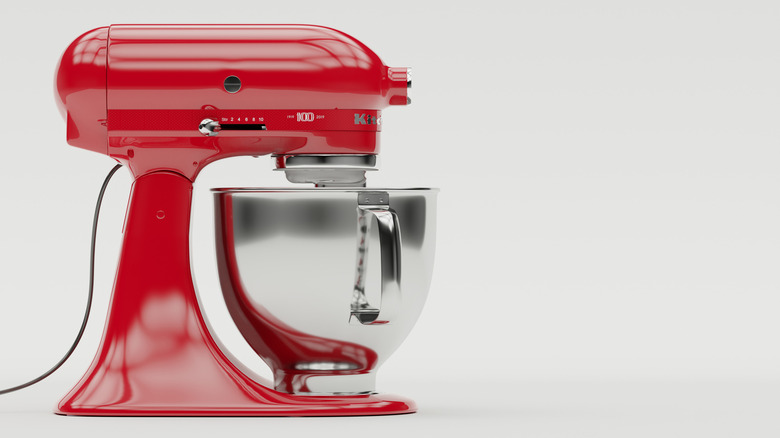
The KitchenAid stand mixer changed the game thanks to something called planetary mixing action. The beater spins on its own axis while simultaneously orbiting around the bowl, reaching at least 59 points around the bowl for thorough, hands-off mixing. It comes to life through three core attachments: the flat beater for everyday mixing, the wire whip for aerating, and the dough hook for kneading. There are also several other handy attachments available for purchase.
While some bakers still swear by working dough with their hands, kneading even a small batch that way takes time and real physical effort. Meanwhile, the KitchenAid's motor and dough hook develop gluten quickly and consistently. It's especially useful for sticky, high-hydration doughs like ciabatta, which are nightmarish to clean up after kneading manually. To knead dough in your KitchenAid, attach the dough hook, turn the mixer on, and set it to Speed 2. This is a strict limit. While KitchenAids can last decades, use them improperly and you risk overworking the motor, damaging the machine, or worse, sending your (not cheap) device creeping right off the edge of the counter.
Speed 2 is the ceiling for kneading dough, so you might be wondering why the dial climbs all the way to 10. The middle speeds, roughly 4 to 6, are suited to combining and beating ingredients. Think creaming butter and sugar or mixing cake batter. Once you hit Speed 8 or 10, forget the flat beater and dough hook; the wire whip belongs up there. At that range, you're whipping air into ingredients like cream, egg whites, or boiled frosting, giving them a light, fluffy texture.