

Here's The Average Lifespan Of A KitchenAid Stand Mixer
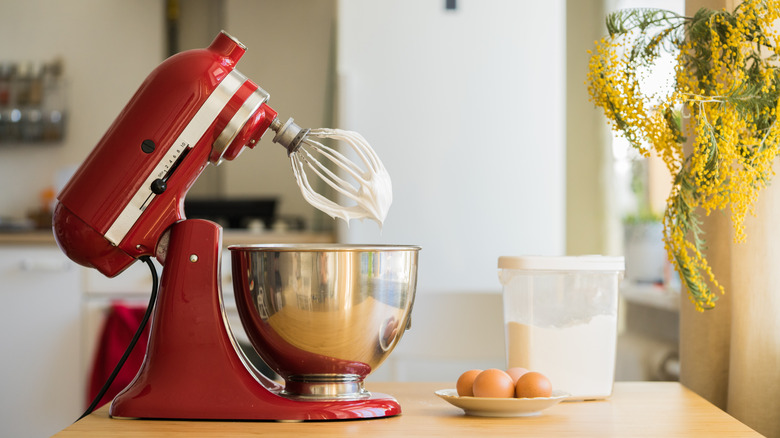
KitchenAid stand mixers are a marvelous addition to any home cook's toolkit. These heavy-duty countertop appliances have a number of different uses, from kneading dough for pizza to making ice cream and, if you have the right attachments, grinding meat or even making the homemade pasta of your dreams. They're real workhorses in the kitchen, but they're not cheap by any means; the lowest-priced model is still well over $300 at full price, and the most expensive one can run you over $1,000. It's an investment appliance for sure, so you would be smart to wonder just how many years you can expect to get out of it. As it happens, you will almost certainly get your money's worth out of a KitchenAid stand mixer; when properly cared for, it can last decades — it might even outlive you.
Yes, KitchenAid mixers earn their reputation for durability, and there are many anecdotal stories of these appliances lasting 20, 30, even 40 years (which makes their one-year warranty seem comically sparse, but it is what it is). One of the biggest factors that impacts a mixer's lifespan is regularly using lower-wattage models for bigger-wattage jobs. Using an Artisan Mini to arduously knead double batches of pizza dough a few times a week will result in much quicker gear wear. The larger capacity, heavier-duty mixers can be quite expensive, we know, but be honest with yourself about how you plan on using it when choosing a model to get the best lifespan.
Care tips to keep your KitchenAid Stand Mixer working for decades

Beyond simply picking the right model for the jobs you will have it performing in your kitchen, there are a lot of small maintenance tasks you can do to ensure that your KitchenAid stand mixer keeps on mixing for years. First, you want to be sure to clean the mixer between every use, including the bowl, attachments, and yes, even the stand part. While you can't dunk the base and head into a water-filled sink, you can run a damp paper towel or cloth all over the exterior to ensure that any splatters are removed.
It's also important that you learn which parts are dishwasher-safe; any attachments or bowls that are stainless steel or ceramic-coated can stand the high dishwasher heat. Some attachments are made of aluminum, and those should not go in the dishwasher, otherwise they may oxidize and develop a black gunk which is unpleasant on both your hands and your food.
If your KitchenAid mixer does start making weird noises, emits a burning scent, or doesn't mix as well as it used to, check the manual for fixes (you can even try some at-home test to make sure it's working properly). There are a number of DIY solutions to try before setting up a repair. However, if the problem persists, you might need to ship it to the KitchenAid factory for a professional mending.