

The Difference Between Culver's And Burger King's Beef
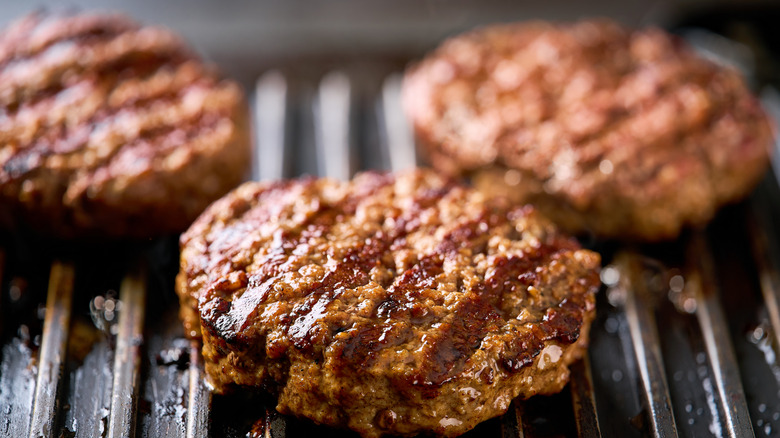
When it comes to delivering on beef burgers, Culver's and Burger King know what they're doing — and clearly appeal to a vast number of American diners, given their thousands of locations nationwide, as well as Burger King's many more locations abroad. From Culver's iconic ButterBurgers to Burger King's unmistakable Whopper, as well as a myriad of other sandwiches and well-known menu items, there's plenty on offer at both chains to get your hands on — or sink your teeth into. But when it comes to the actual beef used in the patties, how exactly do the two fast food giants compare?
For starters, the biggest basic difference is the form in which the beef arrives at the restaurants. Culver's commits to 100% fresh, never-frozen beef, specifically a three-part mix of chuck, sirloin, and plate, while Burger King's patties arrive frozen. That is not necessarily a judgment of quality — much like Culver's, Burger King commits to using 100% beef. However, the difference can affect how the meat actually tastes and feels.
The discrepancies don't end there: The ways the two chains prepare their burgers also diverge noticeably. Here, we break down the differences further.
Culver's uses fresh, never-frozen beef patties
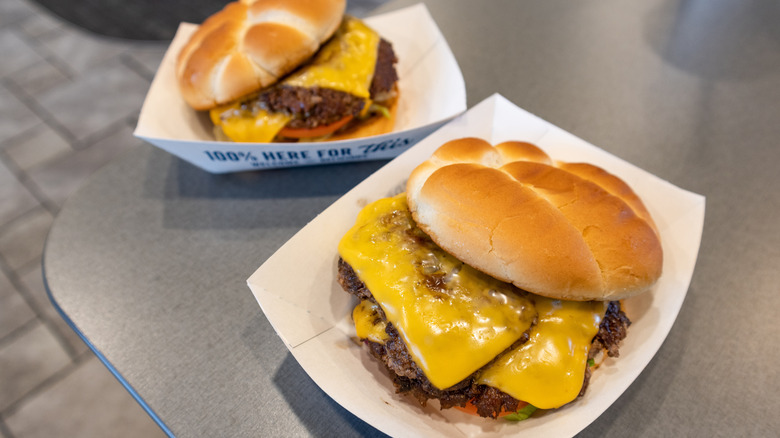
Culver's is a Midwestern staple that opened in Sauk City, Wisconsin, in 1984, where it introduced its well-known ButterBurgers. Aside from its fresh, never-frozen beef patties, it's especially renowned for leaning heavily into comfort food classics, including cheese curds and frozen custard.
One of the most distinctive aspects of the beef used in its burgers is its blend of three cuts, all of which contribute different flavors and textures to the patties. Sirloin is noticeably lean and delicate, bringing a certain degree of tenderness; chuck and plate, on the other hand, have noticeably higher fat content and thus provide a succulent texture and richness while enhancing the meat's flavor. All of this works especially well with the ButterBurger buns, which are toasted and lightly buttered. Contrary to a possible misconception, the patties themselves are not cooked in butter.
The preparation of the burgers also matters, as the patties are pressed into thin, smash-style discs on hot flat-top grills. This process exposes more of the beef to direct heat, creating a noticeable brown crust, while salt and pepper further enhance the meat's flavor.
It's no surprise that Culver's burgers fare well with reviewers and customers alike. The chain earned the No. 1 spot in Food Republic's ranking of American burger chains, where we praised the burgers' freshness, the rich variety of toppings — from those on a classic ButterBurger with cheese to the mushroom and Swiss option — and the luxuriously buttered buns. It's a common sentiment on Reddit, too: "It's one of the best burgers you can get, fast food or not," one commenter opined.
Burger King employs a distinctive cooking method
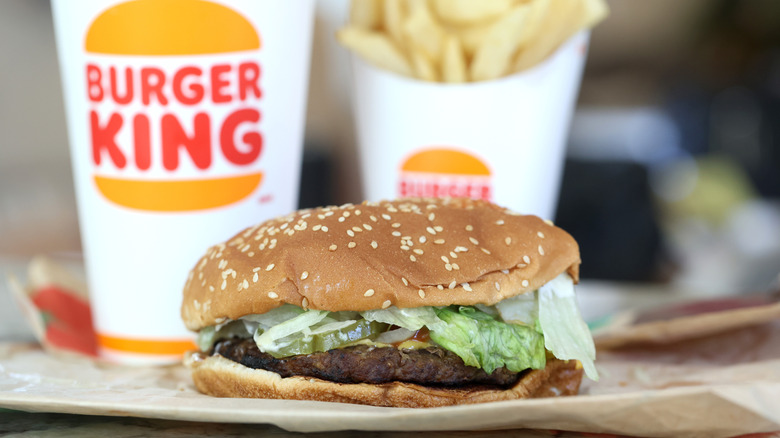
Burger King has a well-established place in the American burger market. Founded in 1954, it has made a name for itself as one of the titans of the fast-food industry — and is especially known for its longstanding rivalry with its most direct competitor, McDonald's. It has also given us many a signature sandwich, most prominently the Whopper, which was introduced in 1957. The reality lives up to the name: The patty itself weighs around 4.4 ounces before cooking, and the burger is a decidedly extravagant affair, loading its beef with iceberg lettuce, onions, pickles, tomatoes, mayonnaise, and ketchup.
Unlike Culver's, Burger King does not specify which cuts of beef go into its patties, and some reports indicate that its patties arrive frozen at restaurants. But if there's one thing Burger King is known for, it's the chain's distinctive flame-broiling method, which gives the patties their smoky flavor and char. The patties pass through a conveyor belt system for two to three minutes, where they are exposed to open flames.
When it comes to taste tests and reviews, Burger King and Culver's use preparation methods distinct enough that personal preference usually dictates the winner. For instance, in our aforementioned American burger chain ranking, our reviewer placed BK in second-to-last place. However, most of the criticism was directed at the greasy fries and soggy fried chicken rather than the beef patties themselves. When it comes to its burgers, the Whopper remains an acclaimed standout — and it's no surprise that we ranked it as our favorite offering from the chain.