

The Difference Between McDonald's And Burger King Fries
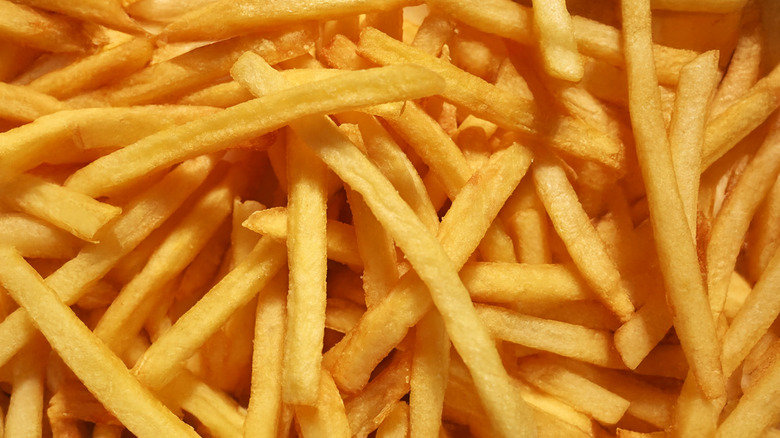
Now, it's possible we all immediately associate McDonald's and Burger King — the long-standing archrivals — with their legendary burgers: the former's Big Mac, so influential in its reach that it's used as an economic index to compare different countries' purchasing power, and the latter's distinctive flame-grilled Whopper, with its charred beef and smoky flavor. But their unmistakable french fries more often than not steal the show and are far from a supporting act: For many, they're one of the main attractions of the Golden Arches and the King's crown, respectively. So, what exactly distinguishes the chains' golden delights from each other?
It's worth noting from the outset that both McDonald's and Burger King serve classic french fries, unlike other chains that have their own more distinctive spins (cue Shake Shack's crinkle-cut spuds or Arby's curly offering). How they treat the deep-fried potatoes, however, differs noticeably. McDonald's has long served its distinctively shoestring-thin fries, which, in the United States, are infused with beef flavoring. Burger King, on the other hand, serves thicker fries that maintain a chewier, softer center. Here, we delve into the exact differences.
McDonald's french fries are distinctively thin and crispy
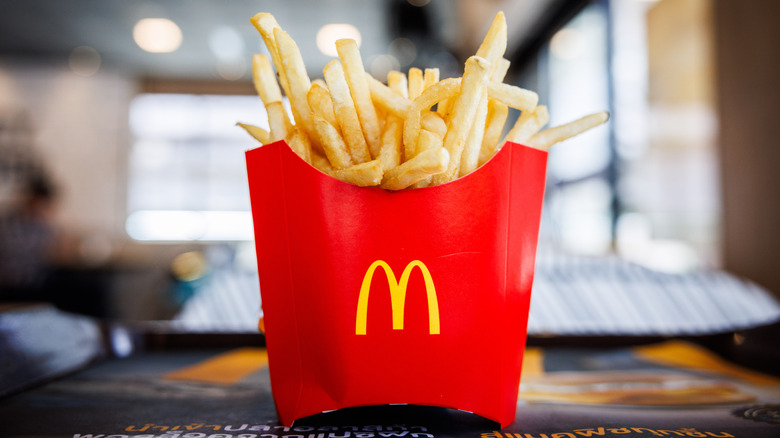
Slender, elongated, and thin, McDonald's gloriously greasy fries have much of their exterior exposed to the heat of the oil during the frying process, meaning they end up particularly crisp in texture. The chain's restaurants across the United States use several potato varieties to make the little golden-hued sticks, namely Shepody, Umatilla Russet, Ranger Russet, and Russet Burbank.
What makes McDonald's French fries so distinctive in flavor and texture is the brand's historical use of beef fat and its continued use of beef flavoring. Before the 1990s, McDonald's fried its potatoes in beef tallow, eventually making the switch to vegetable oil to reduce their saturated fat content. But the fries' connection to beef survived in one form: natural beef flavoring, which is still added during the supplier's partial-frying process. Beyond the frying oil and salt, this helps infuse the fries with a distinctive depth of flavor that is more umami-forward and has helped cement their place in the fast food landscape.
Burger King provides thicker, more potato-forward offerings
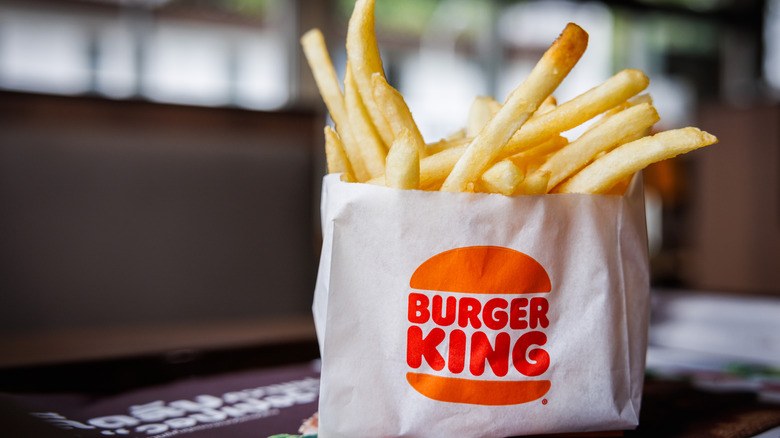
Burger King likes its fries on the thicker side, although that hasn't always been the case. The chain reformulated its recipe in 2011, making the fries bigger, reducing their sodium content, frying them in trans fat-free vegetable oil, and applying a specific coating made with rice flour and potato starch to help them stay warmer and crispier. It was the first time the burger chain had updated its french fry formula since 1998 and was largely seen as an attempt to remain competitive in a fast food market where throats are more sharply cut than the fries on offer.
When it comes to the taste of Burger King fries, the lack of beef flavoring makes a difference, bringing out a more potato-forward profile. Their thickness also means the centers tend to remain fluffier, offering a more substantial bite overall. While Burger King's burgers ranked more highly than McDonald's in Reddit's fast food burger assessment, the reverse was true of the spuds in Food Republic's french fry ranking.