

Not Steak Or Chicken: Cowboys Ate This Traditional Dinner On The Trail
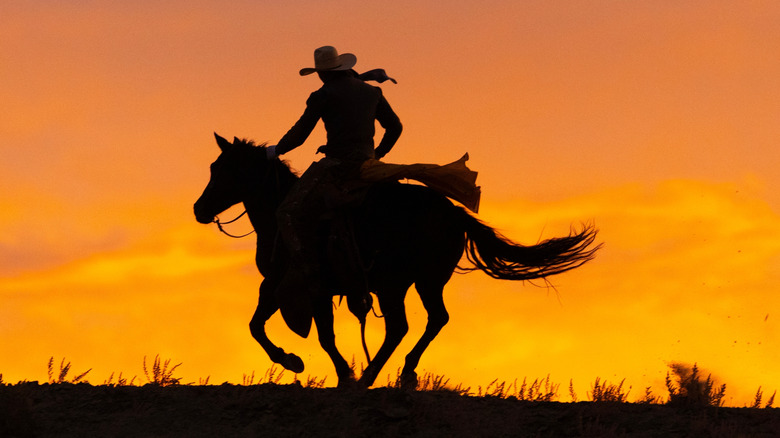
For an old-timey cowboy, food was quite literally the difference between life and death out on the trail. The cowboy's trail diet adapted to the profession's unique demands; it had to keep for long stretches, provide plenty of energy, and nothing could ever go to waste. Though it was far from haute cuisine, some classic trail essentials — think beans, beef jerky, and even the legendary Arbuckle coffee brand – are still enjoyed by cowboys and non-cowboys alike today. Other dishes, however, have long faded into obscurity.
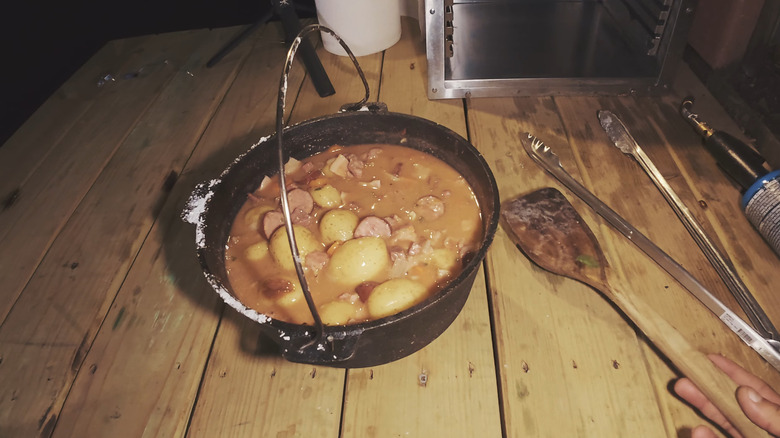
One such dish that might shock modern diners is the "son-of-a-b***h" stew, also known as "son-of-a-gun-stew." This stew was packed with a boomer fave that younger generations haven't quite come around to: offal. Lots and lots of offal. Out on the trail, nothing going to waste was the rule that reigned supreme. This stew was the ultimate expression of that philosophy. Nothing was off limits, and cooks used everything, as the old cowboy saying goes, "but the hair, the horns, and the holler."
The meat came from a freshly slaughtered calf, and the core ingredients included heart, liver, tongue, kidneys, and even brain, alongside less familiar cuts like sweetbreads (glands from the thymus or pancreas). But the real star of the stew was the tube connecting the stomachs of a young, unweaned calf, known as the marrowgut. It held curdled residue of digested milk, which served as the backbone of the stew's flavor. That made a huge difference since spices and seasonings were hardly plentiful out on the trail. Most of the time, the stew was seasoned with little more than salt and pepper.
Beef was hugely important to cowboys, though not in the way you'd expect
Old Hollywood Westerns like to glamorize the life of cowboys grilling prime cuts of steak over an open fire. In reality, this was rarely the case. Cattle was the source of a rancher's income, so killing off inventory to feed the crew simply didn't make financial sense, as one old cattleman's saying put it, "Only a fool eats his own beef" (via North Carolina State University). So cowboys would most often butcher a fresh cow from the herd only if the animal was sick or injured and couldn't keep up with the drive. So while certain cuts of steak are marketed today as "cowboy steaks," it's highly unrealistic that actual Old West cowboys were tucking into this on a regular basis.
Instead of eating fresh beef from the herd, cowboys relied heavily on beef jerky — chewy strips of beef preserved through drying, salting, or smoking, which made it light to carry and virtually immune to spoiling in a time when refrigeration didn't exist. It also helped that it could be tossed into a stew to stretch out a meal. Another cowboy classic was Rocky Mountain oysters, a dish with possibly the most misleading name in all of food history. Hint: there is no seafood involved.
Every spring, ranch hands would castrate young bulls to keep the herd manageable and the animals docile. If there's anything to be learned from son-of-a-gun stew, nothing went to waste, not even testicles. Instead of discarding them, they were peeled, sliced, and battered, then deep-fried over an open fire. Today, you can still find this unique dish served at rodeos and small-town festivals across the Midwest.