

Taco Bell Vs Taco Bell Cantina: How Are The Mexican Chains Actually Different?
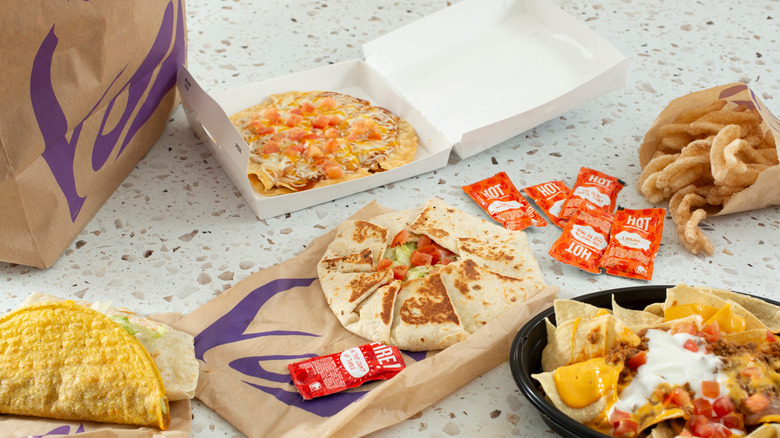
Taco Bell is widely synonymous with Mexican fast food across most of the United States. It is so ingrained within our popular culture that it even makes for memorable movie quotes — who can forget its reference in the 2004 teen cult classic "Mean Girls?" But when it comes to deciding where to get our burritos and quesadillas, what exactly is the difference between Taco Bell and Taco Bell Cantina?
For starters, it's worth noting that Taco Bell and Taco Bell Cantina are not two separate businesses. Rather, the latter is merely an offshoot of the former. Taco Bell is the well-established fast food that is known for offering Americanized Mexican-inspired dishes in a rapid, to-order, drive-thru context. Taco Bell Cantina, on the other hand, takes the similar core culinary inspiration but adapts it to a slightly more high-end, sit-down, casual dining format that feels less like a grab-and-go experience and more like something you'd enjoy on a night out.
The difference ultimately lies in three core things. Firstly, the interior design, which is meant to favor a classic dining ambiance; secondly, the decor, which is supposed to be more sophisticated and upscale; and lastly, the drinks list. Taco Bell Cantina offers alcoholic beverages, unlike Taco Bell, reinforcing its aim to be the sort of place you'd want to hang out with friends or dine with family on a weekend evening rather than where to grab a bite on a 30-minute lunch break. Here, we break down the differences more clearly.
Taco Bell offers a classic Mexican-inspired fast food experience
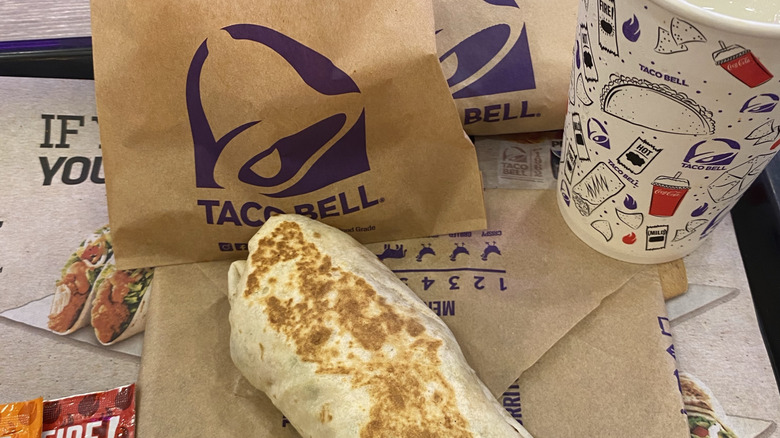
Taco Bell has been serving Americans with Mexican-inspired dishes for over six decades at this point. The first restaurant opened in 1962 in California as a hot dog and hamburger joint that happened to sell tacos, and later developed into the mammoth chain we all know today, serving its famous dishes: from its grilled chicken quesadillas with three-cheese blends to beef burritos and the Crunchwrap Supreme. In terms of its specific development, Taco Bell heavily pivoted towards the suburban market, aiming to be the sort of quick-service or drive-thru spot that Americans could go to for their lunch or dinner fix. Like many other big names in the fast food landscape, it also hopped on the breakfast bandwagon, although with somewhat mixed results.
Its model clearly worked: Taco Bell now has over 9,000 locations across the globe, and reigns supreme as the biggest Mexican-inspired food chain in the USA. Customers coming to the restaurant are met with a familiar dining experience: menu combos or box deals, served on trays or to-go bags, plus a fountain drink. From the aforementioned Crunchwrap Supreme and the budget-friendly Cheesy Roll Up to more unique offerings like the Mexican Pizza Combo, the meals are flavor-packed and hearty, but resoundingly Mexican-inspired (with a heavy emphasis on the "inspired" — traditional Mexican fare this is not). After all, actual Mexican cuisine would typically involve things like pork-based tacos al pastor, birria stew, braised barbacoa, or mole poblano, often made using tablilla Mexican chocolate. Taco Bell's menu items, on the other hand, rely heavily on Americanized fast food — with its seasoned ground meat, shredded cheddar cheese, and french fries — packaged for a U.S.-friendly fast food format.
Taco Bell Cantina aims for a boozier, more upscale dining focus
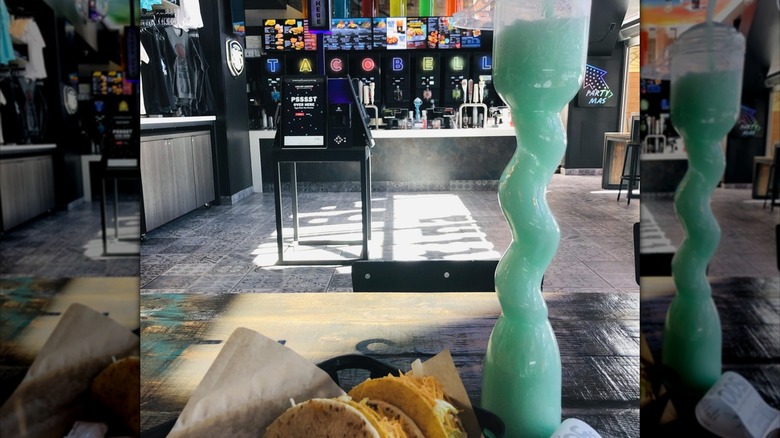
Now, Taco Bell Cantina takes things in a decidedly different direction. Unlike its parent's suburban focus, the Cantina — borrowing from the Spanish word for bar or tavern — aimed to bring Taco Bell to a more urban, evening crowd. The Taco Bell Cantina concept first debuted in Chicago's Wicker Park in 2015, later expanding to San Francisco and other American cities, reaching around 50 locations by 2026. Each Cantina was locally customized — the Vegas flagship, for example, had certain individual features such as merchandise, big screens, and a Freeze wall with self-service drinks that can be given a boozy twist.
Compared to a regular Taco Bell, Cantina interiors have a sleeker, more restaurant-like design, focusing on open kitchens and communal seating, as well as boasting local artwork and jazzy decor finishes. As Taco Bell Cantina itself specifies, the concept is imagined with an upscale, youth-oriented focus, aiming to "deliver unmatched moments and unforgettable nights" (per Taco Bell Cantinas).
Perhaps the clearest difference between the original Taco Bell and the Cantina, however, is the alcohol served. At the latter, you have a drinks menu including wine, beer, sangria, and frozen drinks such as the Twisted Freezes. The menu borrows heavily from the Mexican-inspired theme, with some classics, such as the Crunchwrap Supreme, still available, although it focuses more on shareable food. On Reddit, diners remarked positively on the Taco Bell Cantina, although they found its drinks menu an unusual offering given its connection to Taco Bell. "I liked how it looked inside", one Redditor stated. "The funnest part," the user added, was "being able to order an alcoholic drink at a Taco Bell."