

Not Butter Nor Olive Oil: The Cooking Oil That Dominated Boomers' Kitchens
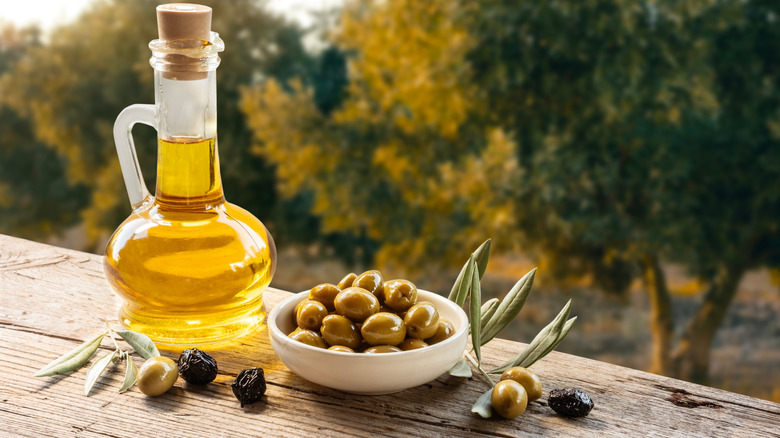
Arguably two of the most foundational ingredients in cooking, butter and olive oil have been used by chefs for millennia. With a multitude of applications, from frying and sautéing to baking and infusing, you'd be hard-pressed to find a kitchen without at least one of these essential ingredients handy. But back in the day, another fat dominated boomers' kitchens: Crisco. Remember it? Though it's rarely used today, it was once a must-have across countless mid-century American households.
Like olive oil and butter, Crisco is a fat. But that's pretty much all they have in common. Olive oil is made entirely of plant oil derived from a huge number of olives, while butter is an animal-based dairy fat containing water and milk solids. Crisco, on the other hand, is a 100% plant-based shortening. The original formula was made from cottonseed oil, partially hydrogenated to transform it from a liquid into a semi-solid fat that remains solid at room temperature; today's version swaps cottonseed in favor of a blend of soybean, palm, and canola oils instead.
Introduced in 1911 by Procter & Gamble, Crisco entered the market as the world's first solid shortening derived entirely from plants. At the time of its release, lard was the dominant fat, and Crisco carved out space for itself in a crowded market by positioning itself as the cleaner, more modern alternative. This strategy worked, and cans sold like wildfire. According to Michigan State University, Americans were buying more than 60 million cans of Crisco annually within just five years of its release. It genuinely changed how people cooked, and there's no shortage of cookbooks from this era, some published by Crisco itself, filled with recipes swapping lard for the shortening.
Crisco had a historic fall from grace
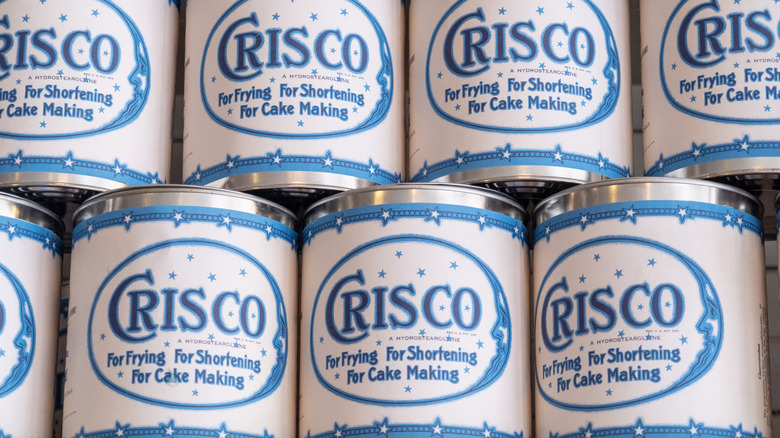
When Crisco first hit the shelves, its biggest market was the Jewish-American community. Since Crisco was made entirely from vegetable oil, it qualified as parve under Jewish dietary law, meaning it contained neither dairy nor meat, so it could be used in either kind of dish. In Crisco's very own words, "The Hebrew Race has been waiting 4,000 years for Crisco." Dramatic? Definitely. But the shortening did solve a real problem for kosher households, and Procter & Gamble leaned hard into this. The company rolled out ads in both English and Yiddish, secured endorsements from rabbis, and even published an official 1933 cookbook, "Crisco Recipes for the Jewish Housewife." Crisco became a genuine kitchen staple in Jewish households across the country, with many still using it today.
But while Jews have their own reasons for continuing to stand behind Crisco, the rest of America has long since moved past the trend. Once upon a time in food history, partially hydrogenated oils, which contain trans fats, were actually viewed as a healthier alternative to animal fats like butter, a perception Procter & Gamble encouraged while staying quiet about the less than appealing cottonseed oil at its core.
That carefully built image came crashing down when scientists in the mid-1990s began linking trans fats to increased cholesterol and heart disease. The backlash was severe enough to put many customers off Crisco, and the brand was forced to reformulate its recipe in 2007 to eliminate trans fats entirely. But the damage was done, and the shortening continues to be heavily associated with negative health effects and marketing deception decades later — though we do have to admit it makes for an excellent cast iron seasoning.