

How Many Olives Are Used For One Bottle Of Olive Oil?
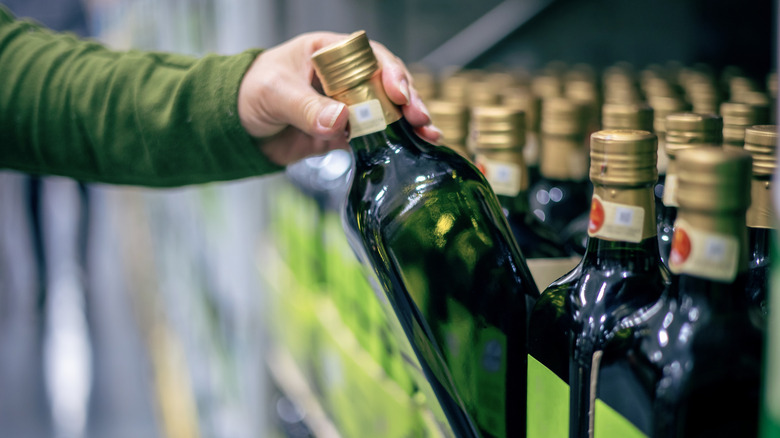
Most people have at least one bottle of olive oil in their home and while not exactly cheap, it's a surprising steal considering how many olives are required to make it. A one-liter bottle requires anywhere between nine to 22 pounds of raw product, which goes a long way towards explaining the wide variety in price tags.
Olives are a stone fruit just like peaches and plums, but what sets them apart is their extremely high oil content. Thousands of years of cultivation created hundreds of different cultivars, but the types of olives in your oil usually have tons of flesh and small pits, like Spanish arbequinas and Italian coratinas. Still, even with the most ideal fruit available, most manufacturers can only expect to get five liters of oil, at most, from a single tree. This gets even more complicated for farmers who prefer "alternate-bearing" species, which may only heavily produce fruit every other year.
Additionally, most manufacturers use underripe, green olives, ones full of chlorophyll and that aren't ready to be brined for direct consumption. While this might lead to a smaller yield than if they'd waited, such fruits typically produce a more flavorful product that comes with more nutrients. While mechanical innovations may make the process easier, making olive oil can have some serious bottlenecks, and manufacturers of any size must keep an eye on the future to guarantee a steady supply.
Different oils and processes use different amounts of olives
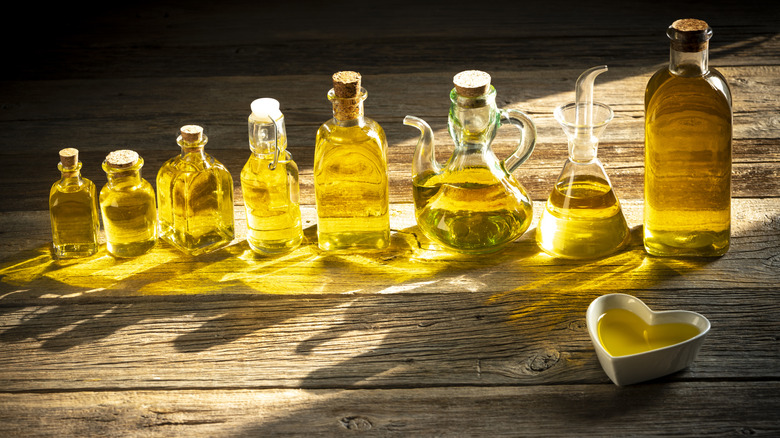
Not all oils are made equally and part of what makes high-end bottles so delicious is that they manage to pack in more olives by volume. From high-quality cold-pressed bottles to differences between refined and extra-virgin varieties, how the oil is made has a marked impact on how much fruit is required.
When you keep any sort of fat at a lower temperature, it inevitably becomes more solid. For cold-pressed oil, this means the process of extracting it from olives actually has a much lower yield. When you heat the fruit above 80 degrees Fahrenheit, extraction becomes much easier but it also breaks down the delicate chemical structures that produce nuanced flavors. While this isn't the most common method of producing olive oil, it's the most desirable when working with high-quality or rare cultivars, as you want to preserve what makes them great.
If you've ever wondered why extra virgin olive oil is so much more expensive than refined when one requires extensive filtration, it's because non-refined varieties only use oil from the first pressing of fruit. This is where the flavor is most intense and the particulates are most abundant, but it also means you can only expect to get about a gallon from a single tree. Despite requiring less machinery, this bottleneck means you need more olives per volume of extra virgin, which overshadows any increased costs from using a centrifuge for filter out debris.