

Forget Classic Apple Pie – Make It Pennsylvania Dutch-Style For More Texture
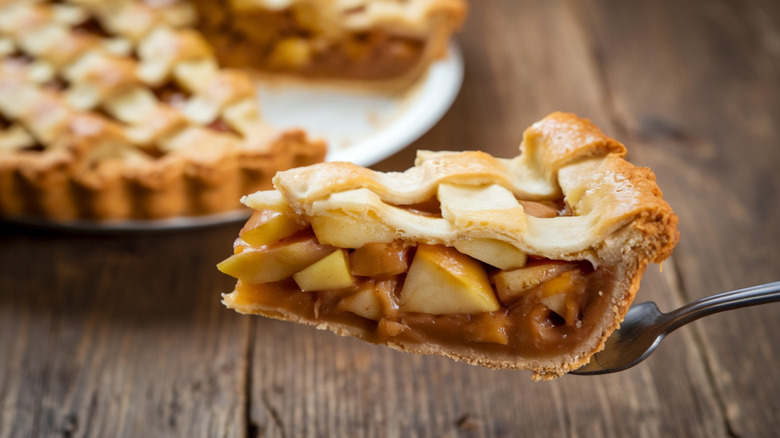
There are few feelings in life that beat the first bite of a warm, freshly baked apple pie. The perfect autumnal dish, it's arguably one of the most iconic baked goods out there, about as all-American as it gets (even though it isn't American at all). But here in the States, there's more than just one style. Picture the classic: a deep dish pastry filled with sliced, spiced apples, enclosed in a flaky, buttery double crust — or maybe one with a salty cheddar lattice. Over in Pennsylvania, however, things are done a little differently. There, the top crust is swapped out for a crunchy, buttery crumble streusel.
Like a classic apple pie, the Pennsylvania Dutch version starts with a pastry-lined bottom and a mixture of warm, gooey apple slices. But it's the thick layer of crumble piled high on top, then baked until golden and crisp, that truly sets it apart. In contrast to the soft, flaky texture of a top crust, the crumble topping gives it a slightly crunchy, varied texture that makes it irresistibly moreish. To make the crumble, stir together flour, brown sugar, and salt, then mix in melted butter until clumps form. Make sure to chill in the refrigerator until it's ready to be scattered over your pre-cooked apple slices.
The filling of Pennsylvania Dutch-style apple pie also takes a unique approach. Your typical filling usually incorporates warm, pumpkin pie-esque spices like cinnamon, nutmeg, and ginger that make it smell and taste like fall in a bottle. Interestingly, Dutch-style often forgoes spices altogether, instead mixing the apples with indulgent dairy additions like milk or heavy cream, often folding sweet, chewy raisins into the mix too. This gives the fillings a creamier, richer texture, providing excellent contrast with the crumbly topping.
How to bake the perfect Pennsylvania Dutch-style apple pie
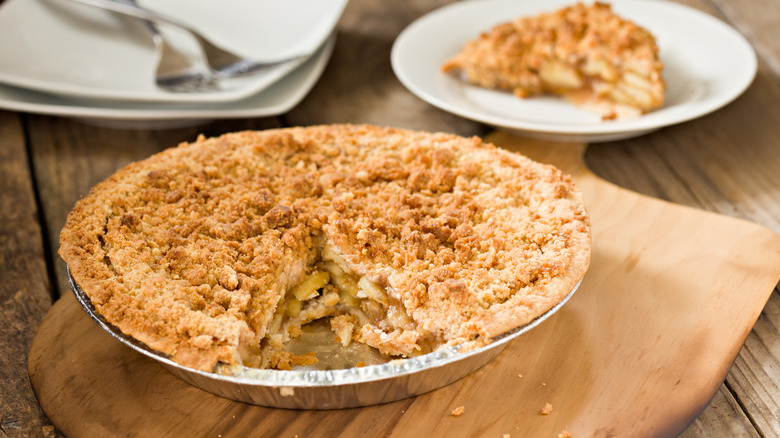
There are some things about Pennsylvania Dutch apple pie that make it more forgiving than your standard double-crust version. For starters, you don't have to worry about cutting air vents. The crumble isn't thick enough to trap steam, so it naturally escapes as the pie bakes. This also means you get to bypass the dreaded pie gap, which happens when apples shrink while steam pushes up the crust, leaving an awkward hollow gap that's definitely not giving the picture-book slice you had in mind. Instead, a crumb topping will naturally settle on top of the fruit and adjust its shape without any extra effort (or worry) required.
But one rule remains true across each and every style of apple pie: letting it rest. Skipping this step is truly one of the biggest cardinal sins when baking pie. Though it might be irresistibly tempting to slice into your pie as soon as it's done cooling, for the best texture, give it several hours — even overnight will deliver excellent results. See, as the apples bake, they release a lot of liquid. As the pie cools down, starches and binders like flour or cornstarch absorb that liquid, which then sets into a thick, gooey sauce. Cut in before that sauce has had time to cool and set, and it'll chaotically spill all over the place. So, for the perfect wedge, which holds its shape and looks aesthetically perfect, give it plenty of time to cool. For a truly firm filling, this translates to four to six hours minimum. That means if you're baking for a crowd or an event, build that time into your schedule if you want to leave people genuinely starstruck at your pie-baking abilities.