

Heavy Cream Vs Whipping Cream: What's The Main Difference?
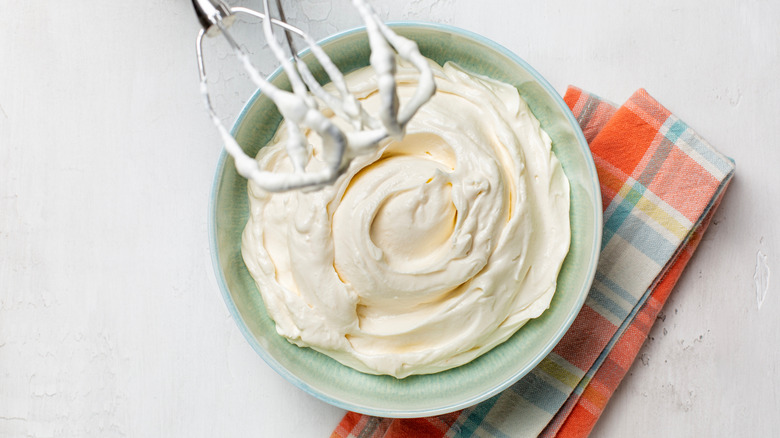
Both heavy cream and whipping cream are refrigerator essentials; you can whip either into fluffy homemade whipped cream to top your pies or cakes, or add them to soups and sauces for a richer, more indulgent texture. You'll often find recipes substituting one for the other, which raises the question: What exactly sets them apart? In all honesty, not much. At face value, it seems like there are more similarities than differences. Both creams start as whole milk, spun in high-speed separators to pull the lighter milk fat away from the liquid. Producers then adjust the mixture to hit the specific legal fat percentages required for each product, and that's where the real divergence begins.
According to the U.S. Food and Drug Administration (FDA), heavy cream must legally contain a minimum of 36% milk fat, no exceptions. Light whipping cream, by contrast, needs to contain between 30% and less than 36% milk fat, meaning it's sometimes sold with a noticeably lower fat content than heavy cream. For the purpose of comparison, we're differentiating light whipping cream from heavy whipping cream, as the latter is generally considered indistinguishable from standard heavy cream, just with a different name.
Though 30% and 36% might not look like a huge gap on paper, that difference in fat content changes how each cream behaves in your dishes. Heavy cream's higher fat content gives it a thicker, richer texture, which is exactly why so many recipes call for it by name instead of whipping cream. Whipping cream, on the other hand, whips into a lighter, airier topping. Which one you actually use depends on what you're making and how you want the cream to interact with the dish.
Whipping cream is the lighter, airier option
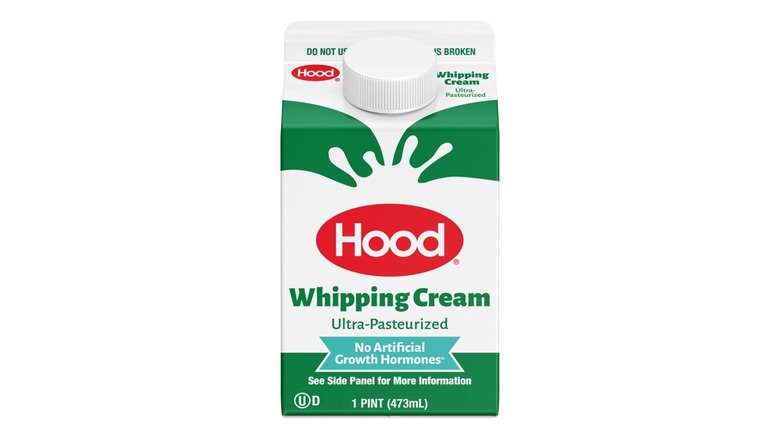
Compared to heavy cream, whipping cream is viewed more as a one-trick pony. It starts out as a light, pourable liquid that's then, as the name suggests, whipped vigorously until it thickens. As the cold cream gets beaten, air bubbles become incorporated into the cream while partially coalescing fat globules help stabilize them, giving it that distinctive whipped texture. Because it contains less fat than heavy cream, the resulting cream is lighter, airier, and forms softer peaks — lift the whisk, and the peak flops back over itself. To help stabilize your whipped cream's delicate structure, consider adding a starch or acid to the mix.
Heavy cream, by comparison, is usually better able to hold its peaks. That makes whipping cream a poorer choice for something like a structural ingredient in festive, boozy trifles or an aesthetically pleasing cupcake topping, but ideal for folding into mousses, where a lighter, airier texture is exactly what you want to achieve.
Occasionally, the softer, airier consistency of whipping cream comes in handy. With fat comes decadent richness, and while some people chase after that indulgent texture and flavor, too much of it can leave a dish feeling heavy and unbalanced. That makes whipping cream an excellent swap for heavy cream when it's being used as a topping on already-rich dishes: think waffles, milkshakes, or some spiced Mexican hot chocolate. These treats are often indulgent, and a dollop of heavy cream on top might just be the straw that breaks the camel's back, leaving your stomach to deal with the consequences.
Heavy cream is our go-to choice for adding body to dishes
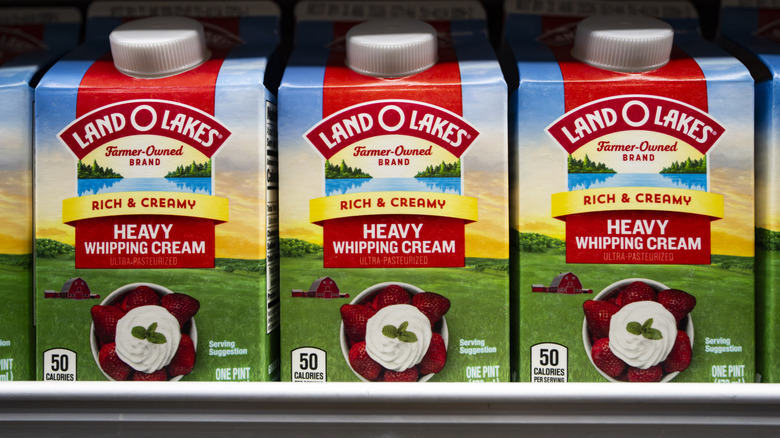
While whipping cream is often relegated to a single task, heavy cream is more of a kitchen all-rounder. Beyond being whipped into a firm, stable topping, there's no shortage of recipes calling for it as a finishing touch in everything from soups to curries. Whipping cream and heavy cream can technically be used interchangeably in many recipes, but heavy cream is usually the go-to for final flourishes because of its higher fat content.
When added to hot dishes, that fat contributes richness and body, transforming broths or curries into thick, luxurious sauces. In the case of butter chicken or a creamy fettuccine Alfredo, no one wants a half-hearted sauce, which is exactly why whipping cream tends to get passed over. That said, the advantage is mostly textural. Both are dairy products at the end of the day, so they bring a similar softening effect to a dish, smoothing out the high acidity in homemade tomato soups or mellowing the intense heat of a spicy curry.
If you want to lower the overall fat content of a saucy dish, make sure to proceed with a little extra caution if you sub in whipping cream for heavy cream. Because of its lower fat content, it's generally less stable than heavy cream, meaning it can split or curdle more easily when exposed to high heat or acidic ingredients. That can make for a clumpy sauce. On top of that, when whipping it, the window between soft peaks and grainy, overbeaten curds can be narrower, too. So, if you're not a confident chef, it might be best to stick to heavy cream to avoid any unwanted accidents.