

The Floating McDonald's Location That Was Abandoned In 1986
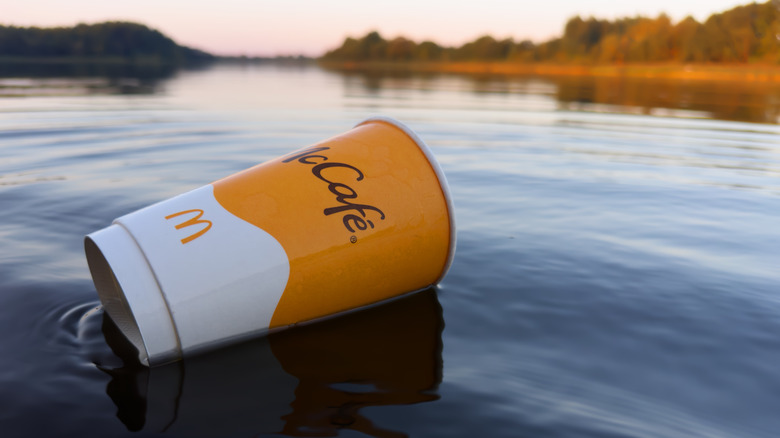
McDonald's has received its fair share of criticism over the years, but one thing fans praise is its commitment to consistency. Take the Oreo McFlurry, for example. In theory, that mix of vanilla soft serve and crushed cookie pieces should deliver the exact same treat whether you've ordered it in New York or Beijing (if the ice cream machine isn't down, anyway). But consistency doesn't always extend to the buildings themselves. Sure, every location gets stamped with the iconic Golden Arches, but with over 40,000 restaurants in operation worldwide, a few oddities are bound to slip through. Just look at the McBarge, a floating McDonald's built in 1986.
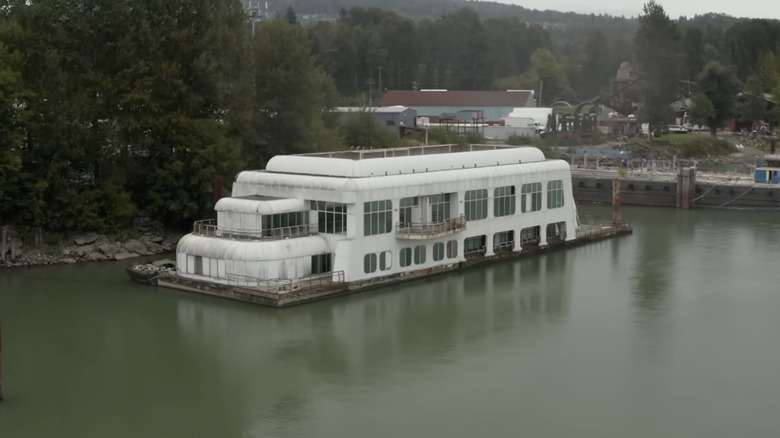
McDonald's built the floating restaurant (officially named Friendship 500) for Vancouver's Expo '86, a transportation-and-communication-themed World's Fair. The 187-foot barge served food to fairgoers for six months and was meant to relocate and stay in operation once the expo wrapped, serving customers at different docks. But after 1986, not a single fry was served. After the expo ended, the McBarge was left sitting empty until 1991, when it was towed to Burrard Inlet and left anchored beside an oil refinery, stripped of its interior and copper wiring along the way.
Over the following decades, ownership of the McBarge changed hands, and so did ambitions for what its future might look like. At one point, it was nearly a museum, then a homeless shelter, and after these plans fell through, it almost went back to being a restaurant. But once again, none of these ambitions ever came to fruition. In 2015, it was towed again, this time to Maple Ridge, British Columbia, where it continued to rust. Then, in March 2025, the McBarge capsized and partially sunk into the Fraser River.
More unique McDonald's locations
Unless you plan on getting very, very wet, the McBarge is off the table for visiting. But McDonald's has no shortage of fully operational, unique locations across the world. While the McBarge took diners to sea, visitors to Taupō, New Zealand, can enjoy their McDonald's in the sky. Well, kind of. The gimmick is a fully intact, decommissioned 1943 Douglas DC-3 passenger plane (which served during World War II) parked right next to the main restaurant. Diners can take their meals up into the cabin to eat their burgers in regular passenger seating.
The Taupō location is somewhat reminiscent of the short-lived McPlane, a marketing stunt McDonald's ran with Swiss regional airline Crossair in 1996. A McDonnell Douglas MD-83 was fully rebranded in McDonald's signature red and yellow, inside and out, and flight attendants in McDonald's uniforms served burgers, nuggets, and milkshakes during special promotional flights (french fries, notably, were left off the menu due to fire risk at altitude).
The McPlane's red backdrop and yellow logo showed the power of McDonald's instantly recognizable marketing. It's so recognizable that the chain doesn't even need to include its name on certain stores. But over in Sedona, Arizona, things are done a little differently. It's the only location in the world with turquoise "Golden" Arches. Local rules prohibited bright signage that would clash with the area's stunning red rock landscape, giving McDonald's no choice but to change its iconic coloring, turning it into something of a tourist attraction itself.
Another U.S. location that leans into its surroundings is Roswell, New Mexico. Science fiction fans have probably already guessed that this McDonald's plays into the town's famous alien-crash history with a UFO-shaped, metallic spaceship exterior. Unfortunately, there's no alien-themed secret menu (a truly missed opportunity).