

Why Does Canadian Chocolate Taste So Good?
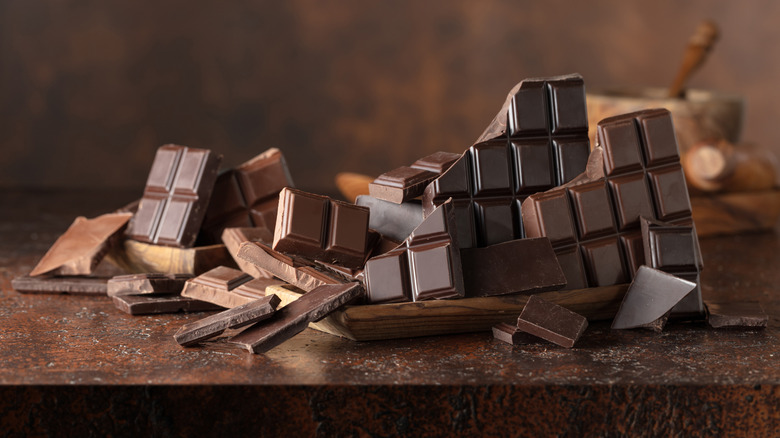
Maple syrup, bacon, Montreal smoked meat, Québécois poutine ... and chocolate? Among the range of delicacies Canada is internationally well-known for, cacao products are not high on the list. But it seems Canadian chocolate is making waves online, especially as people compare it favorably to its American counterparts, begging the question: Why does Canadian chocolate taste so good?
We're not alone in mulling over the matter. Taste is subjective, of course, but at its core, Canadian chocolate is subject to a set of specific cocoa requirements that differ from those in the United States. For milk chocolate, our northern neighbor requires at least 25% total cocoa solids, while the U.S. requires at least 10% chocolate liquor. These figures aren't an apples-to-apples — or chocolate-to-chocolate — comparison, but the differing standards help explain why chocolate formulations can vary between the two countries.
Having a higher cocoa content can give chocolate a more distinct chocolate flavor, as opposed to sweetness and milkiness coming through in the first bite. The cocoa butter — at least 15% of the 25% — also has a distinct effect, as it provides the melt and mouthfeel that make for a luxurious-tasting treat. All of this can help explain why Canadian chocolate might be perceived as simply more "chocolatey" than what you can grab off shelves in America.
Canadian chocolate is made to appeal to specific tastes
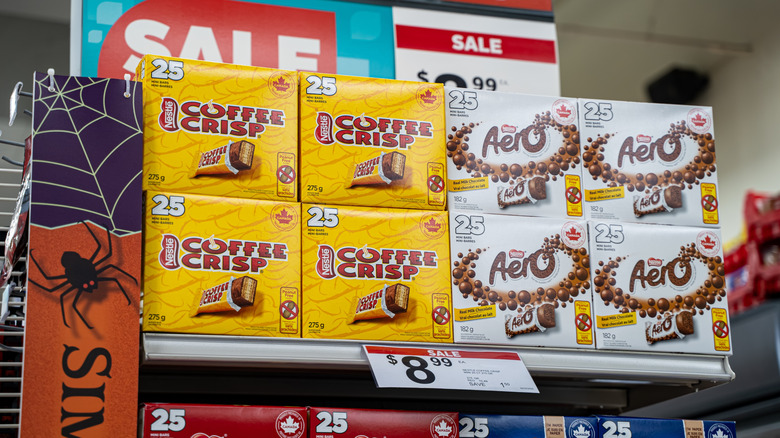
When it comes to what makes a chocolate bar taste good, the balance of all the ingredients — including the sugar and, in some cases, the milk — makes a noticeable difference. Everyone likes their chocolate a specific way — from deeply dark all the way to pearly white — and when it comes to Canada, it seems sweet creaminess is the national preference. This all becomes clearer when you see the specific brands Canadians have a penchant for: Aero, Wunderbar, Caramilk, and Crispy Crunch, all renowned for their smooth milk chocolate profiles.
Companies often modify recipes to cater to specific domestic markets and national consumer tastes, and Canadian chocolate is no exception. Indeed, in 2013, U.S. giant Hershey's — whose dark chocolate bar fared fairly well in our own rankings — decided to change its specific formula for the Canadian market, making it creamier in flavor and texture, and reducing some of the artificial components, such as the vanilla-flavored sweetener vanillin and the emulsifier polyglycerol polyricinoleate (PGPR). The change wasn't just due to differences in taste — according to a poll conducted by the chocolate company itself, Canadians were found to be more attuned to nutritional labels, meaning they were more distrustful of overly processed products, or "label readers," as Hershey senior marketing director Cheryl Bertrand called them (via National Post).
This also goes the other way: When U.K. brand Cadbury wanted to update its beloved Creme Egg recipe two years later, Mondelez International spared the North American Commonwealth country from the change. It seems a history of strong consumer tastes and domestic protections has kept Canadian chocolate sticking to its guns — and it might be the reason why we find it better than what we can find in the United States.