

What The Numbers On Ground Beef Packaging Really Mean
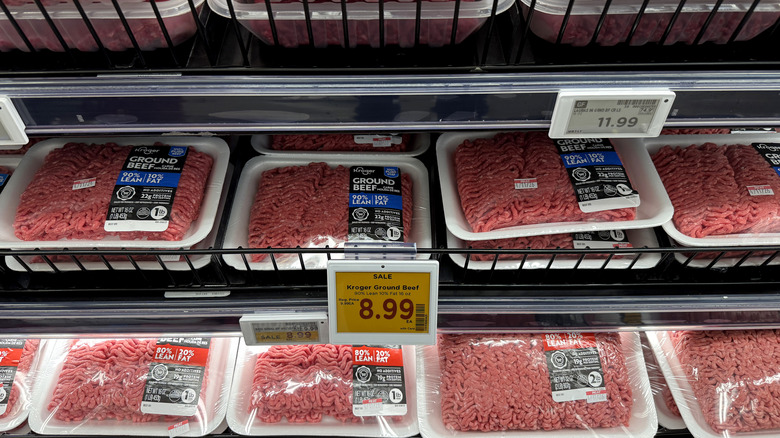
It's truly never a bad idea to add ground beef to your grocery cart. For many of us, it's a kitchen essential, whether you're putting together perfectly juicy burgers for a backyard cookout or infusing it with spices for crowd-pleasing Tex-Mex tacos. But shoppers are occasionally left scratching their heads over what exactly the numbers on its packaging actually mean — you know, the ones that say 80/20, or perhaps 90/10. Fortunately, the answer is simple. These designations are here to inform shoppers of the meat's lean-to-fat ratio by percentage. The larger, first number represents the total percentage of lean meat while the smaller number tells of its fat percentage — so, for example, 80/20 means 80% lean to 20% fat.
Ground beef, not to be confused with beef mince, is a kitchen superstar largely thanks to its simplicity. Raw beef cuts are put through a meat grinder or finely chopped, which tenderizes the texture and makes it exceptionally workable. Although ground meat is occasionally characterized as a "mystery meat," shoppers can rest assured that it's strictly prohibited for suppliers to include offal cuts such as organs — although heart (and tongue) meat received the green light from the USDA back in 2017.
You'll only find two types of ground beef sold: generic or primal. The source of generic ground beef is something of a mystery, as it's largely comprised of trimmings (excess fat and muscle pieces from larger primal cuts). Conversely, primal ground beef refers to beef sourced from a single primal cut. Most often, these cuts are chuck, round, or sirloin, all of which have differing lean-to-fat ratios. Though the numbers may vary, don't expect to find anything falling below 70-30. Set by the USDA, the legal maximum amount of fat permitted in ground beef is 30%. You also won't find it sold with any water, binders, extenders, or phosphates included.
The lean-to-fat ratio makes a huge difference in the kitchen
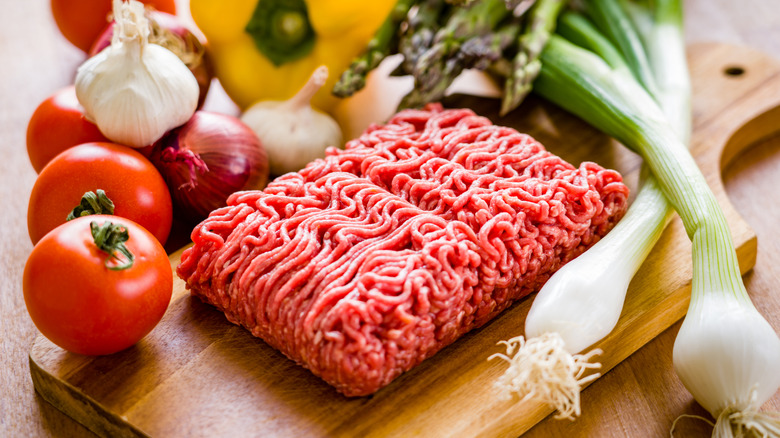
Although 70/30 and 90/10 might not sound like a major discrepancy on paper, to the seasoned chef, these ratios can make or break a dish. Some of the fattiest cuts of ground beef are the chuck and round, which respectively fall within the 80/20 to 85/15 lean-to-fat range. The extra fat makes them ideal for dishes requiring juicy flavor and prolonged, high-heat cooking times — think smash burgers. It's always best to use a fattier blend here, as the fat renders out into the pan to baste the thinly pressed beef with flavor and crisp up the edges. Another prime example is meatballs. The melting fat provides vital moisture and prevents the meat from drying out when cooking, especially if you're simmering them low-and-slow in a rich tomato sauce.
But sometimes, fat isn't always the answer. In certain dishes, too much fat can cause the flavor to feel too heavy and the texture to lean towards the side of greasy rather than juicy. In these cases, it's wise to stick to a refined 90/10 blend, which is often the category ground sirloin falls under. This is particularly important for dishes like casseroles and cottage pie, where the meat bakes directly in the dish, and the resulting grease can't be drained away afterward. This can also be applied to soups and stews, as too much fat can leave an oil-slicked film floating on the surface. Just be careful with lean ground beef, as it's far less forgiving than its fattier counterpart. There's less fat to render out, which can result in the beef becoming dry and tough if exposed to periods of prolonged heat.