

The Country That Produces The Most Pomegranates In The World
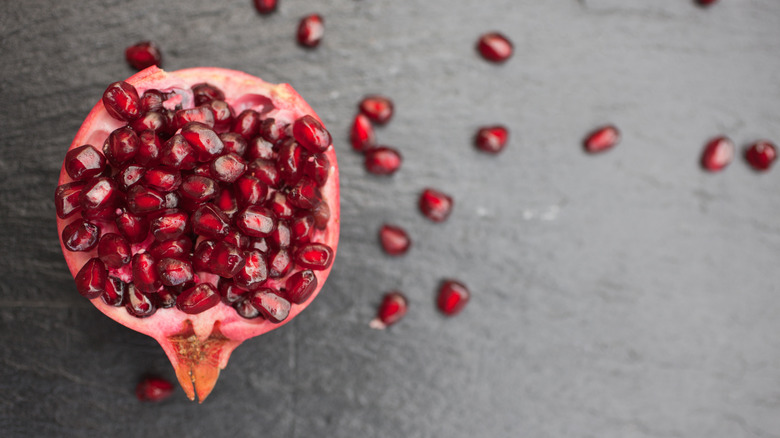
Though pomegranates originate in the Middle East, primarily around Iran and Afghanistan, global growing practices have created a new center for farming the tangy, seed-filled fruit. On top of being the country that exports the most bay leaves, India is now the number one producer of pomegranates, thanks largely to its climate and socio-economics that enable it to efficiently farm this specialty produce item.
India produces about 2.5 million tons of pomegranates every year, accounting for roughly 10% of the global supply. For reference, the next two suppliers – China and Iran – each produce under two million tons a year. Pomegranates were first introduced to India through the Silk Road and swiftly found a place in the culture's Ayurvedic medicinal practices and its food culture. Factor in the heavy economic emphasis on farming and you get a perfect combination of factors that drive Indian farmers to produce so much of the fruit.
Pomegranates are also particularly well-suited to many Indian recipes. The fleshy seeds can be juiced, mashed, or enjoyed whole and are quite versatile. In Southern parts of the country, people enjoy them on fresh salads or in panakam, a spiced drink with both culinary and cultural significance. In the North, you may see them used in street food chaats, in flavorful gravies, or in festive dishes. And India has no small demand for the fresh fruit, either; the raw product is frequently enjoyed for its swathe of nutritional benefits and unique flavor.
Why India is such a great place to grow pomegranates
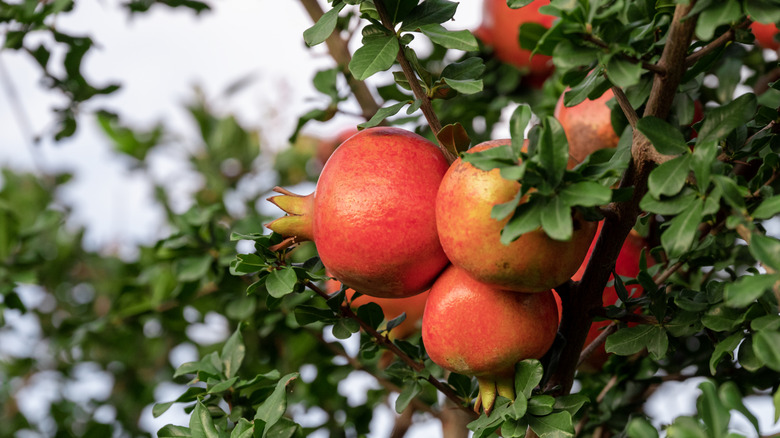
Reflecting its origins in the Mediterranean, pomegranate trees require specific conditions to grow in and produce the most flavorful fruit. While you can grow a pomegranate tree indoors, it requires arid or subtropical environments to thrive and develop the tastiest fruit, and the geographically diverse nation of India has several hot spots perfect for farming.
All commercial production of pomegranates takes place in Maharashtra, a central state in India. Though it sometimes suffers from a lack of rainfall, this actually works perfectly for pomegranates because they're quite drought resistant once established. In particular, the monsoon rain cycle is great for the plant since it needs plenty of long dry periods to develop the most flavorful fruit. This state also has quite a strong farming culture, and though it specializes mostly in sugarcane and grains, pomegranates have established themselves as a prominent crop in the area.
While you likely won't see Indian pomegranates from outside Maharashtra in stores, there are plenty of farms in other states that produce the fruit for domestic consumption. The agricultural belt in the state of Uttar Pradesh may be why India is the mango capital of the world, but its Northern climate is also well-suited to pomegranate production and produces plenty of food for the country's citizens.