

The Mango Capital Of The World Is Nowhere Near The US
We may receive a commission on purchases made from links.
If someone told you that they had a friend who visited them only once a year, but during that visit they blew all their money on that friend, you might try to sit them down for a long chat. But to the medieval Indian poet Amir Khusrau— translated in the collection "In the Bazaar of Love" — this statement wasn't a complaint, but rather an ode to his favorite fruit: the mango. There are probably many people reading this who can relate to the sentiment and smile, but perhaps nobody in the world feels this more deeply than those with roots in the global capital of this tropical fruit: India. This Asian country is responsible for more than 40% of the world's mango production and cultivates around 700 varieties of mangoes. It's also believed that the fruit originated somewhere between modern-day Myanmar and the eastern Indian state of Assam.
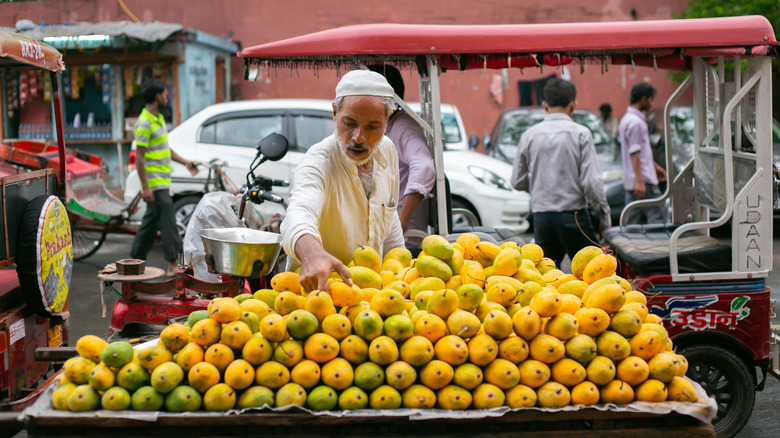
Despite being the largest producer of mangoes in the world, India exports only about 1% of its yearly harvest (per Times of India). It's one of the most widely consumed fruits in the country, featuring in desserts and drinks, like Indian kulfi and mango lassi. The mango also holds deep cultural and spiritual significance across South Asia, is mentioned in the texts of the region's major religions, and inspired the iconic paisley motif. But a local predilection for this tropical fruit isn't the only reason you won't find mountains of Indian mangoes in the produce sections of U.S. supermarkets, or why the mangoes you do find sometimes taste like the life has been sucked out of them.
Fragile, high-quality mangoes rarely survive standard commercial shipping
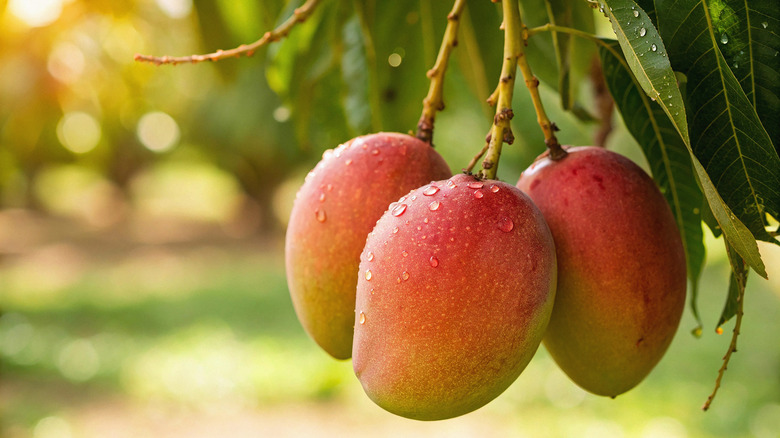
Tree-ripened mangoes taste best and don't mature well when picked too soon, but the fruit is very fragile when ripe, and even the tiniest bump can damage it. I live in Miami, Florida, which has historically been a hub of mango cultivation in the United States and is responsible for some of the most important commercial cultivars in the world, like Haden, Keitt, and Kent. But every local knows that the best mangoes never leave the state and that you never pick a mango until it looks almost too ripe. We rarely buy them at stores because people throughout the region plant mango trees on their properties wherever this fruit flourishes, and we know that the highest-quality mangoes are tricky to transport to market, even where they're grown.
There are also a lot of bureaucratic procedures involved with exporting mangoes from India, and mango season is typically restricted to only a few months of the year. This puts pressure on farmers to harvest, treat, pack, and transport their fruit within a short timeframe amid a lot of red tape. As such, supermarket varieties may sacrifice flavor for durability, are grown closer to home (like in Mexico), and are picked far too early to satisfy a connoisseur. But if you really want to try the good stuff, you can order Indian mangoes online or get Indian and local varieties from Florida. For the best mango experience, though, you're going to have to visit the mango capital of the world, or at least its smaller domestic outpost.