

Why Boomers Have Fonder Memories Of Arby's Than Younger Generations
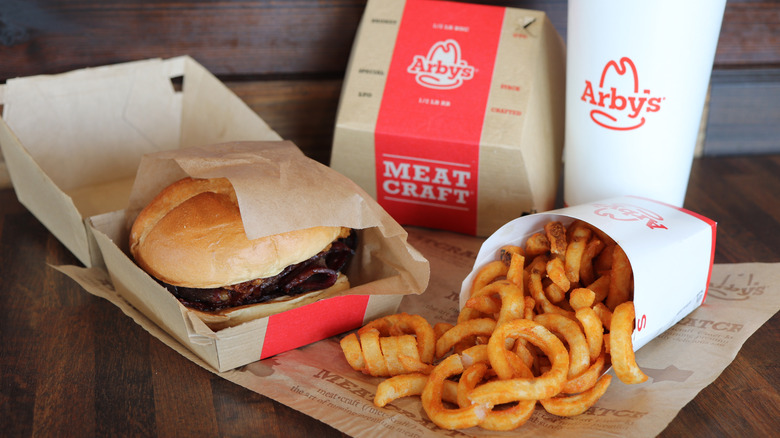
According to many customers, Arby's is vastly underrated — and it's difficult not to agree. The fast food chain, which offers a tasty alternative to your typical burgers in the form of crispy Alaskan pollock, roast beef, ham, gyro, and even Reuben sandwiches, gets especially high marks for its sides, too, like potato cakes, mozzarella sticks, and jalapeño poppers. If new generations are just now discovering how good Arby's can be, and the value it can offer customers, baby boomers have lived with this knowledge for quite some time, particularly those who remember when it first opened in 1964. In fact, some baby boomers think quite fondly of Arby's because they remember when the chain "with the meats" sliced real roast beef right in front of them.
Adding to the transparency that, yes, this restaurant served up real, freshly roasted beef was a large roast displayed in a glass-enclosed roasting station, where customers could watch it cook. Then, on an order-by-order basis, the rosy-pink beef was sliced into delicate folds and piled onto sandwiches, which sold for a premium 69 cents (compared with McDonald's burgers, which were only 15 cents around the same time). We can only imagine how divine this must have smelled and tasted, and we don't blame baby boomers for the Arby's nostalgia one bit.
Growth led Arby's to drop its original fresh beef preparation method
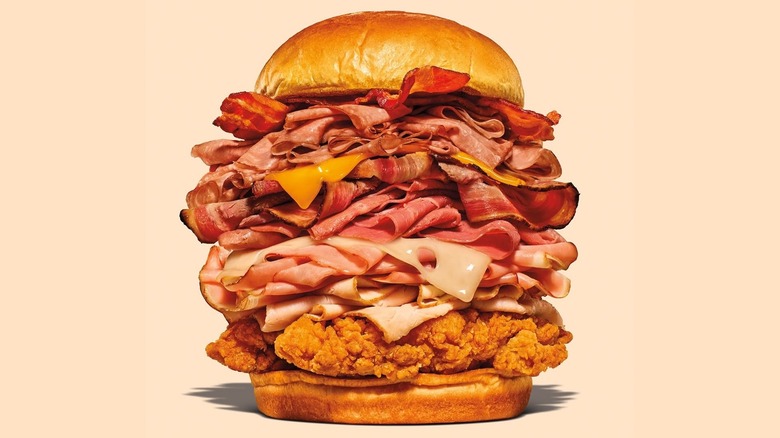
Unfortunately, these sumptuous conditions that baby boomers recall fondly at early Arby's locations just could not last. We'd venture that as the chain grew, using whole roasts and carving them in view of customers simply wasn't sustainable, both practically and economically. Arby's likely would have ended up having to charge so much for the first-rate meat that no one would want to pony up the cash. And so, at some point as the chain expanded, Arby's phased out these original displays and switched to something closer to what we'd recognize today: prepared raw beef that arrived at restaurants packaged in plastic. The spectacle that initially hooked customers was gone (but apparently, it was so good while it lasted).
Today, the beef arrives at restaurants in what is basically a brick: a compressed loaf of beef cuttings with added seasonings that gets packaged in its compacted shape and frozen for transport and storage. Once it reaches its destination, employees let it thaw in the refrigerator before removing the meat from its packaging and roasting it in the oven. When its stint in the oven is over, it gets moved to the Alto-Shaam, a cook-and-hold device that has been specially outfitted and calibrated for Arby's purposes, until it's needed for making sandwiches. These machines received a considerable upgrade in 2015, including a big eco-friendly boost, as well as many practical improvements for employees.