

The Fast Food Restaurant That Uses Locally Sourced Ingredients
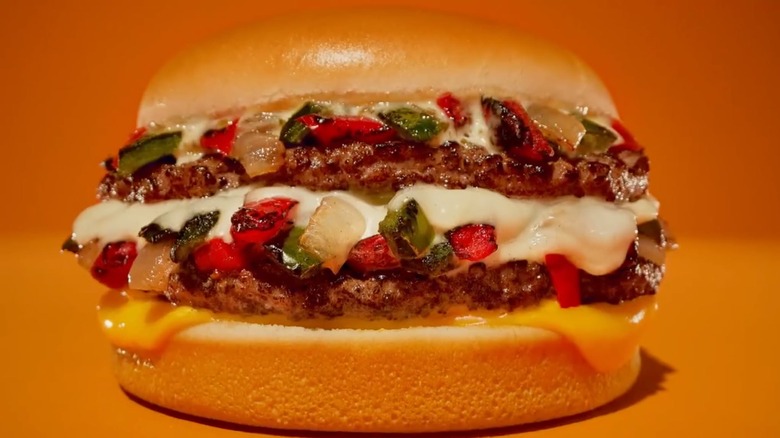
Fast food isn't exactly renowned for prioritizing whole foods or fresh produce. Indeed, the industry is routinely pilloried for selling dishes with purportedly low-quality ingredients. This, however, is far from the case for all fast food chains. Burger giant Whataburger, for example, places a strong emphasis on providing customers with freshly made patties and meat. Its real advantage, however, is what happens after the ingredients reach the restaurant.
The chain, which opened in Corpus Christi, Texas, in 1950, claims its 100% American beef is never frozen and arrives fresh, its vegetables are prepped and chopped daily in-house, and its patties don't touch the grill until they've been ordered. Those details matter because they affect the final sandwich, not just the marketing around it. The tomato should be juicy, the lettuce should maintain a firm crunch, and the burger shouldn't be sitting under a heat lamp as if it fell asleep on a tanning bed, ready to get roasted. This is what earns the chain a place on our list of the fast food burgers that are always fresh and never frozen.
The sourcing claim extends beyond the franchise's namesake burger. According to Whataburger, its restaurants serve real white-meat chicken, cheese provided by American dairy farms, as well as fresh tomatoes, lettuce, potatoes, poultry, eggs, and bacon, all sourced within North America. The company similarly points to clean-label mustard and ketchup, although it falls short of identifying every farm, processor, or regional supplier behind the condiments.
What locally sourced means for Whataburger
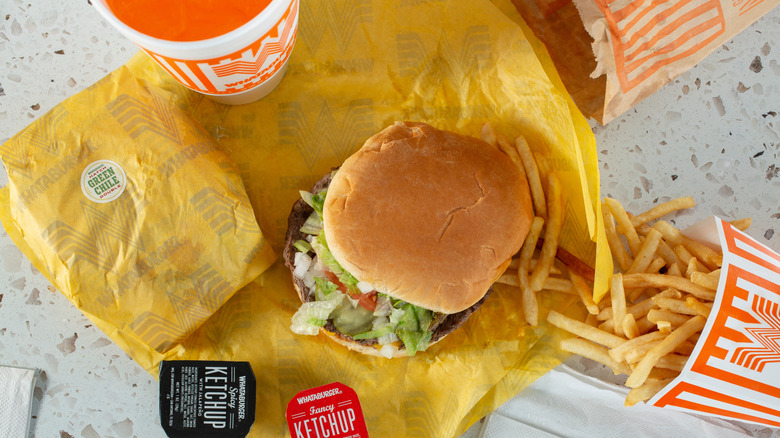
For Whataburger, the wording "locally sourced" is not merely decorative language or PR jargon. QSR magazine, for instance, reported on how Whataburger moves its beef rapidly from processing plants to restaurant kitchens without modified-atmosphere packaging. That term refers to packaging that changes the gases surrounding food to slow deterioration, preserve color, or extend shelf life. Skipping it doesn't always guarantee better flavor, but it means Whataburger depends on refrigeration and rapid distribution to keep its beef fresh. The result is evident in the final product — Whataburgers have a wide-toasted bun with texture and balance that rightly earns it a spot among the country's best fast food burgers.
However, there is still a debate over what "local" actually means, and more directly, how local is genuinely "local." Whataburger doesn't publish a mileage limit, nor does it name the individual farms that supply each of its local establishments, but uses broader labels like "North American." This is clearly closer than a global supply chain, but also might not meet the standards most diners typically think of when they conjure images of "local."
This is a another issue with the food industry that extends far beyond the Texan burger chain itself. "Local" is one of those buzzwords whose meaning can vary from one business to the other, especially between neighborhood spots and bigger franchises operating multiple restaurants. Moreover, there are environmental concerns as well, since shorter distances traveled might sound "greener," but only contribute a rather small source of a food service's carbon footprint, thus potentially disguising bigger issues like how an ingredient is grown and processed. Ultimately, while it's clear that Whataburger has a commitment to quality, freshness, and thoughtful ingredient sourcing, transparency over what "local" means remains a sticking point, especially as it expands into more states.