

Where Costco Bananas Come From
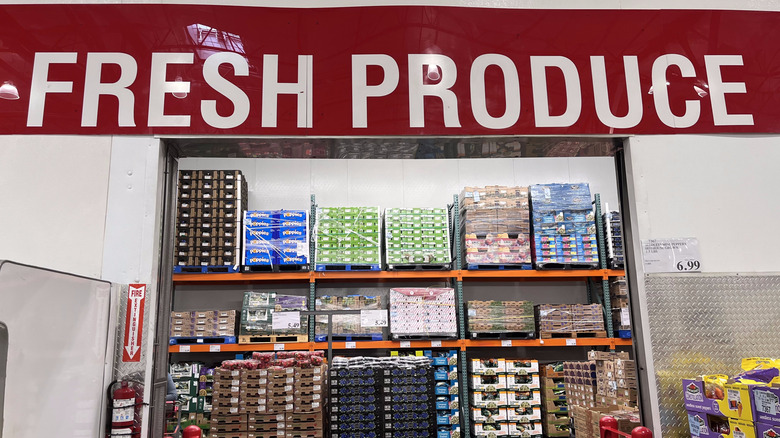
There are plenty of reasons why a trip to Costco is always worth it. Perhaps you crave a stop at the food court for its iconic $1.50 hot dog and soda combo after a long day of shopping, or simply enjoy wandering the vast warehouse aisles to see what you can find. Sure, there are plenty of exciting things on offer, like a 72-pound wheel of Parmigiano Reggiano, but most people are there for the basics, and few basics fly off the shelves faster than bananas. But have you ever stopped to wonder where all those bananas actually come from?
No single country supplies all of Costco's bananas. Even Ecuador, the world's single largest banana exporter, responsible for roughly a third of all bananas traded globally, still isn't enough on its own to keep Costco's shelves stocked. Instead, the chain sources them from a network of six Central and South American countries: Colombia, Costa Rica, Ecuador, Honduras, Guatemala, and Peru. The warm, tropical climate across these countries provides the ideal conditions for year-round banana production. While Costco sources many other produce items, like its lettuce, from U.S.-based farms, the American banana industry is virtually non-existent, with Hawaii standing as the only state with any notable production.
It's not just Costco relying on imports, either, and the vast majority of bananas Americans eat come from abroad. Bananas hold the title of the world's most exported fresh fruit, helped along by how easy they are to transport. They're harvested while still green, shipped in refrigerated containers to prevent spoilage or premature ripening, and then ripened artificially with ethylene gas and a specific temperature right before hitting grocery store shelves.
Costco's bananas have stirred up controversy among customers
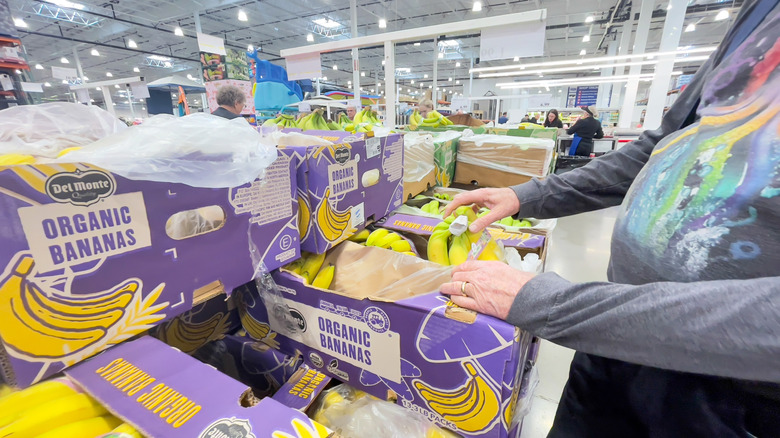
While there are plenty of perks to a Costco membership, the chain is no stranger to controversy. The produce section is one of its most frequently criticized areas, and the bananas often bear the brunt of shoppers' ire. For many, ripeness is the main issue. "We bought bananas ... and they just...stayed green," one shopper shared on Reddit. "Then, a few days ago, they suddenly went brown. There was no in between." There's no shortage of similar complaints, and several customers say they've returned the bananas, or just avoid them altogether. This problem is compounded by the fact that Costco sells them in three-pound bunches. "I can't eat such large quantities before they go bad," another customer complained on a separate thread. Unless you're freezing them for smoothies or stockpiling for banana bread, a lot of that fruit is most likely ending up in the trash.
Bananas are climacteric fruit, meaning they keep maturing after being picked. This creates a delicate balance for warehouses, which receive the bananas green and need to ripen them. Add too little ethylene gas, and the bananas stay hard and underdeveloped. Add too much, and they spoil early. If you find yourself dealing with the former issue, one trick is to place your unripe bananas near ripe ones, or other ethylene-heavy produce like apples or pears. The gas they release should help nudge the bananas along. If you buy them ripe, it's a good idea to separate the bunch. Keeping three pounds of bananas together is a recipe for disaster when you consider the amount of ethylene they'll produce. To further slow down ripening and prevent premature spoilage, make sure to store them in an area with good airflow.