

How To Cook Salmon For Maximum Nutritional Value
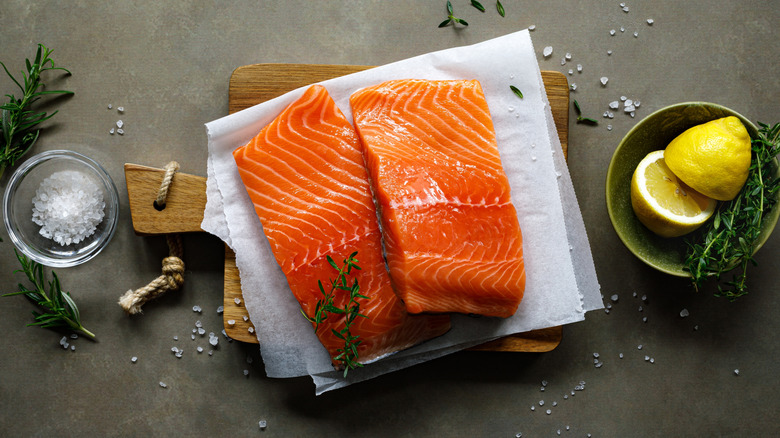
Salmon is one of the most popular seafoods, second only to shrimp in the U.S., with Americans eating some 3.5 pounds of it per person each year as of 2023. The main reason, of course, is that they like how it tastes, whether the salmon is wild-caught or farmed. But word has also been out for a while that the oily fish is full of important omega-3 fatty acids and other nutrients, including Vitamin D, Vitamin B12, and selenium. You don't want to lose any of that nutritional value during cooking, and the best way to preserve it is by steaming or poaching the fish.
The similar methods use a lower temperature, moist heat, which doesn't damage those beneficial elements the way higher-temp, dry heat techniques like pan-frying or grilling can. The same is true of a related method, en papillote, which essentially is steaming it in a parchment paper or aluminum foil pouch in the oven. Although the skin has a lot of the same nutrients, it doesn't crisp up when cooked this way and won't be very good, so it's best to remove it.
Steam the fish above one to two inches of water at a gentle boil, optionally dabbing oil on the basket to prevent any sticking. You can also use a colander in a pot with a lid if you don't have a steamer. For poaching, cook the salmon in water kept at a low simmer. The process for both goes quickly, around five to 10 minutes. Use a digital thermometer to see when it's reached an internal temperature of 145 degrees Fahrenheit, the USDA's safety threshold for fish.
Boost nutritional intake and flavor with additional ingredients and paired sauces
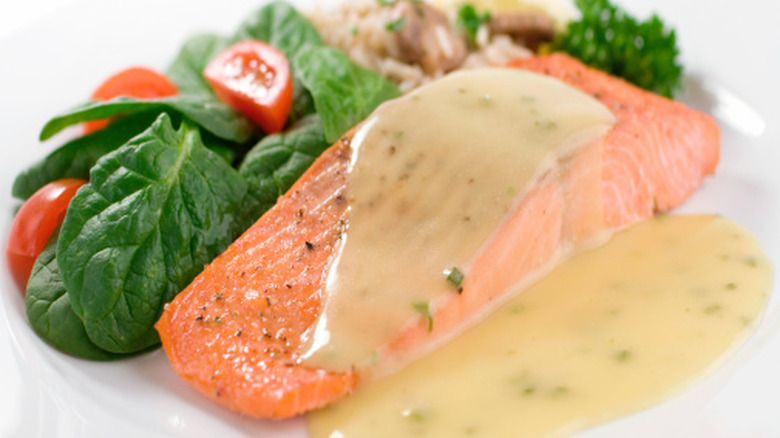
Although you can steam or poach salmon using plain water, it's common to add other ingredients to the liquid to infuse more flavor into the fish. Garlic, onion, carrots, and other aromatics are one possibility, as are fresh herbs and citrus like lemon or lime. Ingredients like soy sauce, ginger, and lemongrass would work well for an Asian approach. You can also add other liquids to the water, such as white wine, seafood stock, or vegetable broth.
Eating other beneficial fats with salmon can help your body absorb all the omega-3s and nutrients even better. Drizzle olive oil over the cooked fish, include avocado in a side salad, or both can be part of a dressing or sauce. Additionally, high-antioxidant foods can help safeguard the nutrients by warding off oxidation. Squeezing lemon or lime juice or sprinkling your favorite herbs (coriander, parsley, white and red pepper, and horseradish are all high in vitamin C) over the prepared salmon are a couple of ways to include them, or either can also be part of a dressing.
Many different sauces work well here, like poached salmon with dill sauce, a classic basic hollandaise, lemon caper, or one made with mustard and honey. Rotate different sauces when you make the fish, or create your own with flavors that go well with it as a jumping-off point. They include tangy dairy such as sour cream or Greek yogurt, citrus, and herbs like dill, parsley, and thyme.