

US Vs Norway: How Does The McDonald's McMuffin Differ?
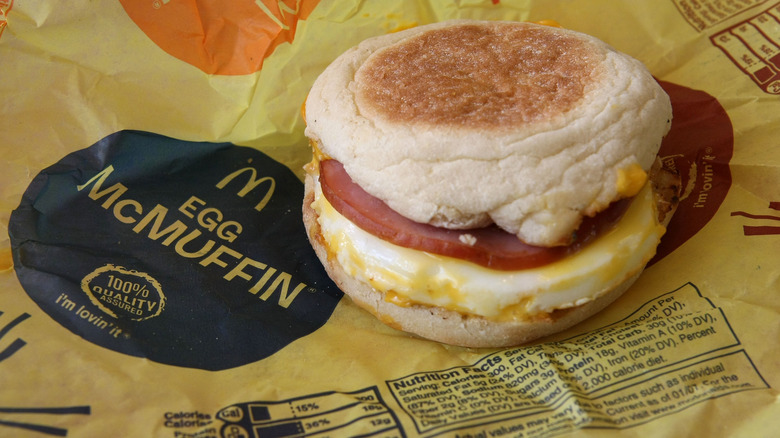
There's something distinctly familiar — nostalgic, almost — about a McMuffin for breakfast. If you managed to roll yourself out of bed early enough to grab one, or fetch the sandwich on the way to work or a morning flight, it's a warm, comforting, and subtly indulgent way to kickstart the morning. But the standard U.S. Egg McMuffin isn't the same everywhere — and in Norway, its Deluxe upgrade feels closer to a cheeseburger that got an early start to the day.
Both versions of the Egg McMuffin share the basics: An English muffin and egg, but the similarities stop there. The U,S. version keeps things on the simpler side, with Canadian bacon, American cheese, and real butter. Norway, on the other hand, turns the handheld breakfast into a veritable extravaganza for its Deluxe: Beef patty, a cheddar-style cheese sauce, tomato, lettuce, fresh onion, and a creamy McFeast sauce — a mayo and mustard sauce with a smoky twist.
The split between the two versions speaks to how McDonald's treats its most recognizable items. Rather than shipping an identical breakfast worldwide and replicating it into a set of cookie-cutter clones, it lets local chains bend the formula to fit national preferences and cultural sensitivities. In the United States, the Egg McMuffin remains embedded in the history of McDonald's breakfast, getting its start as a portable riff, of sorts, on Eggs Benedict. In Norway, the Deluxe borrows from the country's McFeast tradition and a greater appetite for locally sourced eggs and beef. Neither version is inherently better — it all depends on your preferences and how you like to get your morning fuel. The U.S. sandwich is simply compact, familiar, and made for a simple start alongside a coffee. The Scandi modified counterpart is a two-handed, meatier, messier affair for someone looking for a hearty start to the day
The American Egg McMuffin: A breakfast classic
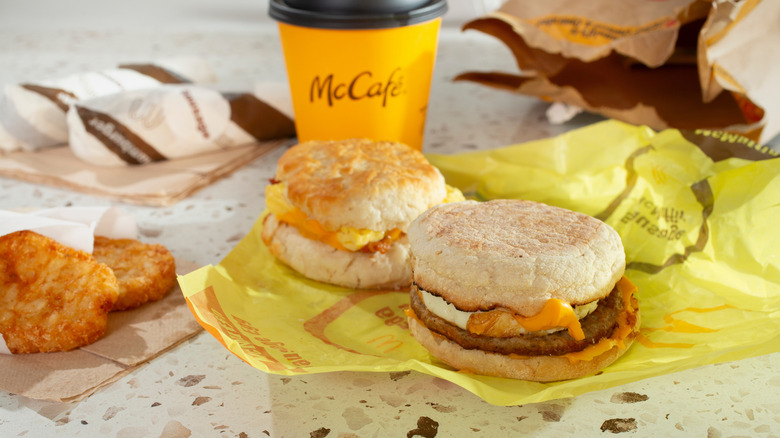
The American Egg McMuffin is nothing short of a breakfast icon, and with good reason: It knows what it is, doesn't add unnecessary fluff, and gets the job done. The eggs are Grade A, the bacon is lean and salty, and the buttered English muffin gives it an almost homemade quality. You feel like you're at McDonald's, but it isn't like indulging in a burger — no sticky sauce, tomatoes slipping from the sides, nor a need for an emergency napkin, making it a work-shirt danger: It's a breakfast food through and through. Its clear formula and restraint are part of its selling point and identifiable aesthetic.
Its famous round egg isn't a visual gimmick either. The sandwich's history can be traced to California franchisee Herb Peterson, who aimed to make a handheld version of Eggs Benedict, the beloved brunch staple that got its start at New York City institution Delmonico's. Hollandaise proved an impractical sauce, so it was replaced with cheese — while Canadian bacon provided the ham-like layer and hint of umami. Peterson also developed rings that could shape freshly cracked eggs to match the muffin perfectly. The sandwich entered test markets in 1972 and ultimately completed its national rollout in 1975. It was originally 63 cents, which, adjusted for inflation, is just over $5.
That origin story helps explain why the American version remains so no-frills, especially in a market where fast food outlets compete to outdo each other and out-stack each sandwich with a landslide of toppings. With the Egg McMuffin, each ingredient has its clear purpose in building texture, balance of flavor — velvety richness from the butter, creaminess from the cheese, savoriness from the bacon — while giving the egg the attention it deserves. Even the ingredient change that improved the McMuffin involved its buttery finish rather than a dramatic rebuild.
Norway's McMuffin Deluxe takes things further
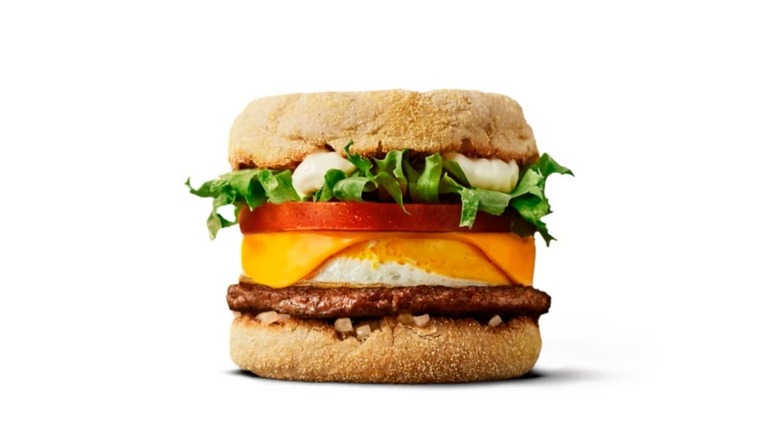
While Scandinavia is generally known for its penchant for keeping things on the minimal side, nothing could be further from the truth when faced with the McMuffin. The Deluxe takes the original's silhouette and basic concept and blows it up into a decadent treat, packing a 100% Norwegian beef patty, processed cheese (the best kind for melting), iceberg lettuce, fresh tomato, and that McFeast sauce.
The biggest change is in the beef, which turns the affair into something distinctly burger-like and shifts the emphasis onto the meat itself. While the U.S. version sees the Canadian bacon act as a side character to the undisputed star of the show — the egg — in a Norwegian McMuffin, the burger takes center stage. Lettuce and tomato add freshness, the onion brings bite and tang, while the McFeast sauce lives up to its name. The end result is less a quick breakfast and more brunch-meets-dinner in a few hefty bites.
There is a distinct explanation behind the excess in the Norwegian Deluxe. McDonald's Norway notes it uses only beef, poultry, organic eggs, potatoes, and onions, plus lettuce when the season permits, all sourced from within the country. That makes the Deluxe feel intentionally localized rather than just a simple change of toppings, as well as catering to local tastes — in Europe, McDonald's is more commonly associated with burgers and drive-thru than breakfast proper. Norway does still offer simpler McMuffin options, including Egg, Bacon & Egg, and Beef & Egg, with the Deluxe a mere maximalist edition. But its existence speaks to how McDonald's views its different markets — and vice versa. If you want to elevate your McDonald's Egg McMuffin, try asking if you can add a burger patty, lettuce, tomato, and maybe some Big Mac sauce.