

5 French Restaurant Rules American Tourists Immediately Break

France doesn't joke about its food. The country, whose own gastronomic tradition garnered UNESCO recognition, is not only renowned for its hard-to-rival culinary heritage and regionally diverse recipes, but also for its consolidated set of eating rituals, which are often rather distinct from those in the U.S. Indeed, American visitors often fall prey to more than a few rookie errors when setting foot in the "Hexagon" and trying its delicious cuisine.
When it comes to perfecting the skill of passing as a native in any French restaurant — be it a more laid-back bistro, a vivacious brasserie, or a higher-end haute cuisine establishment — the key is understanding the philosophy behind French cuisine. At its heart, French dining values structure, tradition, conviviality, moderation, and the ability to exercise good taste, or le bon goût, even in the most informal of environments. Food is meant to be tasted mindfully, rather than scarfed down; recipes should be honored in their near-sanctified traditional form, rather than unnecessarily tinkered with; and, above all, there is a natural rhythm to specific meal times and table customs.
While eating habits are changing around the world, and France is not immune to the rapid influence of food consumerism and globalization, realizing that France treats its food less as a means to an end than an end in itself can help you enter a mindset that should already keep you from making some of the biggest faux pas. But since cultural differences between the States and France do require some background knowledge, we have you covered with some of the blunders to avoid if you don't want to be seen as a maladroit tourist, from ordering unnecessary condiments to misunderstanding basic restaurant etiquette.
Asking for (the wrong) condiments breaches French culinary tradition
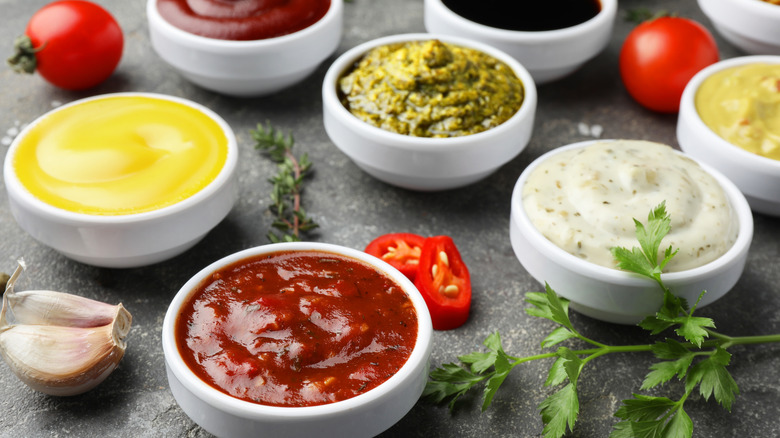
In the United States, condiments are part and parcel of almost any meal and, in a restaurant, are often treated as an open invitation. Bottles or ramekins of ketchup, ranch, mayonnaise, mustard, and countless other sauces are typically left on the table, allowing diners to add them to their meal to their heart's content. Certainly, no one would judge you if you asked for a side of ketchup with your steak, barring some more formal eateries.
In France, however, things are a little different. French culinary traditions are deep-rooted and often historic, tied to recipes that can be hundreds of years old. Each comes with its own flavorings, seasonings, or pre-approved condiments. Take steak au poivre, a pepper-crusted filet mignon that is often accompanied by a peppercorn sauce made from a reduction of Cognac, heavy cream, and Dijon mustard. Or Provençal soup, which is often garnished with pistou — southern France's own version of pesto. To ask for a dollop of mayonnaise or BBQ sauce with either of these dishes would, at best, be seen as a fundamental lack of good taste or knowledge of the dish and, at worst, as a culturally insensitive affront. Granted, no one will judge you if you want a squeeze of ketchup with your pommes frites, or french fries, but to avoid any gaffes, it's best to try the dish as is, or with one of its traditional accompanying sauces.
Requesting a to-go box is atypical in traditional French dining
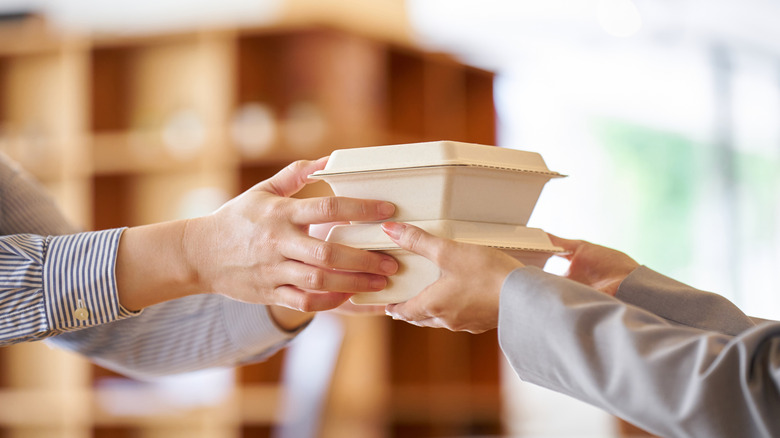
One of the biggest surprises Americans might find when dining out in France is that to-go boxes for leftovers are not quite as ingrained in the local restaurant culture as they are back home. Asking for one is no longer a social crime, but it can still feel unnatural, especially in more formal dining environments.
There are a variety of potential reasons for this. To start with, portions in French restaurants are often smaller, meaning they are typically intended to be manageable for a single sitting. Moreover, lingering over several courses is often seen as part of the experience, not something to be rushed. This has simply resulted in less demand for leftovers to be taken home.
This cultural hesitation also brought with it something of a stigma. French culture is known to be image-conscious, and historically, asking for a "doggy bag" was associated with embarrassment or poverty, with the country's Agriculture Ministry even promoting the term "gourmet bag" to curb the stereotype.
Things, however, have changed slightly over the last few years. Restaurants in France are now required to provide recyclable or reusable containers for diners who want to take unfinished food or drink home. But laws don't make customs, and asking for a doggy bag is far more alien to French restaurant culture than it is to American restaurant culture.
Ordering a croissant after noon clashes with French timing
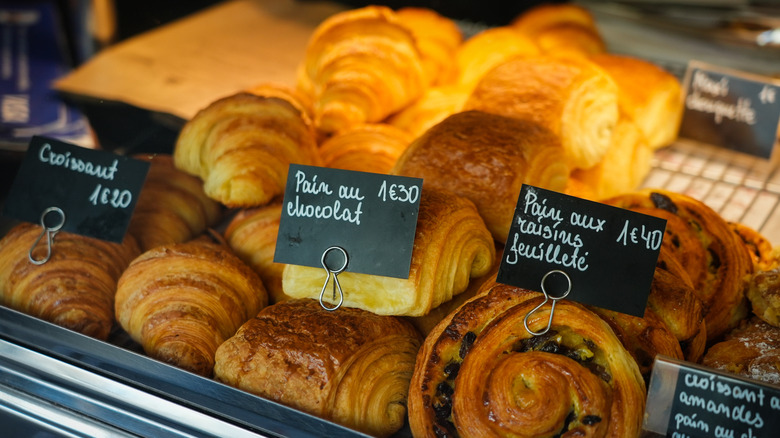
The French are world-renowned for their extensive collection of pastries, which have been exported to cafés and pâtisseries across the world, from flaky butter croissants and pains au chocolat to éclairs and beignets. It's no surprise that they're among the first things Americans want to get their hands on when crossing the pond. Who can forget the scene from the Netflix hit "Emily in Paris," for instance, where she clumsily orders "une" pain au chocolat in a rather flimsy stab at conversational French? But what many might not know is that certain pastries are traditionally consumed at certain times of the day. French meal times generally follow a structured rhythm, including a late-afternoon snack known as le goûter.
Foods such as croissants and pains au chocolat are known as "viennoiseries" and are breakfast staples, intended to be accompanied by a café au lait or hot chocolate before 11 a.m. In the afternoon, the custom is to enjoy choux pastries, cream- or custard-based treats like éclairs or profiteroles. Come the evening, it's time to switch to desserts proper: crème brûlée, for instance, a soufflé, or one of the many fruit-based tarts. While you won't be pilloried for ordering a pain au chocolat at 5 p.m., some cafés might have already run out before you can nab one for yourself. For the best pastry experience, the early bird catches the worm, or, in this case, the croissant.
Adding ice to your wine invites skeptical glances
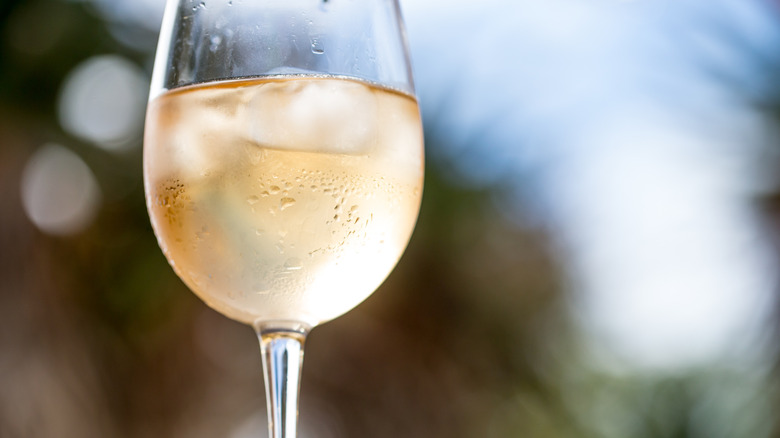
Americans love iced everything — iced coffees, iced lattes, iced matchas, iced dirty chais, you name it. Adding ice to your beverage of choice, alcoholic or not, is so commonplace across the States that it might come as a surprise that the French don't quite share the same love for popping frozen cubes into their glasses. For some common drinks, they might even judge you for it.
Adding ice to water is not a breach of etiquette, but it is not the default in French restaurants. A carafe may arrive with a cube or two, and anyone who needs a colder drink, especially a soda, can ask for "des glaçons, s'il vous plaît," although the waiter might bring a small dish of ice rather than adding it directly to your glass packed to the rim. Tourist-heavy eateries are more flexible, so this can differ from business to business, as well as from region to region.
But adding ice to a good wine is seen as akin to full-blown gastronomic blasphemy. There is good reason for this, too: Melting cubes dilute the wine, while low temperatures can mute the aromas and flatten some of the flavors that make a specific wine so distinct. Out of all wines, red wine is most likely to raise an eyebrow, although, as with all of the above, even the commandments have exceptions. In southern France, rosé over ice is sometimes described as à la piscine, and some Champagne producers have made varieties specifically designed to be poured over the frozen cubes.
Modifying dishes is often discouraged in France
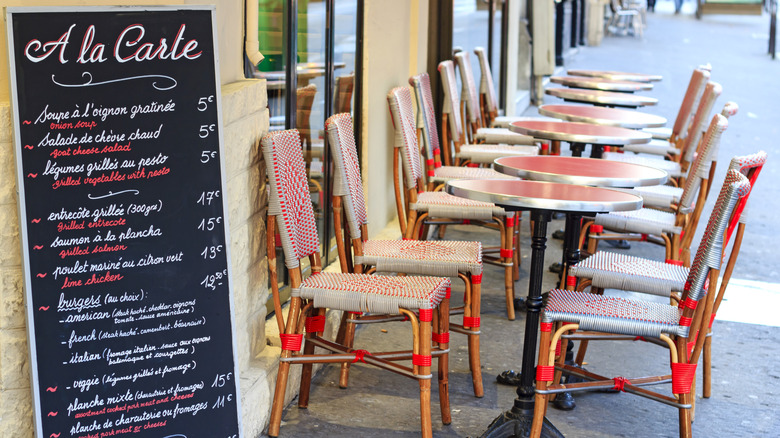
In the U.S., the growing popularity of a wide variety of diets, from carb-averse keto to gluten-free to vegan and plant-forward options, means restaurants, especially in bigger cities like Los Angeles, New York City, and Miami, are accustomed to catering to a huge range of preferences. Asking for swaps or item modifications, consequently, is pretty normal. American dining establishments are often structured to cater to diversity in choice, which helps explain why salad bars, buffets, all-you-can-eat restaurants, and takeout spots are so popular. France, on the other hand, clings much more closely to its à la carte tradition, and because à la carte means "according to the menu," diners are generally expected to act accordingly.
Now, this doesn't mean that valid dietary restrictions are not respected, whether for allergies, intolerances, or specific religious or ethical requirements. But more traditional French dining spots don't take too kindly to fiddling around with established recipes. The broader mentality is: If you don't like what's on the menu, then eat elsewhere, or at home.