

How To Tell Your Weber Gas Grill Is Going Out
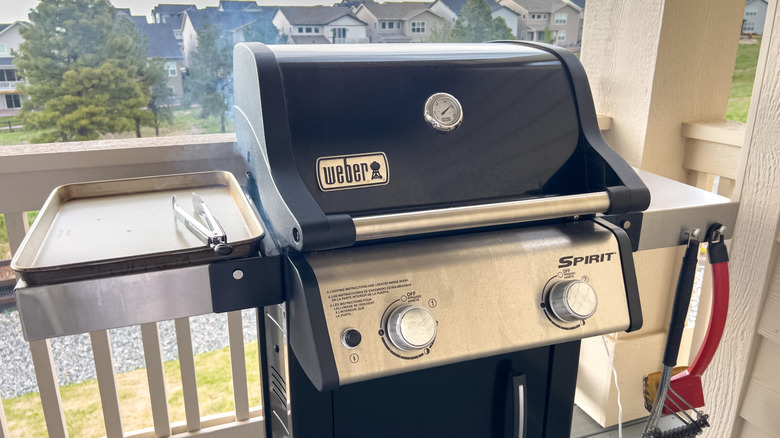
As one of the top-selling gas grill brands, a Weber gas grill can easily last you at least 10 years or more with proper maintenance, though minor issues can occasionally arise sooner. Oftentimes, though, the first sign it's starting to fade is a weak flame or low heat, a potential indicator that your regulator is suffering from wear and tear and may need some adjustment.
Your regulator is that odd-looking metal disc that sits at the connection between your grill's gas hose and your tank. Its job is to control the pressure at which gas enters your grill's burner system, preventing dramatic fireballs and weak flames alike. But when this particular piece trips or starts to fail, it can cause serious problems. When it comes to charcoal versus gas grilling, the major advantage of gas units is their consistent temperature, which doesn't require additional fuel or constant fire tending. A tripped or faulty regulator erases that advantage entirely, usually leading to insufficient heat no matter how high you crank the dial.
Low flames are the most common sign, but you may also notice yellow ones instead. Keep in mind that blue flames are often much hotter, so even if your flames look the same size as before, differences in color are still a good indicator that your regulator is going out. Regulators may look like solid hunks of metal, but they actually have delicate valves and ports inside, so Weber recommends inspecting — and potentially replacing — your regulator every five years to help guarantee safe, reliable grilling.
Troubleshoot low grill heat before replacing your gas regulator
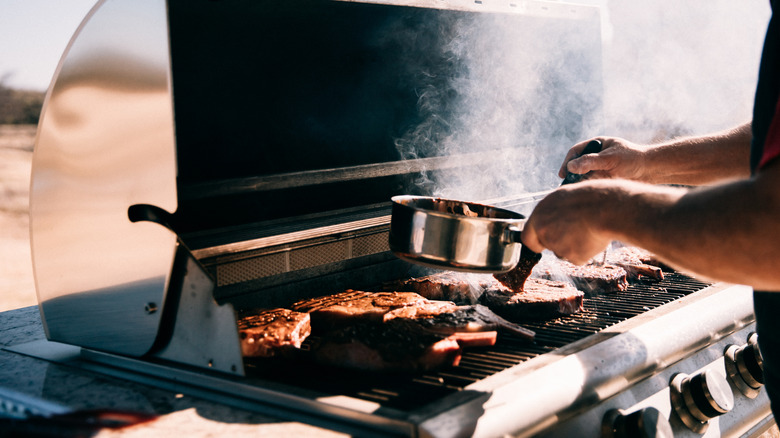
Just like when your Wi-Fi goes out and just needs a reset, a tripped regulator doesn't necessarily require a full replacement. There are a few tricks you can try first to save yourself some hassle.
Most modern regulators have a safety bypass mode that restricts normal gas flow in the event of an emergency, and sometimes it accidentally gets triggered. To fix this, close your tank's gas valve, disconnect the regulator, and crank the dials on your grill to full blast for one minute. This clears out any remaining gas trapped in the lines, helping remove anything that may be interfering with your gas flow. Crucially, turn all burner dials back to the OFF position before reconnecting the regulator. After reconnecting your regulator, slowly open your tank's gas valve again, and check whether your grill ignites properly.
If your low-flame problems are a bit more sporadic and aren't impacting your grilling too much, do not try lava rocks. Old-school barbecue lovers may swear by them for holding heat, but they should never be added to a modern Weber grill, as they trap grease, create dangerous fire hazards, block airflow, and void your warranty. Instead, inspect your Flavorizer bars and clean your burner tubes.