

McDonald's Created An Unusual Flavored Broccoli In 2014 That Never Made It To Menus

McDonald's is no stranger to controversy, and the globally beloved chain has frequently come under fire for not encouraging kids to eat a nutritionally balanced diet. In response, McDonald's set out to build a more veggie-forward kids menu. Fortunately, there are plenty of creative hacks for getting kids to eat their five-a-day. Some parents blend greens into sweet, protein-packed breakfast smoothies or serve them with a fun twist. McDonald's tried its own version of this trick with broccoli, which ultimately turned out to be a candy-flavored flop.
Reported by Business Insider, back in 2014, then-CEO Don Thompson revealed that McDonald's had developed a bubblegum-flavored broccoli. Yikes. The idea, in theory, was that kids might warm up to their vegetables if they tasted more like candy. But, in all honesty, we can't say we're surprised that this one never made it out of the drawing room. In Thompson's own words, the strange flavor combination "wasn't all that." Allegedly, the (lucky?) kids who got to test it found the flavor more confusing than tasty, and it was quickly shelved.
When word got out about broccoli-gate, the internet had plenty to say. Unsurprisingly, almost no one was clamoring for it to land a permanent spot on the menu. "I would be confused and disgusted too if I had to eat something that tasted like bubblegum with the texture of broccoli," one Redditor shared. "Texture is often just as important as the flavor."
For McDonald's, minor operational tweaks often outperform major menu redesigns
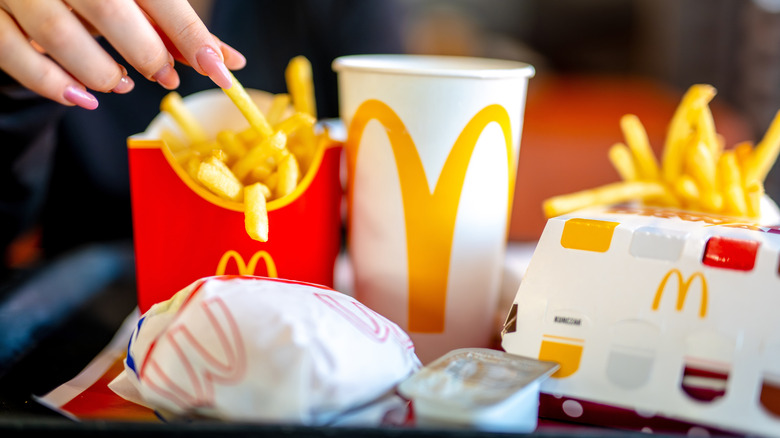
Mickey D's is arguably at its best when it sticks to what it excels at — ultra-processed fast food that's reliably the same no matter which location you visit. That's probably why nearly every "healthier" item it has tried to introduce is among the McDonald's menu items that disappeared not long after launch.
Back in 1991, McDonald's rolled out the McLean Deluxe, a burger that was 91% fat-free thanks to a seaweed-derived additive standing in for beef fat. Marketed squarely at health-conscious customers, its tagline was "Hold the Fat." On paper, it sounded pretty promising, but it didn't take long for customers to complain that the burger was dry and bland. After all, an 80/20 lean-to-fat ratio is generally considered the gold standard for burgers. The fat is what keeps the burger juicy, so skimp on it, and it'll inevitably end up dry. It's no surprise, then, that by 1996, the McLean Deluxe had failed to develop a strong enough fan base to justify its place on the menu and was posthumously dubbed "The McFlopper."
While bubblegum broccoli and ultra-lean burgers weren't successes, McDonald's has been more proactive in changing how its food is served. In 2004, as part of its "Eat Smart, Be Active" campaign, the chain phased out its "Supersize" serving option to present a more nutritionally-minded image. In 2018, it also removed artificial preservatives, flavors, and colors from its burgers. So, as is often the case, it seems the simplest changes often have the biggest impact.