

Here's The Average Shelf Life Of Soda
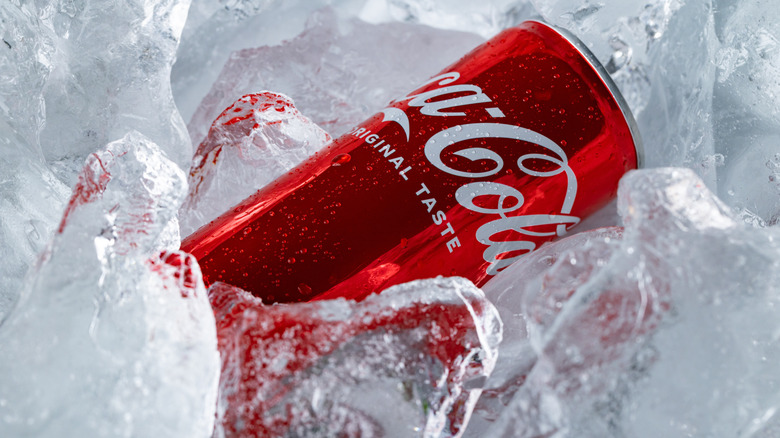
Who doesn't enjoy soda? It's one of the most popular beverages out there, with Coca-Cola alone selling a whopping 2 billion drinks a day. One of the best perks of keeping plenty of cans on standby is that they don't typically go off, making them great for whipping up a spontaneous Jack and Coke highball or cracking open for a quick pick-me-up on a hot day. But while you can certainly leave your cans sitting in the fridge (or pantry) for a hot minute, if you want your pop tasting its best, it's generally recommended to enjoy regular soda within nine months tops. Diet sodas don't get as much leeway, though, and keep fresh for just half as long (per WestAir).
Sodas most often come with a "best by" date, not an expiration date, and this distinction matters. Best by and use by are essentially the difference between quality and spoilage. So while your soda won't grow mold or spoil in the way milk or fresh juices do, it's still susceptible to losing its signature flavor over time. The date on your cans or bottles is primarily a heads-up for when the drink might start losing its bubbles — aka carbonation.
Carbonation refers to the dissolved carbon dioxide gas responsible for that fizzy mouthfeel. That same gas also transforms into carbonic acid, which gives soda its subtle tang and helps balance out all that sugar. Over time, however, certain outside factors like temperature and light can leave your once-crisp soda tasting flat and unbalanced. The type of container also plays a major role in how well it holds up, and opaque aluminum cans offer far better protection from light and heat sources than transparent plastic bottles, which is a big reason why cans tend to stay fresher for longer.
Why does diet soda go off faster than regular soda?
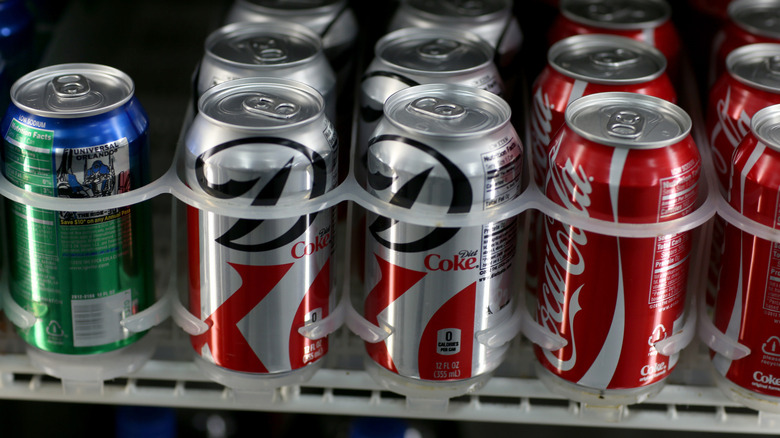
While diet sodas might not be as popular as their sugary counterparts, they still occupy a huge share of the soft drink market. Ever since the first diet soda, No-Cal, hit shelves in 1952, other brands have been quick to follow suit, relying on sweeteners to mimic that classic sugary flavor. But it's these very sweeteners that are to blame for diet varieties degrading in quality much faster than their full-sugar versions.
While it wasn't always the case, aspartame is now the most common sweetener used in diet soda. Iconic brands like Diet Coke and Pepsi Max rely on it because it's roughly 200 times sweeter than regular sugar, delivering that signature sweetness with almost zero calories. The catch? Aspartame's chemical makeup is far more delicate than sugar's, and it breaks down much more easily into amino acids such as phenylalanine. According to the Food Science Institute, a byproduct of this breakdown is diketopiperazone (DKP), which can potentially cause the drink's flavor profile to turn bitter and metallic. This same time frame should also be applied to zero sugar sodas, as these newer beverages are essentially just diet sodas with a few tweaks.
No matter what type of soda you prefer, there's one easy precaution to keep them in top shape. Carbonation hates heat, so store soda away from direct sunlight or heat sources. Cold liquids also hold gas much better than warm ones, so keeping your cans in the fridge will keep them far crisper. But it's a different story once you've cracked open your soda. Since carbon dioxide begins rapidly escaping the moment that seal breaks, you're racing against the clock, and you've got about four days tops before it's no longer worth drinking.