

Is There Any Difference Between Zero Sugar And Diet Sodas?
If you're a big player in the soda game and wanna be taken seriously, you've gotta offer more than just your classic flavor. Take Coca-Cola, for instance — there's original Coca-Cola, Diet Coke, and Coca-Cola Zero, to name just a few! And that's just one example; many other brands now feature both diet and zero sugar variations. But if you're a true soda connoisseur, you might be wondering what actually sets these two categories apart. While easily distinguished from classic variations as they both contain virtually zero sugar, they still taste different, and that all comes down to the blend of sweeteners used — although today the line between both has started to blur. While there's no single concrete answer, diet sodas usually feature just a single artificial sweetener and aren't necessarily designed to taste like their non-diet counterparts. Zero drinks, however, use a blend and usually try to mimic the taste of the OG beverage. The marketing surrounding the two also varies.
Unlike sugar, which the body breaks down into glucose for energy (in non-science terms, a "sugar-rush"), artificially produced sweeteners cannot be metabolized, which is why they contain little to no calories. They're also incredibly potent, often being hundreds of times sweeter than sugar, so only a small amount is needed to achieve the same level of sweetness. While they're often marketed as the better alternative, there's growing evidence that these sweeteners might be doing more harm than good.
What is diet soda?
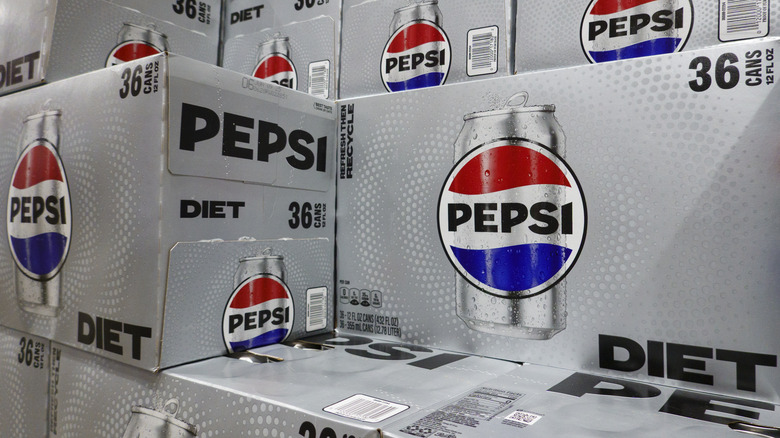
Diet soda has a much longer history than its zero-sugar counterpart, with its earliest variations first hitting shelves in the 1950s and marketed as a sugar-free soda substitute to diabetics. Over time, diet drinks like Diet Coke have become as culturally iconic and commercially successful, and also hated by flight attendants. Although one of the most popular types of sodas, it doesn't yet rival the popularity of its sugary counterparts.
Diet sodas are distinct because they typically only use one sweetener: Aspartame. Just take one of the biggest soda brands in the United States: Coca-Cola, which solely uses this sweetener in its diet sodas. Generic brands, like those by Walmart, also frequently use just aspartame.
They're also not intended to taste the same as the original, either. For example, when comparing Diet Coke to regular Coke, Coca-Cola stated that "Diet Coke has a different blend of [flavors,] which gives it a lighter taste." Despite the different blend of sweeteners, there is a mixed opinion of the taste differences between diet and zero sodas. For example, go online, and you'll see diverse opinions on the differing flavor profiles of diet verses zero sodas. Some can't taste the difference at all while others swear up and down that they can pick each out in a blinde taste test. So the differences in flavor seem to be largely influenced by personal taste.
What is zero sugar soda?
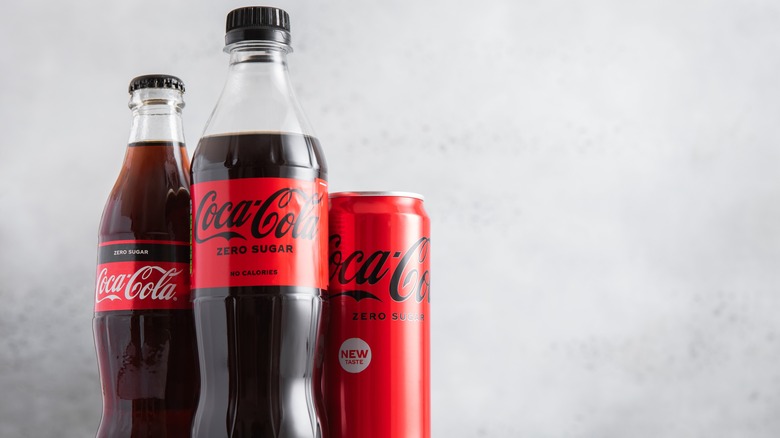
Zero-sugar sodas were the natural successors to diet sodas. While almost the same as diet sodas — with a few ingredient tweaks — they are marketed to a different audience. Take Diet Coke, for example, which was largely associated as a "feminine" drink for the diet-conscious consumer, cleverly appointing celebrities like Kate Moss as their creative directors. On the other hand, Coke Zero took on a distinct marketing strategy aimed at everyone, simply selling it as tasting like the real thing without the added sugar, with little reference to diet culture.
Unlike diet sodas, zero-sugar sodas typically combine aspartame with another sweetener. Take Coca-Cola Zero, which uses a blend of aspartame and another sweetener called acesulfame potassium (ACE-K). Other zero-sugar versions that also add ACE-K include Pepsi Zero Sugar and Dr Pepper Zero. The flavor profile of zero-sugar sodas is largely meant to mimic the original taste. This is confirmed by Pepsi's statement, which claimed that for their zero-sugar version, "We have reduced the amount of sugar and used a blend of sweeteners to maintain the Pepsi taste people expect," and by Coca-Cola, which similarly affirmed that "Coca‑Cola Zero Sugar looks and tastes more like Coca‑Cola original taste." This formula does seem to have worked, and across social media, users claim that they were unable to taste the difference between Coke Zero and regular Coke.