

12 Popular Pot Roast Dishes From Around The World
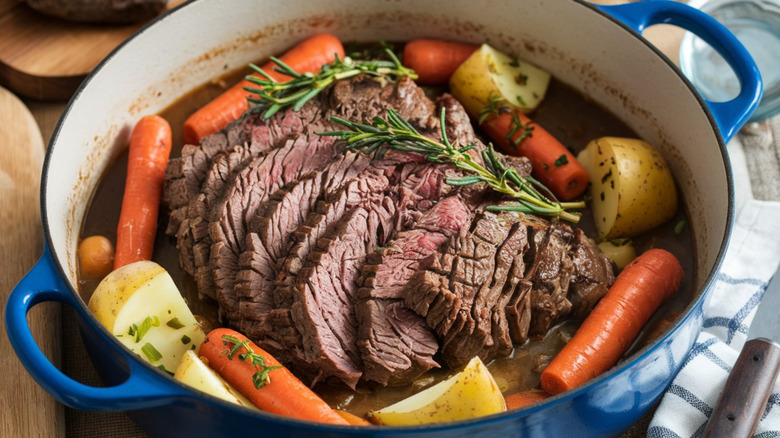
What do you do with a hunk of meat that refuses to respond to casual searing and basting? Carve out a Sunday and make a pot roast, of course! The economics couldn't be better: It takes a relatively unglamorous, dirt-cheap cut and transforms it into something vaguely ceremonial, all with little to no babysitting. The basic formula is pretty simple: One large piece of obstinate meat, a few aromatic vegetables, any old broth, low heat, and voilà — several largely unattended hours later, you have enough roast to feed a small party and leftovers to build into breakfast or fold into a comforting meat pie.
As far as technique goes, a written recipe will serve you well. But, it's not frowned upon to chuck whatever vegetables and aromatics you've got loitering in the fridge into the pot with your seared meat; things tend come together nicely somewhere around the second hour of braising. However, though easygoing, pot roast is hardly uncultured. It has traveled the world, picked up countless regional accents, and settled into some seriously rich culinary traditions. Ready for a world tour of pot roast? Here's a roundup of delectable variations from France, Italy, Venezuela, and beyond.
Yankee pot roast
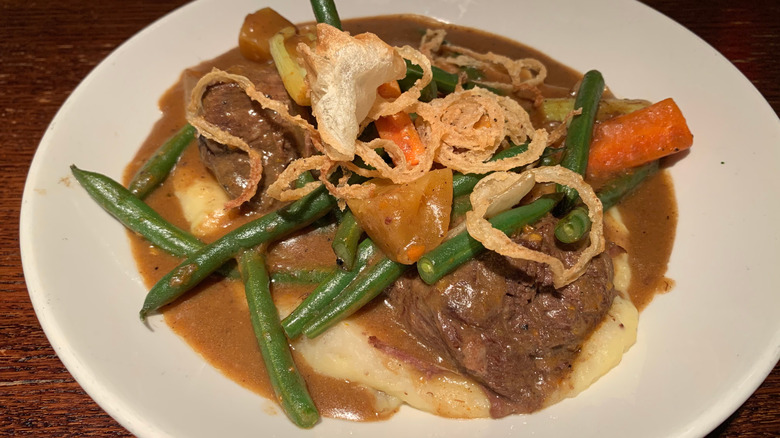
There's nothing like a pot roast stewing away to inject a little balminess into your kitchen in cold weather. This is something New Englanders understand well — that and thrift — which is why they're credited with popularizing the famous Yankee pot roast, an updated moniker of the less flashy New England boiled dinner.
There is no definitive first appearance of the complete phrase "Yankee pot roast," but American pot-roast recipes were already turning up in print by the 1870s. By 1944, however, the name had become recognizable enough as part of New England cuisine to appear in an official U.S. Army recipe manual.
An old-fashioned New England boiled dinner, according to Meg Muckenhoupt's "The Truth about Baked Beans," consisted of sturdy root vegetables — potatoes, rutabagas, carrots, and turnips — and corned beef, boiled for several hours with salt for seasoning. A decades-old New England cookbook cited by Muckenhoupt also calls for beets and parsnips, though these were hardly universal, as the 1944 U.S. Army variation — which stuck to tomatoes, carrots, onions, and garlic — makes abundantly clear. Contemporary Yankee pot roasts tend to use carrots, celery, onions and tomatoes, though a little experimentation is not frowned upon.
There's also plenty of liberty granted with the choice of cut. A late nineteenth century print of Good Housekeeping cited by Muckenhoupt calls for salt brisket, but modern recipes may substitute with chuck or even underappreciated cuts, like bottom round.
Sauerbraten
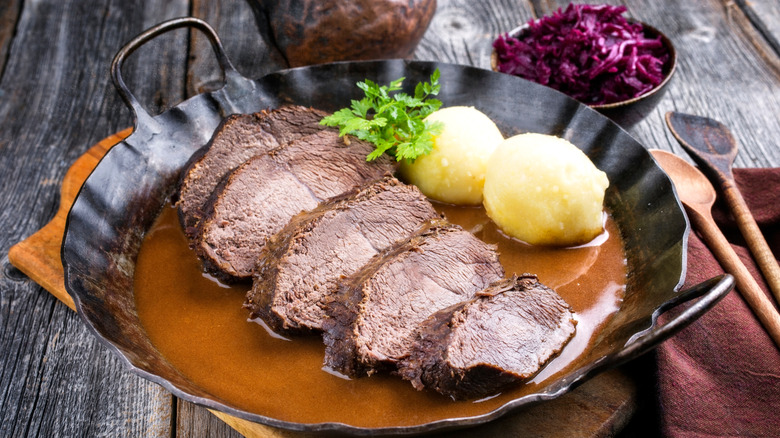
An ordinary pot roast asks for an afternoon. Sauerbraten, the classic German variation, demands something closer to a week-long commitment. Much of that time is carved out for marination; and not in just any old bath. The name Sauerbraten literally translates to "sour roast," and few ingredients deliver sourness with quite the efficiency of good old vinegar.
Some early recipes, including one recorded by celebrated German cookbook author Henriette Davidis in the mid-to-late 1800s, called for boiled, seasoned beer vinegar. Contemporary versions may reach for red-wine vinegar or combine it with wine, though raw vinegar is not strictly forbidden. Either way, this is not ideal cooking for someone who remembers dinner at 5 p.m. Davidis prescribed eight to ten days of marination in winter, but cooks brave enough to swelter over a midsummer pot roast were granted the comparatively merciful sentence of three or four days. Thankfully, modern recipes can get you over the finish line in less than a week.
The seasoning leans warm and aromatic. Bay leaves and cloves were common in early versions, while thyme, parsley, peppercorns and pickling spices have joined the pot as recipes have traveled through time. For extra richness, Davidis recommended larding the meat with strips of bacon seasoned with salt, cloves, and pepper, though modern recipes generally treat that step as optional.
Stracotto alla Fiorentina
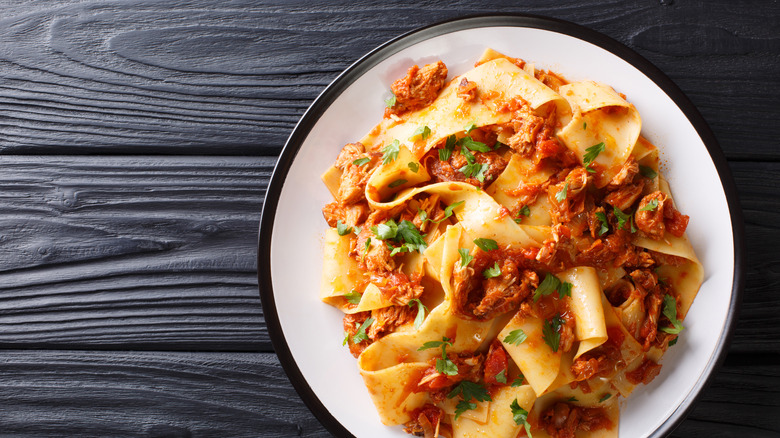
Wherever a discussion of big old chunks of meat breaks out, you can bet Tuscany will elbow its way into the conversation with some very juicy opinions. In the pot-roast department, this picturesque Italian region struts in with stracotto alla Fiorentina, a dish steeped in the culinary traditions of Florence.
Its strongest documentary anchor is perhaps Pellegrino Artusi's "La scienza in cucina e l'arte di mangiar bene," first published in 1891. Artusi recorded a stracotto di vitella — a veal preparation rather than the beef dish now commonly sold under the Florentine name — as already familiar in Florence's bourgeois households.
Traditional preparations typically start off with the holy trinity of Italian cuisine: Soffritto. That order is hardly holy writ, though. You can absolutely relegate the onion, carrot, and celery to second place to get a good sear on the meat first.
But, perhaps its most defining feature may be the tomato-rich braising sauce, built from tomato paste, passata, peeled tomatoes, prepared sauce, or some combination thereof. Together with the soffritto, it creates a deep, cohesive sauce that can be passed through a food mill until smooth or left slightly rustic for more texture. There is some latitude with the accompaniments, but mashed potatoes, pasta, and polenta are among the sauce's most dependable companions.
Bœuf à la mode
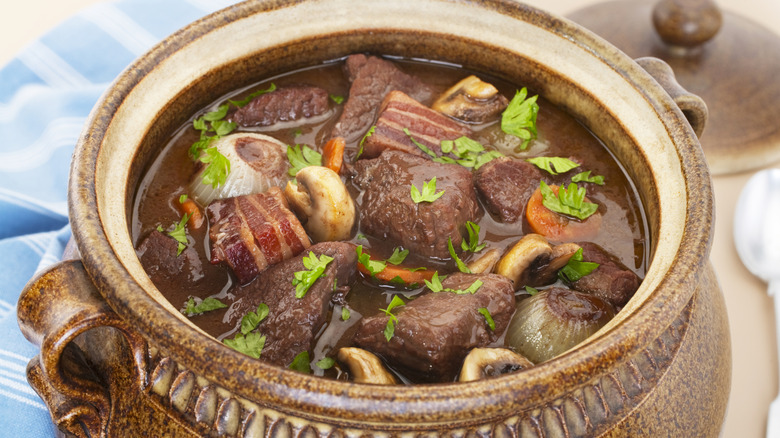
You can scrounge up a perfectly respectable pot roast from as few as three ingredients. But, when you want something bolder — something that takes both flavor and prep work to the next level — look no further than the classic French pot roast, bœuf à la mode. Despite what the name might suggest, this is not beef served with a jaunty dollop of ice cream on the side. Here, à la mode means prepared according to a particular manner or fashion; one that has evolved considerably over the centuries.
Early recipes were far barer than contemporary versions. François Pierre de La Varenne's foundational eighteenth century French cookbook, "Le Cuisinier François," instructed cooks to tenderize the beef, stud it with pork fat, then braise it in broth seasoned with a bouquet garni. Over time, cooks began dressing up the pot with white or red wine, thyme, bay leaf, lime, mushrooms, brandy, and other refinements.
There is plenty of latitude in the choice of cut. Larding was traditionally used to inject richness into the leaner cuts commonly chosen for the dish, such as rump or round, and it still appears in some preparations. But, modern recipes may instead reach for something naturally well marbled, such as chuck, making the needlework largely redundant. Connective-tissue-rich cuts and gelatin-heavy additions also make regular appearances. Shoulder cuts, like paleron and macreuse, may supply the beef, while veal bones or even calf's foot can be added to give the cooking liquid extra body and silkiness.
Birria
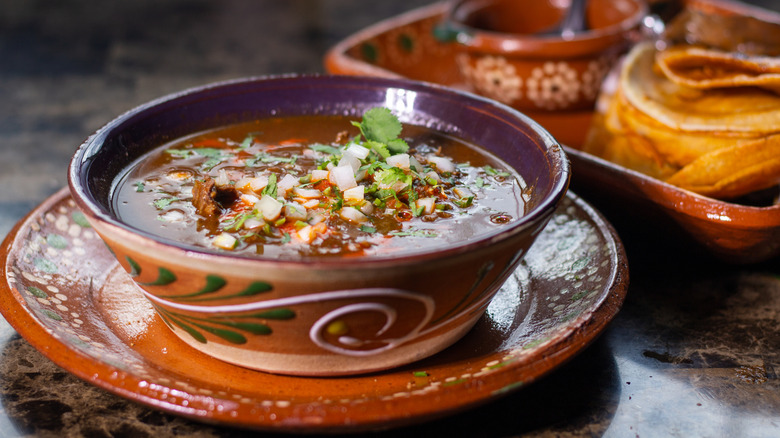
An ordinary pot roast asks for beef, liquid, and perhaps a restrained amount of spices and aromatics to bring everything together nicely. Not birria. This one waves off the dependable carrot-and-celery brigade and places nearly all its bets on a gloriously exuberant blend of chiles and seasonings.
The dish is steeped in the culinary traditions of Jalisco, tracing its origins back to the 1600s. Traditional birria generally reaches for goat meat, but beef, mutton, and even chicken variations have emerged as the dish has travelled through time. The seasoning typically consists a rich chile mixture that may include ancho, cascabel, mirasol, morita, chilacate, guajillo, árbol, or pasilla. That blend can be backed by a broad spectrum of aromatics and spices, including ginger, garlic, cloves, cumin, pepper, thyme, black pepper, marjoram, oregano, and bay leaf — though the mix can certainly be tamed if your palate tends to tire out quickly.
The meat preparation can be surprisingly straightforward. Even the holy writ of pot roast — browning the meat first — is not strictly required. Some cooks skip the crust altogether, preferring to keep the chile-rich adobo front and center. At the tail end, the meat is separated from its cooking liquid, which is then worked into a rich consommé and served alongside — or generously ladled back over — the tender meat.
Brasato al Barolo
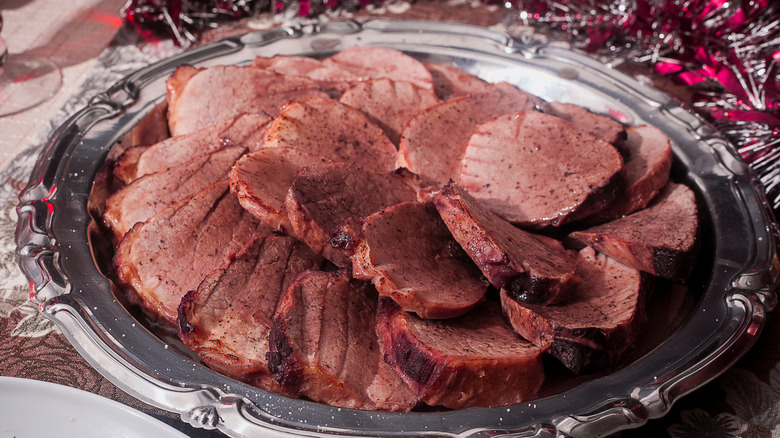
Pot roast is, at its core, a pretty down-to-earth dish, though you can dress it up a number of ways, if you're feeling fancy. And, if fancy pot roast is your weakness, you may want to borrow a page from Piedmont. This celebrated wine region is home to one of the most extravagant pot-roast preparations around: Brasato al Barolo.
There is nothing especially unusual about the basic framework. Dependable vegetable companions, such as celery, carrots, and onions, still report for duty. The aromatic ensemble leans warm rather than spicy, with cloves, cinnamon, black pepper, bay leaves, and rosemary making frequent appearances, though some cooks may dial things up further with juniper berries or sage for a richer perfume. There is also some latitude when it comes to the meat. Chuck is prominent, but thigh cuts and even veal can take its place, depending on the cook.
Where brasato al Barolo really begins acquiring airs is the braising liquid. An ordinary pot roast may call for water, broth, vinegar, or — if you're feeling generous — a humble bottle of dry red. Brasato al Barolo turns up its nose at the lot and insists on Barolo, the prestigious Piedmontese wine made from Nebbiolo grapes. And, this is no restrained little pour: Many recipes demand the entire bottle, which can easily set you back $30 to $50.
Pérnil al caldero
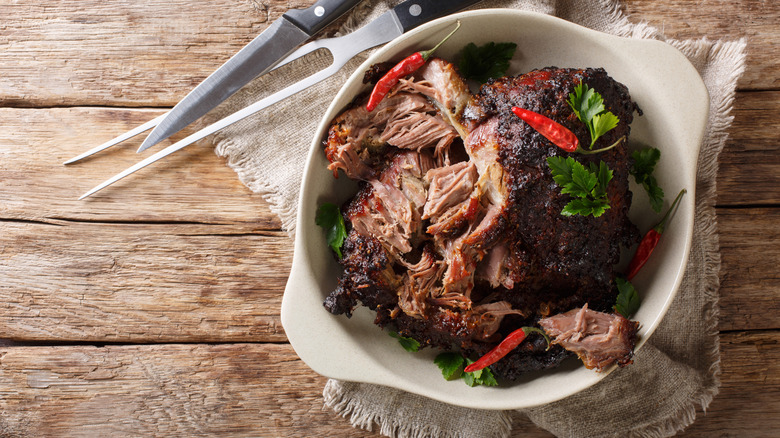
Nothing shows off your dinner party-hosting skills quite like a well-seasoned pot roast, and if you've got a hulking piece of pork and an irresponsible amount of garlic, give your guests something to talk about with the Puerto Rican Noche Buena staple: Pérnil al caldero.
Unlike its close cousin, pérnil al horno, this version is slow-cooked in a caldero (a rounded pot typically made from cast aluminium), rather than roasted in the oven. As the name suggests, the typical cut is the thigh, haunch, or ham, though contemporary recipes may substitute Boston butt or skin-on picnic shoulder.
Where pérnil really digs into its Puerto Rican roots is the adobo: A forceful consortium of garlic, dried oregano, white vinegar, salt, black pepper, and olive oil. This savory ensemble is rubbed all over the pork and left alone with it for anywhere from four hours to an entire day. To steep the flavor deeper into the meat, some recipes peel back the skin, apply the adobo directly underneath, then pull the skin blanket back into place.
Browning matters with any pot roast, and pérnil is no exception. Some preparations spare the skin from the initial sear, though, preserving it so it can be removed and crisped separately after the braise. Aside from an abundance of garlic, the cooking liquid is generally pretty bare-bones: Water or stock will both do the job, though more adventurous versions may invite dark beer into the pot.
Boliche
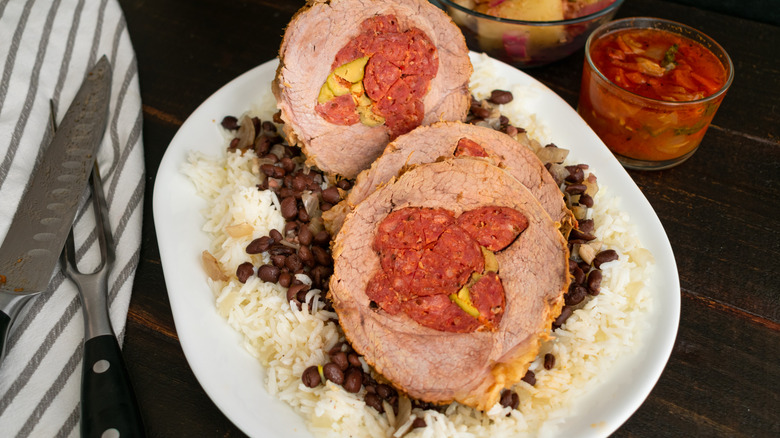
Many pot-roast recipes stick to sturdy braising cuts with an abundance of collagen and fat to withstand a long braise. But, leaner muscles are not strictly forbidden; as long as you know how to keep them from withering away in the pot. There are plenty of ways to pull that off. Bacon works beautifully (cue sauerbraten), but if you're craving something even richer, try your hand at boliche.
Hailing from Cuba, boliche ditches the bacon for something considerably bolder: Chorizo, tucked right through the center of the meat. Recipes are fairly strict about the choice of cut: Eye of round, an exceptionally lean piece of beef that can certainly use the sausage reinforcement.
The seasoning is surprisingly restrained considering the dish's origins, with many recipes building the mojo from a simple mixture of garlic, salt, oregano, and pepper. Perhaps to compensate, the braising liquid is a little more lavish, bringing together dry white or red wine, bitter orange, tomato, and beef stock. Some versions stack in carrots, peppers, extra oregano, and bay leaves for good measure.
The oven, stovetop, slow cooker, and pressure cooker can all lead to an excellent boliche, though the timing naturally shifts with the method. You also have plenty of latitude with the sides, but for a firmly Cuban finish, a healthy helping of black beans, sweet plantain chips, or even rice will do nicely.
Asado negro
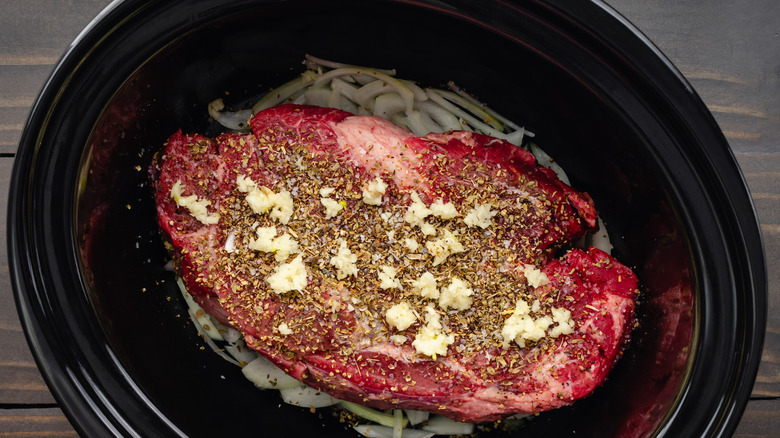
If you're looking for a recipe that'll get your heart hammering a little, try your hand at asado negro. This traditional Venezuelan dish, with strong ties to Caraqueñan cuisine, veers firmly off the beaten path. It ditches familiar searing fats, like butter and olive oil, opting instead to get its color and char from a combination of oil and papelón (unrefined cane sugar).
The browning is a little aggressive, with many recipes calling for the exterior to teeter somewhere between dark mahogany and pitch black. Papelón's distinctive flavour is prized here, but should the vast reserves you naturally keep on hand suddenly run dry, a few tablespoons of ordinary white sugar will do just fine. Unlike the average pot roast, asado negro doesn't quake at the sight of a lean cut. The classic choice is muchacho, particularly muchacho redondo, though pulpa negra may also gain admission to the pot in a pinch.
Everything is tied together with a relatively simple adobo built from onion, garlic, salt, and pepper, though grated tomato, marjoram, and even Worcestershire sauce may join the party for a richer finish. The mixture can be smeared over the meat immediately before cooking, though more forward-thinking cooks may leave it to marinate overnight for a deeper infusion. The braising liquid is pretty modest. Some cooks rely on plain water and the reserved adobo, while others bring in onion, tomato, salt, pepper, or even red wine for extra body and richness.
Pašticada
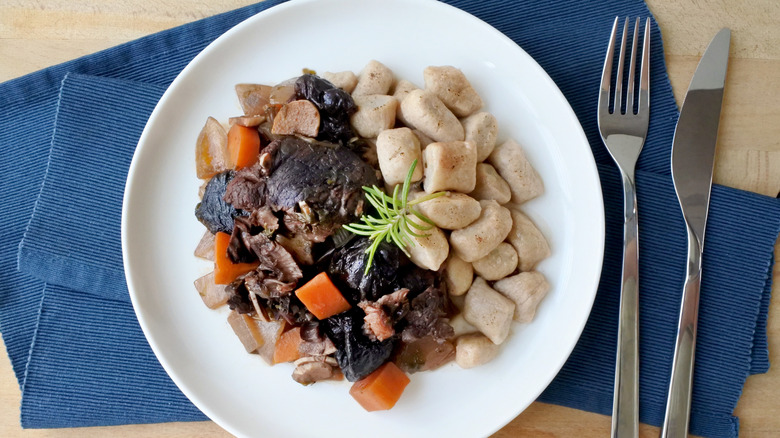
If pot roast is your designated comfort meal, you've probably found one or two secret ingredients to elevate it a notch. Chances are, though, you've never considered prunes. They may sound rather out there in the average American kitchen, but not along Croatia's Dalmatian coast.
Traditional Dalmation pot roast — pašticada — is typically made from beef, though the cut may vary depending on the recipe. A version inspired by Dika Marjanović-Radice's influential 1951 cookbook, "Dalmatinska kuhinja," calls for goveđeg frikandoa, a cut from the hind leg, though other recipes may recommend orah, beef cheeks, or even horse meat.
One of pašticada's most distinctive preparatory steps is piercing and studding the beef with seasoning. Dika-inspired versions stuff in bacon, cloves, and garlic, while more modern recipes may squeeze in strips of carrot and pancetta. An overnight marinade is customary and generally leans sour rather than savory. Some cooks achieve that effect with wine vinegar alone, though a more wine-heavy marinade combining red wine, red-wine vinegar, and warm spices such as cloves, cinnamon, and bay leaves is also acceptable.
The braising liquid is flexible. Dika-inspired recipes may combine wine, tomato purée, nutmeg, and water, while modern versions go in with beef stock, garlic, prosciutto, and tomatoes. The dish's sweetness may come from prunes and apples added during the braise, though it is perfectly acceptable to bring in some of that sweetness toward the end, then deepen it with prošek, sugar, prune jam, nutmeg, or even Dijon mustard.
Svíčková na smetaně
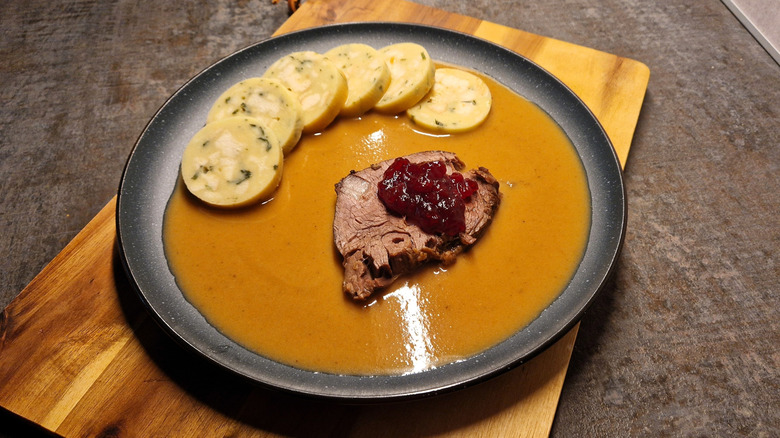
Next on this winding tour is Svíčková na smetaně, a dish so emblematic of Czech cuisine, you'd be hard-pressed to find a Czech restaurant that doesn't serve it. The name roughly translates to "tenderloin in cream," though the tenderloin part is largely aspirational. Most cooks happily shrug off the pricey cut in favor of more economical options, like silverside, eye of round, top blade, or other lean roasting cuts. Where you really start to transgress the name is if you omit the cream finish.
Most traditional preparations call for piercing and larding the beef with strips of bacon to enrich those lean cuts from within. Where the larding leaves off, the seasoning takes over. The flavor profile leans warm and woody, rather than bold, with most recipes calling for a simple mix of bay leaves, thyme, allspice, and black pepper.
That same restraint carries into the braise. Some recipes are perfectly content with water, while more adventurous cooks may splash in beef stock or even a little white wine. Dependable vegetable companions, like carrot, celeriac, onion, and parsley root, make regular appearances and ultimately become the dish's biggest lodestone: The sauce. Once the beef is tender, the vegetables are strained or blended into the cooking liquid, then enriched with heavy cream and a light roux before being balanced with lemon juice or vinegar for a gentle sweet-and-sour tang.
Garofolato
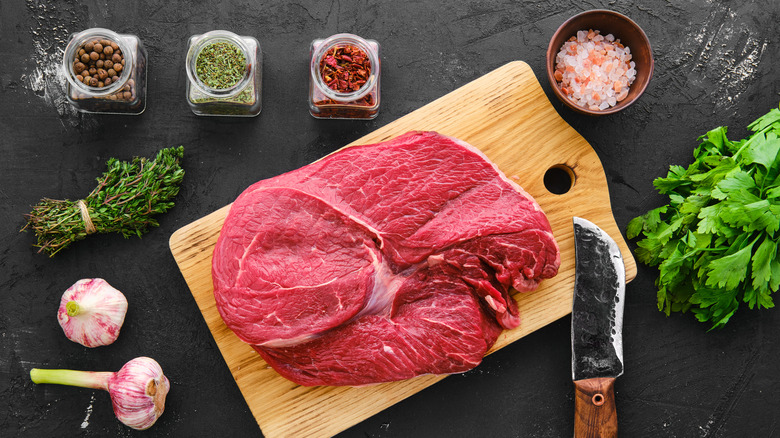
Some traditional pot roasts have stubbornly clung to life despite being centuries old. Others haven't been so fortunate. One classic roast that's slowly losing its grip on the dinner tableis garofolato, a traditional Roman dish you'll be lucky to find in the average trattoria. Its roots stretch back centuries, with a recipe bearing all the hallmarks of the modern dish — manzo garofanato — appearing toward the end of the eighteenth century in Francesco Leonardi's "L'Apicio Moderno."
The choice of meat leans delicate rather than obstinate, with eye of round (girello) being the typical choice, though traditional recipes might call for hindquarter cuts, like culatta and noce. This also isn't one of those recipes where a quick sprinkle of seasoning and a rough chop of aromatics gets the job done. Lean cuts need a little bolstering to survive an hours-long stretch in the pot, which is why traditional recipes call for studding the beef with strips of pork fat alongside garlic and cloves.
Unlike many Mediterranean braises, the seasoning leans warm, rather than herbaceous, revolving around a frankly egregious amount of cloves accompanied by salt, pepper, garlic, and marjoram. No surprises with the vegetable ensemble, though. Most recipes are perfectly content with the dependable trio of onion, carrot, and celery.