

Cleaning Vinegar Vs White Vinegar: How They Are Different And When To Use Each One
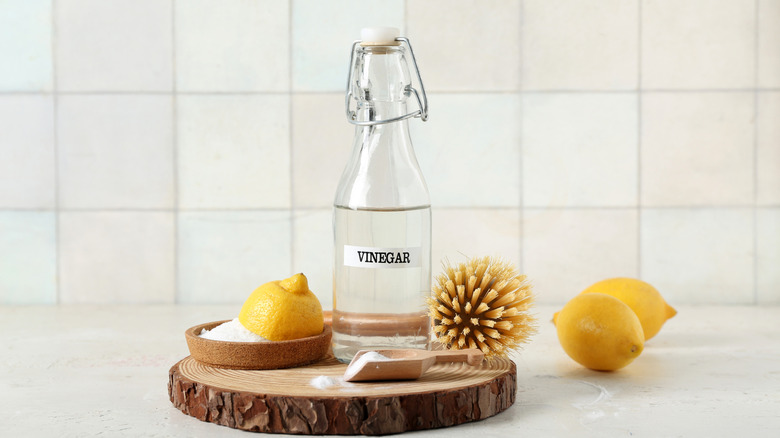
Cleaning vinegar and white vinegar are two things you should always have in your kitchen arsenal. Yet despite their similarly colorless appearance, strong odor, and comparable production process, they serve very different purposes and are by no means interchangeable. While white vinegar has multiple uses in the kitchen, cleaning vinegar should be strictly reserved for household chores.
Despite their divergent applications, white vinegar and cleaning vinegar are made using the same process. Distilled grain or corn alcohol is fermented; during this process, bacteria feed on the alcohol, converting it into acetic acid and water over several weeks. It's this acetic acid that gives each vinegar its defining properties. The key distinction between the two is concentration: Cleaning vinegar has a significantly higher acid content than white vinegar.
That difference in acidity is what determines how each is used in the kitchen and beyond. White vinegar falls under the broader category of cooking vinegars, which derive their flavor from their base ingredients. Compared to other cooking vinegars, like balsamic or apple cider vinegar, white vinegar has a much sharper, more neutral acid profile, making it especially versatile in the kitchen. Its acidity also gives it some cleaning power, allowing it to cut through grease and kill certain kinds of bacteria, which is why many people use it as an all-natural household cleaner. But for tougher stains and heavier-duty jobs, cleaning vinegar's higher acid content makes it the (literally) stronger choice while also making it unsuitable for consumption.
White vinegar is a kitchen all-rounder
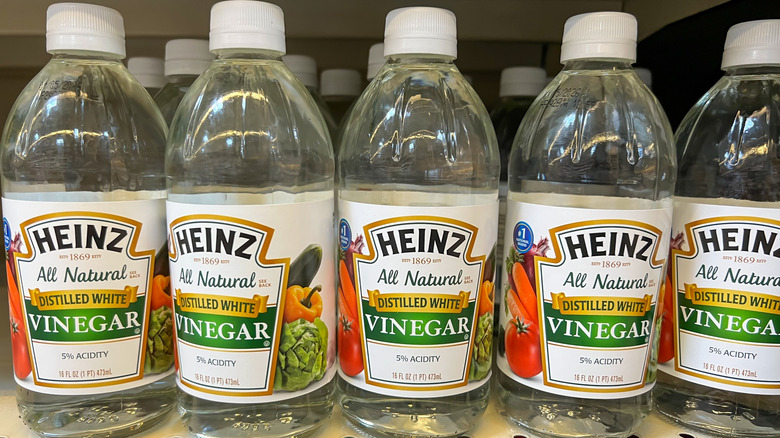
White vinegar — also known as distilled white vinegar — is a clear, colorless solution of roughly 5% acetic acid, with the remainder made up of water. Because it is sold for consumption, it also undergoes stringent food safety regulations. While the clear liquid might not look like much and doesn't smell great, it's one of the most versatile kitchen staples out there. From preserving foods and adding flavor to baking, its low pH makes it a pantry essential.
One of the best ways to use white vinegar is as a pickling solution. Simply heat equal parts white vinegar and water, add salt and sugar, then continue heating until everything has dissolved. When you add your vegetables (though you can also pickle fruits!), the acetic acid in the vinegar lowers the pH of the liquid, making it extremely hostile to food-spoiling microbes and harmful bacteria. This increases the shelf life of your vegetables by several months while simultaneously giving them a delicious tang. Speaking of flavor, white vinegar's acidic profile also pairs well with countless dishes. If you've ever found a sauce too heavy or realized you were overly generous with the salt when making a batch of classic beef chili, a small splash of vinegar can restore balance by brightening the overall character of the dish.
Many people also utilize vinegar's chemical reaction with baking soda, which can serve an interesting dual purpose. In cake batter, that fizzy reaction activates the baking soda, helping the cake rise higher and giving it a lighter, fluffier crumb. Got a clogged sink instead? The same fizzing action can help break things loose and get your drain flowing again in no time.
Cleaning vinegar is great for tackling more stubborn stains
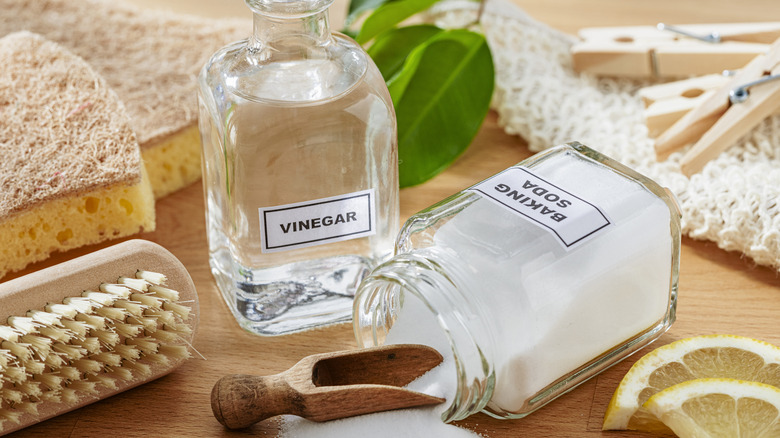
Cleaning vinegar is essentially white vinegar's stronger cousin, formulated with around 6% acetic acid compared to white vinegar's 5%. That might not sound like a big jump on paper, but that small difference makes it roughly 20% stronger. It's also strictly non-food grade, as it can burn the mouth, throat, and stomach. Another reason not to consume cleaning vinegar is that it's bottled in non-food-safe environments without the hygiene controls required for edible products and could contain a whole host of unwanted contaminants, such as chemical residues or added fragrances.
You might be wondering: What's the point of cleaning vinegar when white vinegar is already known to handle stains and clogged drains? Well, beyond saving your white vinegar solely for cooking, cleaning vinegar comes in handy when white vinegar just isn't cutting it. Its higher acidity makes it especially suited to lifting stubborn grease and grime. We're talking about the limescale coating your sink, the sticky film on your range hood, or the black, crusty carbon baked onto the bottoms of your pans. In these cases, apply the cleaning vinegar to dissolve mineral deposits, or use baking soda as a gentle abrasive scrub, rather than mixing them together ahead of time, which neutralizes the acid.
While cleaning vinegar's extra strength sounds like a win across the board, it comes with a few important caveats. Avoid using cleaning vinegar on certain surfaces. Skip it on natural stone countertops like granite or marble — the acidity can eat away at the surface and leave permanent etching. And keep it far away from your precious cast iron pans, too, unless you're in the mood to strip away years of seasoning in a single swipe.