

How Chef Boyardee Prepped Pasta For His Tomato Sauce In The 1930s
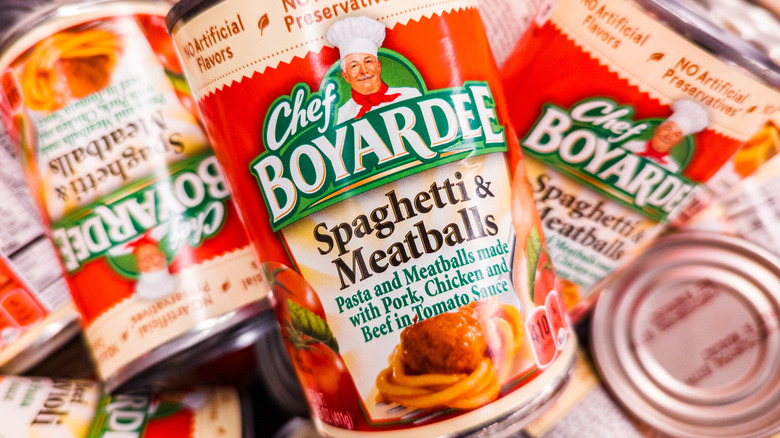
Chef Boyardee might be well-known for Beefaroni and canned ravioli, but the man behind the ubiquitous line of canned pasta products was far more than a mere mascot. Before he became a household name — and more commonly associated with the pantry than with fine dining — the Italian-born chef cut his teeth preparing pasta dishes in restaurant kitchens, where he had one particularly distinctive cooking method that involved tossing the noodles with parmesan and butter before adding his sauce.
Born Ettore "Hector" Boiardi in 1897 in the Italian region of Emilia-Romagna — known for its hearty, meat- and cheese-based staples like lasagne, ravioli, prosciutto, and parmesan itself — Boiardi crossed the pond at 16 to make a name for himself in the United States, working his way up the restaurant ladder at the prestigious Plaza Hotel in New York City. After building a prominent career as a chef — he even supervised a White House dinner hosted by President Woodrow Wilson for World War I soldiers — he moved to Cleveland, Ohio, where he opened his own eatery, Il Giardino d'Italia, in 1924, attracting customers with his signature tomato sauce. Demand was so high that the business spawned an empire, as he produced his own line of canned pasta with sauce and even grated cheese: a true Italian-American classic. What some diners didn't know, however, was the cooking trick behind his delicious pasta dishes — one that even contemporary chefs like Bobby Flay use — where the pasta wasn't treated as an empty vehicle for the sauce, but rather was enriched beforehand.
Butter and parmesan add a rich depth to pasta
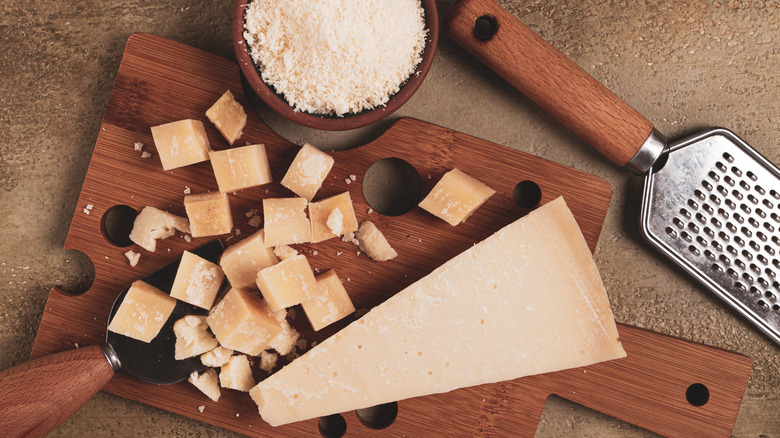
Chef Boyardee applied a common cooking method from his region — where butter is present in almost every dish, and parmesan is a source of regional pride — to elevate his recipes and make his sauce not only taste exquisite, but also marry with the pasta even more harmoniously. Tossing the cooked pasta with butter and parmesan has multiple functions, starting with helping prevent the noodles from clumping together, an all-too-common issue when cooking spaghetti. The butter coats the pasta, its richness giving it a glossy, smooth finish that adds the perfect texture.
What the method also profoundly enhances is the flavor profile. Both butter and parmesan are rich in fat, making even a simple tomato sauce pasta taste more luxurious. The latter especially has a deep saltiness and umami that infuses what could otherwise be a rather basic dish with a wonderfully savory nuttiness. There's also a bit of chemistry involved, too: Both ingredients neutralize some of the acidity of a tomato passata, especially considering that Hector Boiardi's sauce packed a lot of tang. Tomatoes aside, it also included onion, beef, carrot, mushrooms, basil, and olive oil, flavors that could easily become overpowering without a delicate counterbalance.
Boiardi clearly knew what he was doing and was bringing age-old local traditions to American dining. It's a simple hack you can use when making pasta at home, too. The trick is simple: Cook your spaghetti until tender, but still al dente, drain it, return it to the warm pot, and toss it with a few tablespoons of butter and a generous blizzard of Parmigiano Reggiano before adding the crimson sauce.