

Should You Use Pickle Juice To Kill Weeds In Your Garden?
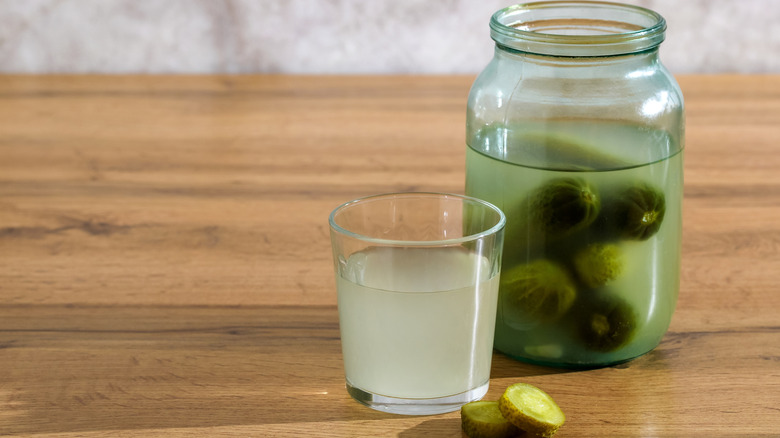
Of all the ways to use leftover pickle brine, you probably didn't think to use it as an all natural weed killer. While it may seem strange, the sheer acidity of it actually makes it a potent gardening tool, but only under specific circumstances.
Most plants thrive in a very specific pH zone, with some, like tomatoes, loving acidic soil and others, like rosemary, preferring to keep things more neutral. However, most plants will always react poorly to a direct application of brine. When plant roots directly absorb something so loaded with vinegar, it destroys them from the inside out over only a day or two. Plus, it is an insect-repelling pantry staple, so you get a two for one combo to protect your most precious plants.
However, just like chemical-laden weed killers, you have to be extremely careful when applying it around your fruits, veggies, and herbs. Even a small amount can sabotage your crop's health, so a cautious application with a spray bottle is recommended. Trying to pour brine directly onto weeds means you can't control the amount you're using, and you're more likely to use so much that you end up leaking into the surrounding soil. Unless you've been saving up brine for months, you probably won't have enough to prevent ground ivy from wreaking havoc on your garden, but small amounts are still good for spot treatments where you have recurring weed problems.
How to apply pickle juice in your garden most effectively
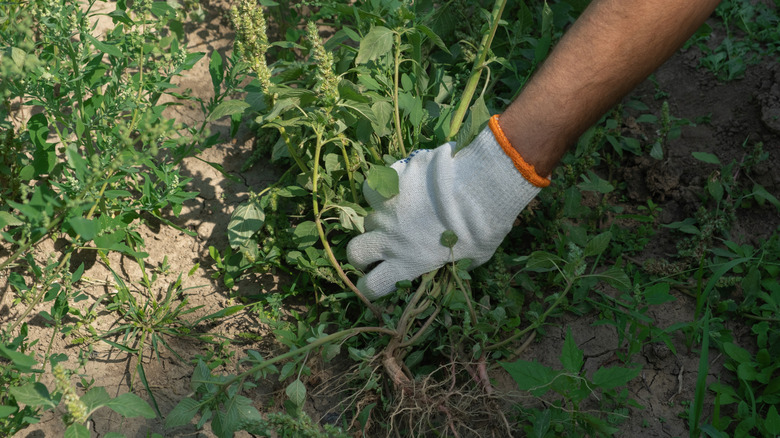
How you apply pickle juice mostly comes down to what stage of growth your garden is currently at. If you're just prepping the soil, you can be pretty liberal with your applications and always balance any boost in acidity with some lime. A thriving, producing garden, however, may only tolerate precise, diluted uses that yield less significant results.
If your garden is just one big plot with narrow spaces in between your veggies, you should always dilute your brine to prevent contaminating their soil. One part brine to 20 parts water may weaken its weed-killing properties, but it gives you a much wider margin of error that protects your crop. Soak the entire weed but only wet the soil directly against the stem to ensure enough salt reaches the root but also that it won't spread too far. This is particularly useful on things like clover or anything in the mint family, as they can come back with a vengeance if even on small part survives.
If you're prepping your garden, you may not even have to dilute your brine. Pickle juice is especially useful for first time gardeners who are trying to define their space, spray it around the perimeter and watch as the grass and weeds die in neat lines that you can work within. Just keep in mind that the edges of your garden may not be as prolific that season as the salt and vinegar will need time to wash away.